





AMMS® CIK Cell Expansion Reagent & Medium Kit - China Suppliers & Factory Model AS-15 in Stock
Catalog Number: AS-15
| Component Descriptions | ||||||
| Component Name | Cat. No. | Specification | Amount | Storage | Product characteristics | Shelf Life |
|---|---|---|---|---|---|---|
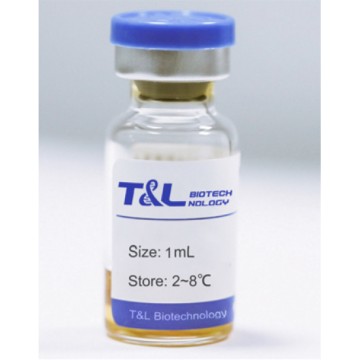
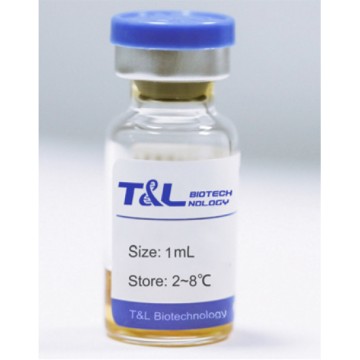
| CIK reagent A | AS08A | 500 μL | stick | -20℃ | lyophillization | 24 months |
| CIK reagent B | AS08B | 500 μL | stick | -20℃ | lyophillization | 24 months |
| Product name | Cat. No. | Specification | Amount | Storage | Product characteristics | Shelf Life |
|---|---|---|---|---|---|---|
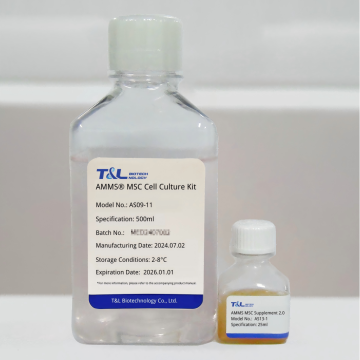
| AMMS® CIK Serum-free Medium | AS15-2 | 1000mL | 2 flasks | 2~8℃ | Liquid | 18 Months |
Product use
Frequently Asked Questions
1. What are the storage requirements for AMMS® CIK Cell Expansion Reagent components?
Both CIK reagent A (AS08A) and CIK reagent B (AS08B) must be stored at -20℃ to maintain their stability and activity.
2. What is the shelf life of the AMMS® CIK Serum-free Medium?
The AMMS® CIK Serum-free Medium (Cat. No. AS15-2) has a shelf life of 18 months when stored at its recommended temperature of 2~8℃.
3. In what physical state are CIK reagent A and B supplied?
Both CIK reagent A and CIK reagent B are supplied in a lyophilized (lyophillization) state to ensure prolonged product stability.
4. What is the packaging specification for the Serum-free Medium?
The AMMS® CIK Serum-free Medium comes in a specification of 1000mL, packaged as 2 flasks per order.
5. How long does the CIK cell expansion process take using this protocol?
The complete workflow takes 14 to 15 days, starting with PBMC separation on Day 0 and concluding with cell harvesting on Day 14 or 15.
6. What are the key stages of cell amplification in the product use timeline?
Following PBMC separation (Day 0) and activation (Day 1), there are four amplification stages scheduled on Day 4, Day 6, Day 8, and Day 11 before final harvest.