Cell Therapy is really changing the game in medicine—offering some pretty exciting new options for treating a bunch of different diseases. As this field keeps expanding, there's a real need for high-qualityGmp-Grade Materials. Recent rEports are pointing out that the global cell therapy market is expected to hit a whopping $19.9 billion by 2026, growing at over 30% annually. This just goes to show how important it is to have trusted suppliers like Thermo Fisher, who can provide Gmp-Grade Materials that actually meet those tough regulatory standards.
What I appreciate about Thermo Fisher is their dedication to quality—they really make sure their custom GMP-grade materials support researchers and manufacturers as they navigate this rapidly changing landscape. Having reliable, precise materials is such a huge factor in whether therapies succeed or not. But, let’s be honest, there are still hurdles. Keeping consistency and compliance across every single batch isn’t easy—no matter how strict your protocols are, a little variability can still sneak in.
Investing in top-notch Gmp-Grade Materials isn’t just a smart move; it’s essential for pushing cell therapies forward. It helps pave the way for successful treatments and, more importantly, keeps patient safety front and center. Looking ahead, it’s clear we need to focus on tackling these challenges head-on. The journey isn’t over, and thinking back on past issues really helps guide us toward a brighter future for cell therapy.

Overview of Cell Therapy and Its Importance in Medicine
Cell therapy represents a revolutionary approach in modern medicine. It utilizes living cells to treat diseases, regenerate tissues, and enhance healing. This method has shown promise in various conditions, including cancer, genetic disorders, and degenerative diseases. The potential to replace damaged cells offers new hope for patients.
Cells can be modified to perform specific functions. For instance, immune cells can be engineered to target and destroy cancer cells. These advances highlight the need for high-quality materials in cell therapy production. Using the right materials is critical for successful therapy outcomes.
Tip: Always focus on the source of your cells. High-quality, ethically sourced materials ensure better results.
Innovation in cell therapy is still evolving. There are challenges regarding safety, efficacy, and consistency. Manufacturing processes must be monitored closely. Each batch of cells produced can exhibit different qualities.
Tip: Quality control is essential. Regular checks can prevent complications later.
As the field grows, it will be important to reflect on the ethical implications of these therapies. Balancing innovation with safety will guide the future of cell therapies in medicine, paving the way for remarkable breakthroughs.
2026 Best Cell Therapy Custom GMP Grade Materials Overview
| Material Type | Source | Applications | Key Features | Quality Standards |
| Cell Growth Media | Synthetic |
Stem Cell Expansion | High Purity, Serum-Free | GMP Compliant |
| Matrix Solutions | Natural | Tissue Engineering | Biocompatible, Adjustable Stiffness | ISO 13485 Certified |
| Cryopreservation Media | Synthetic | Cell Storage | Optimized for Cell Viability | GMP Compliant |
| Transfection Reagents | Chemical | Gene Editing | High Efficiency, Low Cytotoxicity | GMP Compliant |
Thermo Fisher Scientific: A Leader in Biopharmaceutical Manufacturing
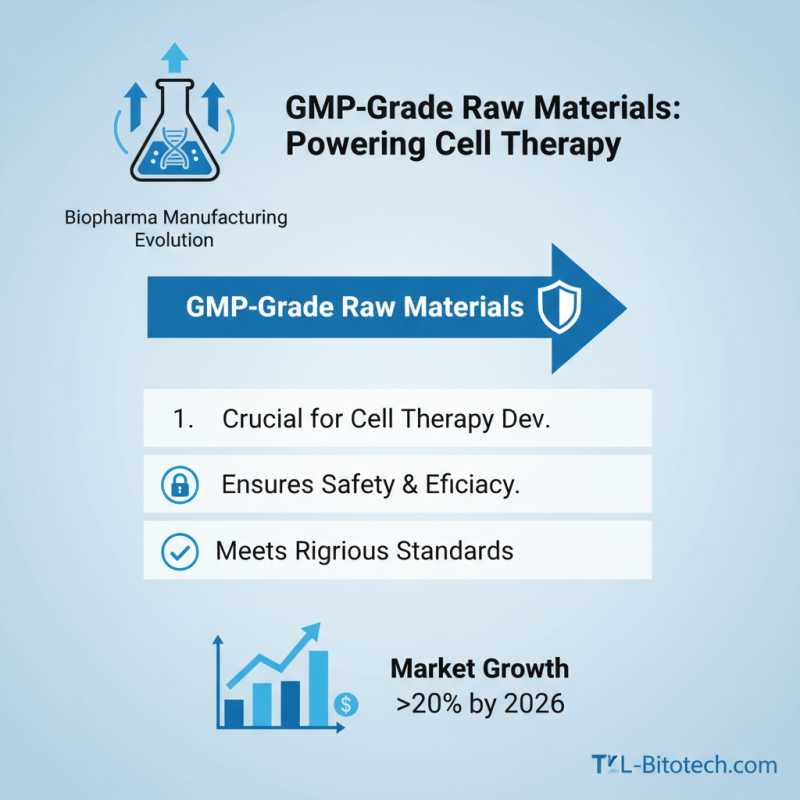
In the evolving landscape of biopharmaceutical manufacturing, companies are turning to specialized materials. Gmp-Grade Raw Materials play a crucial role in cell therapy development. These materials ensure that products meet the rigorous standards required for safety and efficacy. Recent trends indicate a growing demand for high-quality materials, with projected market growth reaching over 20% by 2026.
Despite the advances, challenges remain. Many companies struggle with the consistency of raw materials. Variability can lead to compromised product quality. It's essential for manufacturers to invest in robust quality assurance processes. Regular testing and supplier audits are vital. Without these, the risk of failure increases.
Tips: Always verify the source of your materials. Consider local suppliers for timely delivery. Building strong relationships with providers can enhance material reliability. Training staff in best practices can improve processing accuracy. Quality is non-negotiable in biopharmaceutical production.
Understanding GMP (Good Manufacturing Practice) Standards
GMP, or Good Manufacturing Practice, is crucial in cell therapy development. It ensures that materials are produced consistently and controlled to meet quality standards. These standards are essential in maintaining safety and efficacy in therapies. Compliance with GMP can be challenging. Many manufacturers face obstacles in understanding these complex regulations.
When working with GMP materials, attention to detail is key. Documentation is vital at every step. Missing a signature or a validation can lead to significant delays or issues. Staff training is equally important. Regular training sessions can enhance understanding of GMP standards.
Tips: Keep a checklist for compliance. Review regularly. A clear process can save time and reduce errors. Also, engage with experts to clarify doubts. Remember, the goal is consistent quality in your materials. Address challenges head-on and learn from mistakes.
Features of Custom GMP Grade Materials for Cell Therapy
Custom GMP grade materials are essential for the advancement of cell therapy. They ensure that the manufacturing processes meet strict regulatory standards. These materials support the growth and maintenance of various cell types. They also enhance the quality and safety of cell-based therapies. Advanced manufacturing practices contribute to reproducibility and reliability.
The features of these materials are impressive. They typically include defined formulations, which enhance cell viability. Furthermore, they often come with extensive documentation. This documentation guarantees compliance with regulatory requirements. Researchers sometimes face challenges when sourcing these materials. Availability can vary, and lead times may affect research timelines.
Adopting custom GMP grade materials requires careful consideration. Customization helps in meeting specific project needs. Yet, it demands thorough discussions and planning. Suppose the specifications are not accurate. This could lead to potential delays or issues. Striking the right balance between customization and standardization is crucial. Maintaining quality while pushing innovation forward is a constant challenge.
Innovative Technologies in Cell Therapy Material Development
The development of cell therapy materials is transforming the medical landscape. Innovative technologies are driving progress in this field, particularly in creating High-Quality Gmp-Grade Raw Materials For Clinical Trials. Recent studies indicate that the global cell therapy market is expected to exceed $10 billion by 2025. This growth highlights the critical need for high-quality materials.
Current advancements in biomanufacturing techniques are essential. New methods focus on ensuring consistency and sterility, which are vital for clinical applications. Reports indicate that 70% of researchers cite material quality as their primary concern. This emphasis on quality is crucial as it directly impacts clinical efficacy and patient safety.
Despite these innovations, challenges remain. Many materials still lack the required scalability for widespread clinical use. Additionally, regulatory hurdles often slow down the adoption of new technologies. As the industry learns from these obstacles, ongoing collaboration between researchers and manufacturers is necessary. Such partnerships can lead to the development of more effective, high-quality solutions that meet the needs of the evolving market.
2026 Trends and Predictions in Cell Therapy Materials
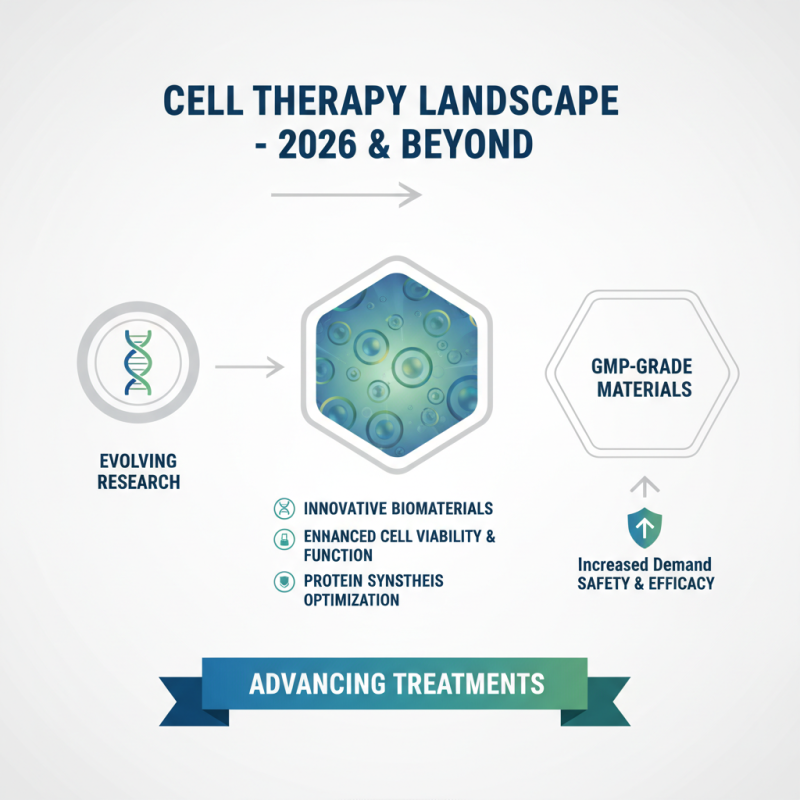
In 2026, the landscape of cell therapy is rapidly evolving. Researchers are focusing on innovative materials that enhance cell viability and function. One key trend is the increasing demand for GMP-grade materials. These materials are essential for ensuring the safety and efficacy of therapies. They're often used in protein synthesis processes, which are crucial for developing advanced treatments.
Emerging technologies play a significant role in this evolution. Bioprinting and microfluidics are gaining traction. They offer precise control over cell environments, impacting how therapies are developed. However, challenges remain. For instance, sourcing Gmp-Grade Materials For Protein Synthesis can be complex. Quality control processes must be robust to avoid compromising results. Researchers must also address scalability issues as demand grows.
Another trend is the shift towards personalized medicine. Customized cell therapies require tailored materials that can adapt to individual patient needs. This personalization is promising, yet it poses logistical challenges. Ensuring consistent quality across batches remains a concern. Researchers must navigate these complexities while pushing the boundaries of what cell therapies can achieve.
Case Studies: Successful Applications of Thermo Fisher's GMP Materials
Cell therapy is revolutionizing medical treatments. Companies are now focusing on high-quality GMP-grade raw materials. These materials are crucial for successful gene therapy applications. Some case studies highlight the effectiveness of these materials. They show how these components facilitate innovative therapies.
In one instance, a project used GMP-grade raw materials for gene editing. The results were promising, enhancing cell function significantly. However, challenges emerged during the process. Some batches did not meet the required standards. This raised concerns about consistency and reliability. The team had to revise protocols to address these issues.
Another case involved the application in regenerative medicine. GMP-grade raw materials played a vital role in producing therapeutic cells. Yet, there were unexpected delays in sourcing materials. This setback affected timelines and increased costs. Teams must remain vigilant and adaptable. Learning from these experiences will drive progress in the field. Emphasizing quality in Gmp-Grade Raw Materials For Gene Therapy Applications is essential. Each lesson learned helps improve future projects.
FAQS
: The article aims to provide helpful information and insights on specific topics.
Individuals looking for practical guidance will find this information valuable.
Consider your unique situation and apply the tips that resonate most with you.
Yes, overlooking details can lead to issues. Reflect on your approach to find improvements.
Yes, sharing can help others who may also benefit from these insights.
Every situation is different. It’s okay to seek alternative strategies or try again.
Take small, actionable steps to make progress. Consistency is key, even if it feels slow.
Yes, monitoring your progress helps you understand what works and what doesn’t.
Absolutely. Revisiting concepts can clarify uncertainties and inspire new applications.
Conclusion
The landscape of cell therapy continues to evolve, emphasizing its critical role in modern medicine. As the demand for effective biopharmaceutical manufacturing increases, the significance of custom GMP-grade materials becomes paramount. These materials adhere to stringent Good Manufacturing Practice standards, ensuring the safety and efficacy of cell therapies.
In examining the innovative technologies that drive the development of GMP-grade materials, it becomes clear that advanced manufacturing processes and regulatory compliance are essential to realizing successful applications in cell therapy. Looking ahead to 2026, emerging trends suggest a growing reliance on tailored materials that enhance therapeutic outcomes. Case studies illustrating the successful use of these materials further underline the transformative potential of GMP-grade products in driving advancements in cell therapy.