Hey, you know, in the ever-changing world of healthcare, the role of Biotech Cdmoreally can’t be overlooked. These Biotech Contract Development and Manufacturing Organizations (or CDMOs for short) are kind of the unsung heroes—playing a vital part in helping develop those groundbreaking biopharmaceuticals we hear so much about. I remember Dr. Emily Carter once saying, “Biotech Cdmo bridges the gap between innovation and market access,” and honestly, that just hits the nail on the head. They’re key players in getting new therapies to the people who need them, faster.
A lot of startups lean heavily on these Cdmo Services when they’re trying to ramp up their operations. Without them, the whole process of drug development would slow down big time. They bring in specialized expertise and resources that most smaller companies just can’t get on their own. That said, quality control can sometimes be a bit tricky—staying sharp and vigilant about standards is really important because mess-ups can happen.
The relationship between biotech companies and their CDMO partners isn’t always straightforward, though. It’s all about trust, but of course, issues can pop up now and then. Open communication is absolutely vital to keep things running smoothly. As we look ahead, the success of these collaborations will keep shaping the future of healthcare. Improving how they work together — that’s definitely something the industry will keep talking about.

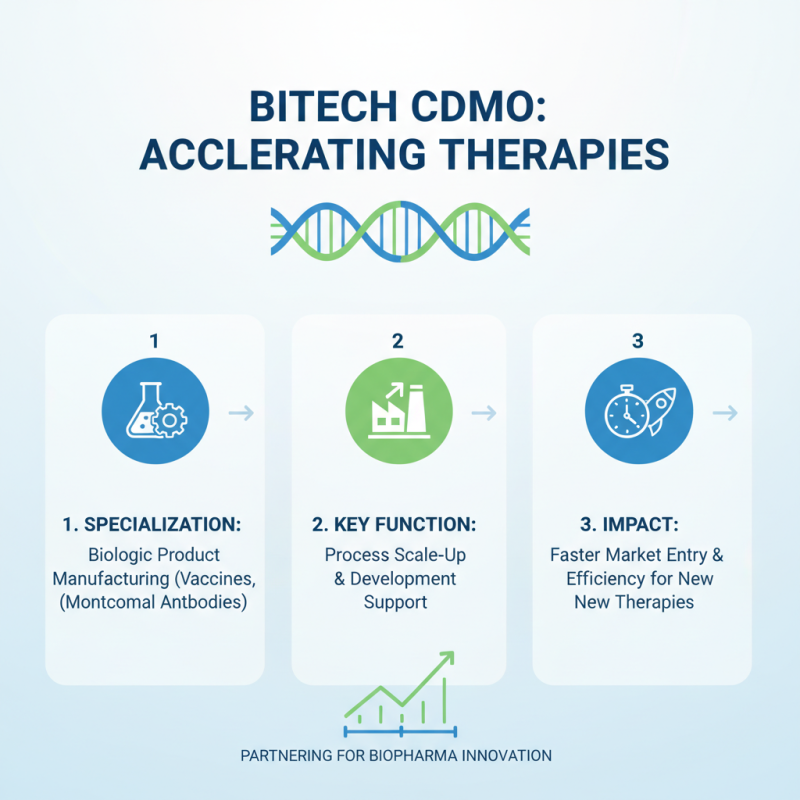
A Biotech CDMO, or Contract Development and Manufacturing Organization, plays a critical role in the biopharmaceutical industry. These entities specialize in producing biologic products, such as vaccines and monoclonal Antibodies. They assist biotech companies in scaling up their production processes. This support is vital for bringing new therapies to market faster and more efficiently.
Biotechnology often involves complex processes. Biopharmaceutical Cdmos understand these challenges. They offer expertise in formulation development, clinical trial material production, and regulatory compliance. This expertise can significantly reduce the development timeline for new treatments. Companies can invest more time in innovation rather than getting bogged down by manufacturing difficulties. However, not all CDMOs are created equal. Quality control issues can arise. Some firms might overlook critical aspects during production. This can lead to setbacks in the development process.
For many biotechs, partnering with a reliable CDMO can be a game-changer. It allows them to focus on research and development. Yet, these partnerships demand careful selection. Evaluating a CDMO's capabilities and their operational standards is crucial. The stakes are high when it comes to patient safety and efficacy. Engaging with a reputable biopharmaceutical CDMO is essential for the success of new therapies.
The role of Contract Development and Manufacturing Organizations (CDMOs) in biotech development is crucial. They help streamline processes that bring new therapies to market. With the biotech industry growing rapidly, companies often rely on Cdmo Services for efficient production.
CDMOs offer expertise in areas like formulation, process development, and manufacturing. This allows biotech firms to focus on research and innovation while outsourcing production. With limited resources, small companies particularly benefit from these partnerships. They find it challenging to manage large-scale production alone.
When selecting a CDMO, consider their experience and capabilities. A strong relationship can enhance product quality and reduce time to market. Look for CDMOs with a transparent process. This builds trust and allows for better collaboration.
Tips: Ensure your CDMO aligns with your project goals. Visit their facilities to assess capabilities. Clear communication is essential. Discuss timelines and expectations upfront to avoid misunderstandings. Carefully evaluating potential partners will lead to successful outcomes in biotechnology development.
| Key Dimensions | Description | Importance in Healthcare |
|---|---|---|
| Manufacturing Capabilities | CDMOs provide specialized manufacturing processes for biotech products, including biologics and biosimilars. | Ensures the efficient production of complex medicines, meeting regulatory standards. |
| Quality Control | Implementation of stringent quality assurance protocols to ensure product safety and efficacy. | Maintains trust and reliability in therapeutic outcomes for patients. |
| Regulatory Compliance | Expertise in navigating the complex regulatory landscape for drug approval. | Facilitates faster time-to-market for essential healthcare solutions. |
| Technical Expertise | Access to a wide range of technical knowledge in various biotech disciplines. | Enhances innovation and efficiency in the product development lifecycle. |
| Cost-Effectiveness | Outsourcing to CDMOs can significantly reduce development and manufacturing costs. | Allows healthcare companies to allocate resources effectively for research and development. |
| Flexibility and Scalability | CDMOs can adjust production scales according to demand and market needs. | Meets the dynamically changing needs of the healthcare market. |
Biotech Contract Development and Manufacturing Organizations (CDMOs) play a crucial role in healthcare. They provide essential services that support biotech companies in developing new therapies. The demand for these services has surged recently. According to a report by Global Market Insights, the biopharmaceutical CDMO market is expected to reach USD 11.4 billion by 2026.
Key services offered by biotech CDMOs include formulation development, process optimization, and manufacturing. Formulation development ensures drugs are effective and safe. This stage often involves rigorous testing and adjustments. Moreover, process optimization can significantly reduce production costs. Many companies struggle with this aspect, leading to delays.
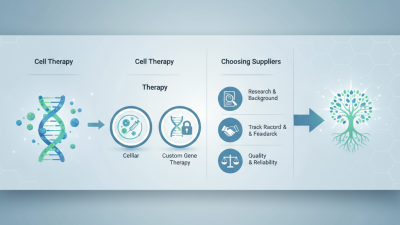
Manufacturing is another vital service provided by these organizations. This includes services like clinical trial material production and commercial-scale manufacturing. Cell Therapy Cdmo has gained tremendous traction. The growing need for personalized medicine has accelerated this trend. However, there are challenges, such as maintaining high-quality standards. Companies must navigate complex regulatory requirements, which can be a daunting task.
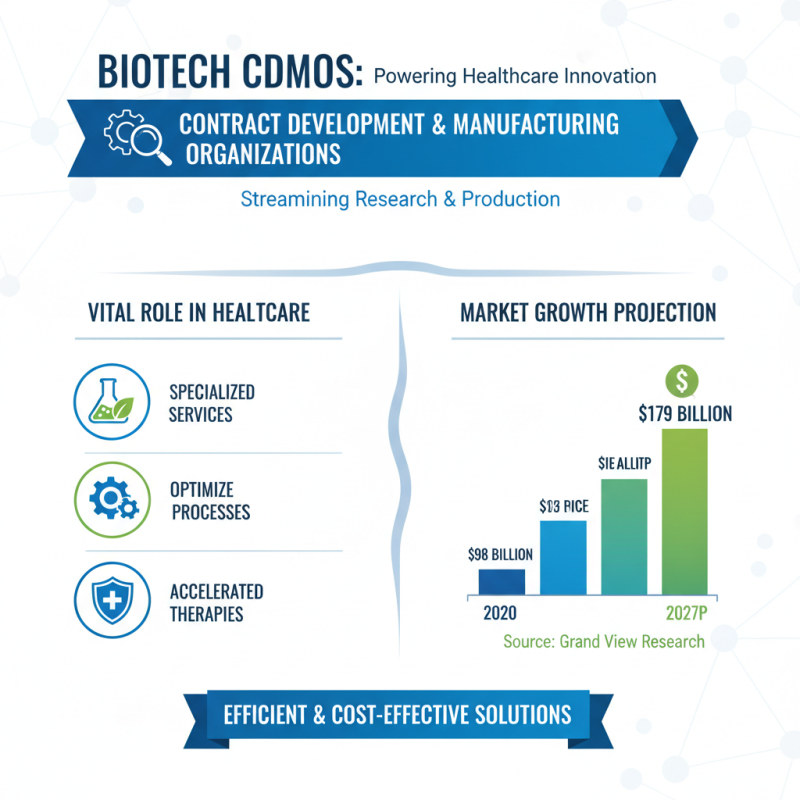
Biotech CDMOs, or Contract Development and Manufacturing Organizations, play a vital role in healthcare. They offer specialized services that help biotech companies streamline their research and production processes. According to a report by Grand View Research, the global contract manufacturing market is projected to reach over $179 billion by 2027. This showcases the increasing reliance on CDMOs for efficient and cost-effective solutions in biotech.
The benefits of using biotech CDMOs are significant. They provide access to advanced technologies and industry expertise. This allows healthcare companies to focus more on their core competencies while outsourcing manufacturing and development. A study from the BioProcess International revealed that 70% of biopharma companies now prefer outsourcing their biologics production to enhance efficiency. Furthermore, CDMOs can scale up production quickly, adapting to market demands.
However, reliance on biotech CDMOs is not without challenges. Quality control remains a key concern. Not every CDMO maintains the same standards. Companies must thoroughly vet potential partners for compliance with regulations. A mismatch in communication can also lead to delays and increased costs. Thus, while biotech CDMOs offer many advantages, healthcare companies must approach these partnerships cautiously.
In the biotech industry, quality control is crucial for ensuring patient safety and efficacy of products. CDMOs, or Contract Development and Manufacturing Organizations, play a vital role in maintaining these standards. Their processes must be precise and reliable. A small mistake can lead to large-scale consequences.
Quality control begins right from the raw material selection. Testing for purity and potency is essential. Every batch needs careful analysis before progressing through production. This helps in catching potential issues early. Insufficient quality checks can result in recalls or worse, harming patients.
**Tip:** Always ask about the quality assurance protocols of your CDMO. Transparency is key.
Moreover, the documentation process is as important as the manufacturing itself. Accurate records provide a traceable history of compliance. This also helps in regulatory submissions when necessary. Mistakes in documentation can delay product launches. It can even impact future partnerships.
**Tip:** Regular audits of quality control measures can help flag non-compliance issues. This ensures constant improvement and reliability.
In a field where lives depend on innovation, maintaining rigorous quality control standards is non-negotiable. Every adjustment or oversight needs reflection. Ensuring safety is a shared responsibility.
The chart above illustrates key quality control metrics in the Biotech CDMO process, highlighting the significance of maintaining high standards in batch consistency, contamination rates, process validation, regulatory compliance, and product yield to ensure patient safety and product efficacy.
Biotech Contract Development and Manufacturing Organizations (CDMOs) play a vital role in healthcare. These firms facilitate the production of complex biological products, which are crucial for treatments. Recent industry reports indicate that the global biotech CDMO market is projected to reach $16.3 billion by 2025, growing at a CAGR of 8.5%. This growth highlights the increasing reliance on CDMOs to efficiently deliver biopharmaceuticals.
A notable trend is the shift towards outsourcing. Companies prefer focusing on core competencies while leaving manufacturing to specialized partners. This relationship benefits both parties, driving innovation and reducing costs. However, this trend raises concerns about quality control and consistency. Companies must ensure that their partners maintain the highest standards.
Another emerging trend is the integration of advanced technologies such as AI and automation. These tools enhance efficiency and precision in manufacturing processes. Yet, relying heavily on technology may introduce unforeseen challenges, such as cybersecurity risks. Companies must continuously assess the balance between technology and human expertise.
Tips for companies considering partnerships with CDMOs include conducting thorough due diligence. Understand the CDMO's capabilities and track record. Evaluate their adherence to regulatory standards. Communication is key; establish clear expectations upfront. These steps can mitigate risks and promote successful collaborations.
Biotech Contract Development and Manufacturing Organizations (CDMOs) play a crucial role in healthcare. However, they face various challenges. One major issue is the complexity of biotech products. Biologics and advanced therapies require precise processes. Ensuring consistency and quality can be daunting.
Additionally, regulatory hurdles often slow down timelines. CDMOs must comply with stringent regulations worldwide. This can lead to increased costs and time delays. The pressure to innovate while maintaining compliance weighs heavily on these organizations.
Tip: Regular training for staff on regulatory updates can mitigate compliance risks.
Another challenge is the demand for personalized medicine. Customization requires flexible manufacturing processes. Many CDMOs struggle with scaling operations. Balancing efficiency with personalization is a tricky equation.
Tip: Investing in modular manufacturing technologies can provide adaptable solutions.
Ultimately, the industry needs to address these challenges to thrive. Finding innovative solutions can enhance efficiency and ensure high-quality healthcare products reach the market faster. Continuous improvement is essential in this dynamic field.
: CDMOs streamline processes to bring new therapies to market efficiently. They help with production, allowing firms to focus on research.
They often lack resources for large-scale production. CDMOs provide necessary support and expertise, making it easier to scale up.
Experience and capabilities are crucial. A strong relationship enhances product quality and reduces time to market.
It ensures patient safety and product efficacy. Even a small mistake can lead to significant consequences.
It starts with raw material selection. Testing for purity and potency is essential to avoid issues later.
Accurate records ensure compliance and traceability. Mistakes can delay launches and affect partnerships.
Regular audits can identify compliance issues. This helps maintain reliability and improve processes.
It builds trust and fosters better collaboration. Clear communication also helps avoid misunderstandings.
Biotech CDMOs, or Contract Development and Manufacturing Organizations, play a crucial role in the biotechnology sector by offering essential services for the development and production of biopharmaceuticals. These organizations facilitate the efficient transition from research and development to market-ready products. By providing services such as process development, scale-up manufacturing, and regulatory compliance support, Biotech CDMOs significantly enhance the capabilities of healthcare companies.
The importance of quality control in Biotech CDMO processes cannot be overstated, as it ensures that products meet the stringent regulatory requirements necessary for patient safety. As the biotech landscape evolves, trends such as increased demand for personalized medicine and advancements in technology are shaping the future of Biotech CDMOs. However, these organizations also face challenges, including a competitive marketplace and the need for continuous innovation, necessitating strategic solutions to maintain their relevance and effectiveness in the healthcare industry.