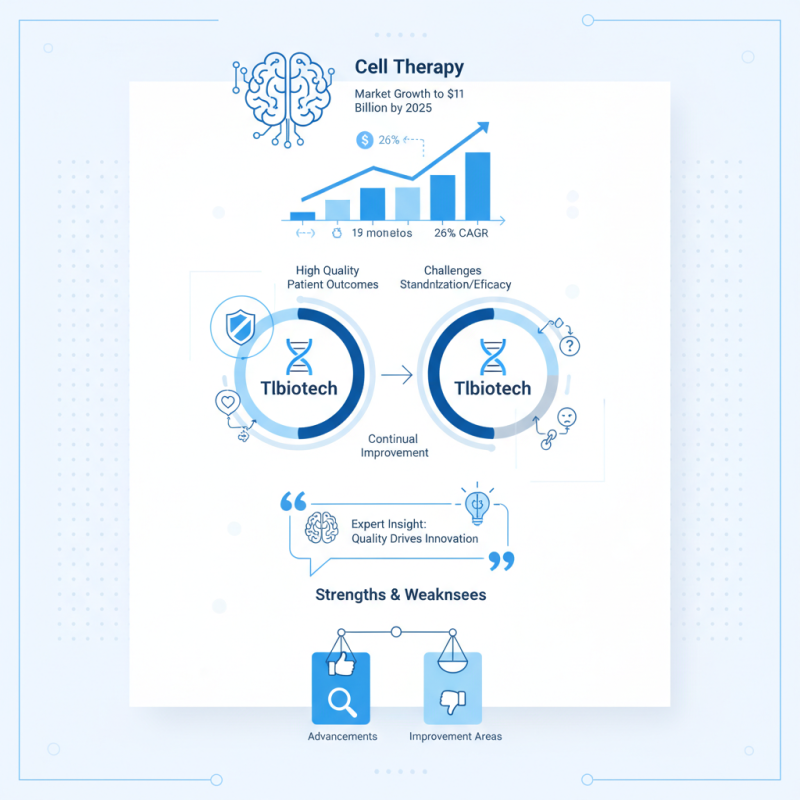
Cell Therapy is really shaking up the medical world, especially when it comes to regenerative treatments. One company that's been making waves in this space is Tlbiotech, known for their high-quality cell therapy products. According to a recent report from Market Research Future, the global market for cell therapy is projected to hit around $11 billion by 2025, growing at an impressive CAGR of 26%. Pretty crazy, right?
Dr. James Lee, who’s pretty much an expert in this whole field, stresses how crucial quality is when it comes to these therapies. He’s quoted as saying, 'High-quality cell therapies can really make a difference for patients and pave the way for new innovations.' That just underscores how important companies like Tlbiotech are—they’re the ones making sure these advances actually benefit real people.
Of course, it’s not all smooth sailing. There are still some hurdles, like standardizing results and making sure treatments work consistently across different protocols. Sometimes, products don’t quite live up to expectations, leading to mixed outcomes in patients. This is an area still in need of some fine-tuning, and ongoing improvement is key if we want to push the field forward. As we look into the top suppliers, it’s important to know what they’re good at—and where they might fall short—to get a clearer picture of where this industry is headed.
The cell therapy market in China is rapidly expanding. Advances in technology are driving innovations in treatment options. These therapies offer hope for diseases once deemed untreatable.
China's regulatory environment continues to evolve. This impacts how therapies are developed and marketed. Companies are finding ways to navigate these changes effectively. However, challenges remain, particularly in ensuring quality and safety.
Investors are paying attention to this market. They see potential despite the hurdles. Patient demand for new treatments is rising. This creates both opportunities and pressures for suppliers. The balance between innovation and regulation is delicate. Keeping pace with scientific developments is crucial for success.
China's cell therapy industry is rapidly evolving, driven by advancements in technology and research. Key players in this field focus on developing innovative therapies for various diseases. Understanding the landscape of suppliers is crucial for stakeholders. Many companies are entering the market, but not all maintain high standards.
When evaluating suppliers, quality is paramount. Experience in cell therapy significantly influences a company’s credibility. New companies often face challenges in meeting regulatory standards. Therefore, thorough research is essential. Check for certifications and past clinical successes. This adds an extra layer of security.
Tips: Collaborate with experts in the field to navigate complexities. Seek suppliers with robust quality control processes. Watch for emerging trends, as technology is constantly changing. A supplier's ability to adapt can significantly impact treatment outcomes. Keeping an eye on market developments will help identify leading players.
| Company Type | Specialization | Location | Year Established | Compliance Certifications |
|---|---|---|---|---|
| Biotech Company | Stem Cell Research | Shanghai | 2015 | ISO 9001, cGMP |
| Pharmaceutical Firm | T Cell Therapy | Beijing | 2018 | ISO 13485, FDA |
| Research Institute | Gene Editing | Guangzhou | 2020 | CLIA, CAP |
| Medical Technology Company | Cellular Therapy Platforms | Shenzhen | 2016 | CE Marking, ISO 14644 |
| Clinical Research Organization | Clinical Trials | Hangzhou | 2017 | AAHRPP, ICH-GCP |
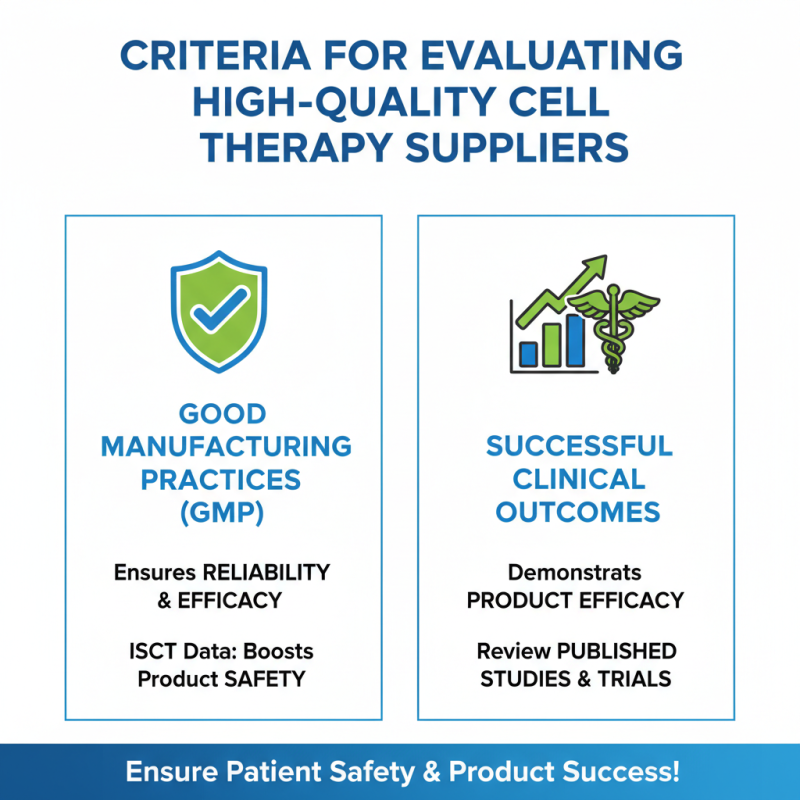
When evaluating high-quality cell therapy suppliers, certain criteria are crucial for ensuring reliability and efficacy. One important metric is the supplier's adherence to Good Manufacturing Practices (GMP). According to data from the International Society for Cellular Therapies (ISCT), compliance significantly boosts product safety and effectiveness. Another factor is the supplier's history of successful clinical outcomes. Reviewing published studies or clinical trial results can provide insights into their product efficacy.
Additionally, the expertise of the research and development team plays a pivotal role in determining supplier quality. A strong team often indicates a commitment to innovation and continuous improvement. An analysis by the World Health Organization (WHO) on cell therapies highlighted that suppliers with a robust R&D background tend to produce higher quality solutions.
Tips: Focus on suppliers that are transparent about their processes and outcomes. Gathering feedback from past clients can also offer valuable insights. Lastly, consider the scalability of the supplier. A company that can efficiently scale production is often better positioned to meet market demands.
It's important to reflect on the varying levels of quality within the industry. Not all suppliers will meet the highest standards, and this inconsistency can impact patient outcomes. Keep in mind that thorough evaluations are necessary to navigate this complex market effectively.
When exploring the top TLBiotech suppliers in China, it's essential to assess multiple factors. Quality of cell therapy products is paramount. Evaluate their research capabilities and clinical trial outcomes. Suppliers must demonstrate innovation in their methodologies. Look for companies with a strong track record in cell therapy.
Tips: Check for certifications and regulatory compliance. If a supplier lacks proper documentation, reconsider your options.
Communication with suppliers is another key aspect. Transparency about their processes fosters trust. Investigate their background in advanced therapies and patient outcomes. Reviews from other clients can provide valuable insights. A reputable supplier often shares case studies and success stories.
Tip: Engage with other professionals in the field for recommendations. Their experiences can help you make informed decisions.
Take time to review potential partners. Collect detailed information about their services and pricing structures. This evaluation can be a time-consuming process. However, ensuring that you find a reliable supplier is worth the effort. A poor choice can lead to unforeseen challenges in treatment quality.
The landscape of cell therapy in China is continually evolving, presenting innovative technologies that reshape treatment paradigms. Leading suppliers are focusing on advanced methods such as gene editing and personalized medicine. These techniques promise better patient outcomes and more efficient therapies.
Some suppliers utilize cutting-edge bioprocessing platforms. These platforms offer streamlined workflows that enhance the production of cell therapies. Yet, there are areas for improvement in scalability and cost-effectiveness. The aim is to make these therapies more accessible without compromising their quality.
Collaboration between academia and industry plays a critical role. Many suppliers are investing in research partnerships. This strategy fosters innovation, but it can lead to variations in quality control. Results may vary dramatically, emphasizing the need for rigorous evaluation and oversight. As the field advances, consistent communication between stakeholders remains essential.
This chart provides an overview of the market share distribution among the top high-quality cell therapy suppliers in China. The data represented highlights the competitive landscape within the industry.
In China, the regulatory framework for cell therapy is evolving rapidly. The National Medical Products Administration (NMPA) plays a crucial role in overseeing the development and approval of cell therapy products. This agency is responsible for ensuring that these therapies meet safety and efficacy standards. Companies must navigate a complex landscape of guidelines and regulations that vary depending on the type of cell therapy.
Developers face several challenges in compliance. The prerequisites often require extensive preclinical and clinical data. The process can be lengthy, causing delays. Additionally, regulatory requirements can change, which adds uncertainty. Obtaining approval for innovative cell therapies often demands significant financial and human resources.
Despite these hurdles, many see potential in the field. The recent push towards innovation has prompted a more streamlined approval process for certain therapies. Relevant stakeholders are urged to adapt and stay informed. The dynamic nature of the regulatory environment means ongoing education is vital. Engaging with these regulations can pave the way for successful therapy development.
China's cell therapy sector is rapidly evolving, driven by technological advancements and increasing investment. Researchers are exploring new modalities, like gene editing and immune modulation. This innovation spurs collaborations between biotech firms and research institutions. However, navigating regulatory landscapes remains challenging for many suppliers. Compliance with updated guidelines is essential but can be complex.
The demand for high-quality cell therapies is soaring, reflecting patients' needs. Suppliers must adapt quickly. This dynamic landscape requires ongoing education and flexibility in operations. Emerging companies often face hurdles in scaling production. Their ability to maintain quality while growing is crucial. As competition rises, only those prioritizing robust quality control will succeed.
Looking ahead, partnerships will play a critical role. Collaborative networks will likely emerge to share knowledge and resources. However, balancing innovation with ethical considerations needs careful attention. Engaging in thoughtful dialogue can help address potential pitfalls. The future of China's cell therapy sector appears promising but demands a strategic approach and a commitment to quality.
: The market is rapidly expanding, driven by technological advancements and innovations in treatment options.
The evolving regulations impact the development and marketing of therapies, creating challenges for ensuring quality and safety.
Innovations include gene editing and personalized medicine, aimed at improving patient outcomes and therapy efficiency.
Some suppliers use advanced bioprocessing platforms to streamline workflows but face issues with scalability and cost.
These companies often struggle with scaling production while maintaining the required quality of their therapies.
Partnerships between academia and industry foster innovation but may lead to variations in quality control that need addressing.
Rising patient demand for new treatments creates opportunities and pressures for suppliers to adapt quickly.
They must prioritize quality control while remaining flexible and innovative in a competitive environment.
Balancing innovation with ethics requires careful attention and dialogue among stakeholders to avoid potential pitfalls.
Keeping pace with scientific developments and engaging in ongoing education and strategic partnerships are crucial for success.
The cell therapy market in China is rapidly evolving, driven by advancements in innovative technologies and a robust regulatory framework. Key players in this industry are distinguishing themselves by adhering to stringent criteria for high-quality cell therapy suppliers, with a particular focus on Tlbiotech as a significant contributor to this landscape. A detailed analysis reveals that top Tlbiotech suppliers are leveraging cutting-edge methodologies to enhance treatment outcomes and patient safety.
Looking ahead, the future trends in China's cell therapy sector indicate continued growth and diversification, as suppliers adapt to the changing regulatory environment and consumer needs. As the market matures, the emphasis on quality and innovation remains a priority, with Tlbiotech playing a pivotal role in defining best practices and driving excellence within the industry.