Navigating the world of biopharmaceuticals can be pretty daunting, and picking the right Biopharmaceutical CDMO is a big deal. Experts often stress how important it is to choose wisely. For example, Dr. Emily Carter, who's pretty much a big name in biopharmaceutical manufacturing, once said, “The right partner can really take your product to the next level.” Her words just go to show how crucial it is to find a CDMO that genuinely shares your vision and understands what you're aiming for.
Let’s be real – picking a CDMO isn’t something you do on instinct alone. It’s a bit of a juggling act, you need to look at their experience, their capabilities, and whether they’re legit when it comes to regulatory rules. Each project in this space is unique, so a one-size-fits-all approach won’t cut it. The magic really happens when you work hand-in-hand with a team that’s not only technically solid but also gets your specific needs and the hurdles you’re facing.
Think of it less like hiring a service, and more like forming a partnership. Take a look at their track record — successes they’ve had and what other clients are saying. It’s also good to see how flexible they are when things change or new challenges pop up. Keeping these points in mind can really help you make smarter choices, which in turn can make a huge difference in how smoothly your product moves from idea all the way to the market.

Understanding the Role of CDMOs in Biopharmaceutical Development
Choosing a suitable Contract Development and Manufacturing Organization (CDMO)is crucial in biopharmaceutical development. CDMOs play a vital role in offering expertise and resources that can enhance efficiency. In a recent rEport, nearly60% of biopharmaceutical companies expressed their reliance on CDMOs for process development and manufacturing solutions (Biopharma Report 2022). These organizations help streamline production, reducing time-to-market for critical therapies.
CDMOs offer a range of services, including Formulation Development and quality assurance. Yet, selecting the right partner is not always straightforward. Companies often face challenges when evaluating a CDMO's capabilities. A significant consideration is assessing the alignment of the CDMO’s technical expertise with specific project needs. For example, if a CDMO specializes in monoclonal Antibodies, it might not be the best fit for a complex gene therapy.
Another aspect to consider is their regulatory history. Biopharmaceutical firms should be wary; 20% of CDMOs have faced regulatory scrutiny in the past five years (Pharma Compliance 2023). This can impact timelines and costs.
Additionally, communication and collaboration are essential. Misunderstandings can lead to delays. Transparency in processes is crucial. Trust in the CDMO's ability to scale up production matters, especially for startups or small companies. Time and resource constraints can make it tempting to overlook due diligence. Balancing urgency with thorough evaluation is necessary for long-term success.
Key Factors to Evaluate When Selecting a Biopharmaceutical CDMO
Choosing the right biopharmaceutical Contract Development and Manufacturing Organization (CDMO) requires careful consideration. Start with their expertise in your specific area. Look for companies that have a strong track record with similar projects. This can save time and resources.
Evaluate their technological capabilities. A reliable CDMO should use modern methods and equipment. Check if they invest in the latest technologies. Their ability to adapt their processes to your needs is crucial. Often, a CDMO’s flexibility can impact timelines and costs.
Don't forget about regulatory compliance. Ensure they have a good history with inspections and certifications. Transparency is vital here. Ask for audits and references from previous clients. However, it's important to remember that even established organizations can face challenges. Conversations about past difficulties can reveal their problem-solving abilities.
The Importance of Regulatory Compliance in CDMO Selection
When selecting a biopharmaceutical Contract Development and Manufacturing Organization (CDMO), regulatory compliance is paramount. It ensures that the products meet stringent industry standards. Non-compliance can lead to delays or even product recalls. Companies must thoroughly assess a CDMO's understanding of regulatory landscapes. This includes knowledge of FDA guidelines and international regulations.
A reliable CDMO will demonstrate a strong track record. Regular audits and certifications strengthen their credibility. Seeking evidence of regulatory affairs experience is vital. Reviewing past interactions with regulatory bodies can provide insights into their processes. Transparency in operations fosters trust, which is essential in the partnership.
Choosing a Custom Biopharmaceutical Cdmo requires careful evaluation. Look for proven expertise in your specific area of interest. Consider their approach to compliance as a critical factor. Sometimes, a CDMO might excel in manufacturing but struggle with regulatory aspects. A thoughtful review of documentation practices reveals compliance attitudes. Collaborating with the right partner can ultimately enhance product safety and efficacy.
How to Choose the Right Biopharmaceutical CDMO for Your Needs? - The Importance of Regulatory Compliance in CDMO Selection
| Criteria | Importance | Compliance Standards | Facilities | Experience Level |
| Regulatory Compliance | High | FDA, EMA | GMP Certified | 10+ years |
| Technical Expertise | High | ICH Guidelines | Advanced Technology | 5-10 years |
| Client References | Medium | ISO Standards | State-of-the-art | 3-5 years |
| Cost Efficiency | Medium | Flexible | Competitive Pricing | 1-3 years |
| Scalability | High | Regulatory Adaptability | Modular Systems | 10+ years |
Assessing Technological Capabilities and Expertise of CDMOs
Choosing the right biopharmaceutical CDMO is crucial for success. When assessing their technological capabilities and expertise, gather data on their experience in Biopharmaceutical Cdmo Service. Recent reports indicate that over 70% of companies prioritize a CDMO’s ability to scale-up production. This highlights the importance of evaluating their facilities and equipment.
Innovative technologies play a significant role in success. Look for CDMOs with capabilities in advanced manufacturing processes, such as continuous flow technology or single-use systems. Data shows that 65% of industry leaders believe these technologies significantly enhance production efficiency. Engaging with experts who are knowledgeable about current trends is essential. A CDMO's staff should possess a blend of scientific expertise and practical experience.
Additionally, organizations must reflect on past partnerships. Some CDMOs may excel in certain areas while lacking in others. Carefully consider their track record in regulatory compliance and product quality assurance. Industry statistics reveal that companies focusing on quality management systems can reduce production failures by up to 40%. Such insights can guide your decision-making process when selecting the right biopharmaceutical CDMO service.
Analyzing Cost Structures and Pricing Models in CDMO Services
Cost structures in biopharmaceutical CDMO services can vary significantly. Each CDMO may have its pricing models, impacting overall project budgets. When analyzing these costs, consider factors like manufacturing scale, technology use, and turnaround time. A detailed understanding of these elements helps in making an informed choice.
Pricing models often include fixed pricing, cost-plus contracts, and pay-per-service. Fixed pricing provides budgeting certainty, while cost-plus allows flexibility. Pay-per-service can be advantageous for smaller projects, but it may lead to unexpected expenses. It’s important to engage with the selected Biopharmaceutical Cdmo Supplier to clarify these models early on.
Transparency is key. Inquire about hidden fees or additional costs that may arise throughout production. A reliable CDMO should offer clear breakdowns of what to expect. Decision-makers should also consider the experience and expertise of the team. Finding a balance between quality service and acceptable pricing is crucial for long-term partnerships in this industry.
Evaluating Quality Control Processes in Biopharmaceutical CDMOs
Choosing the right biopharmaceutical CDMO is crucial for your project’s success. Quality control processes play a vital role in this decision. These processes should ensure that products meet the highest standards. When evaluating CDMOs, look for comprehensive quality management systems. Ask about their guidelines, audits, and certifications. These factors signify their commitment to quality.
Tip: Examine the CDMO's history in managing quality control. Longevity in the industry often reflects reliability. A newer company may not have fully developed processes. Investigate their track record with other Biopharmaceutical Cdmo Suppliers. Client feedback can provide insights into their effectiveness.
Moreover, how does the CDMO handle deviations? A robust process for managing quality deviations is essential. This includes documentation, investigation, and corrective actions. Inspect their approach to continuous improvement. You want a partner who values innovation and adaptability.
Tip: Request a site visit if possible. Observing operations firsthand can reveal operational realities often glossed over in presentations. Gauge the culture of quality within the organization. A workforce that prioritizes quality will contribute to your project’s success.
Reviewing Client Testimonials and Case Studies for Informed Decisions
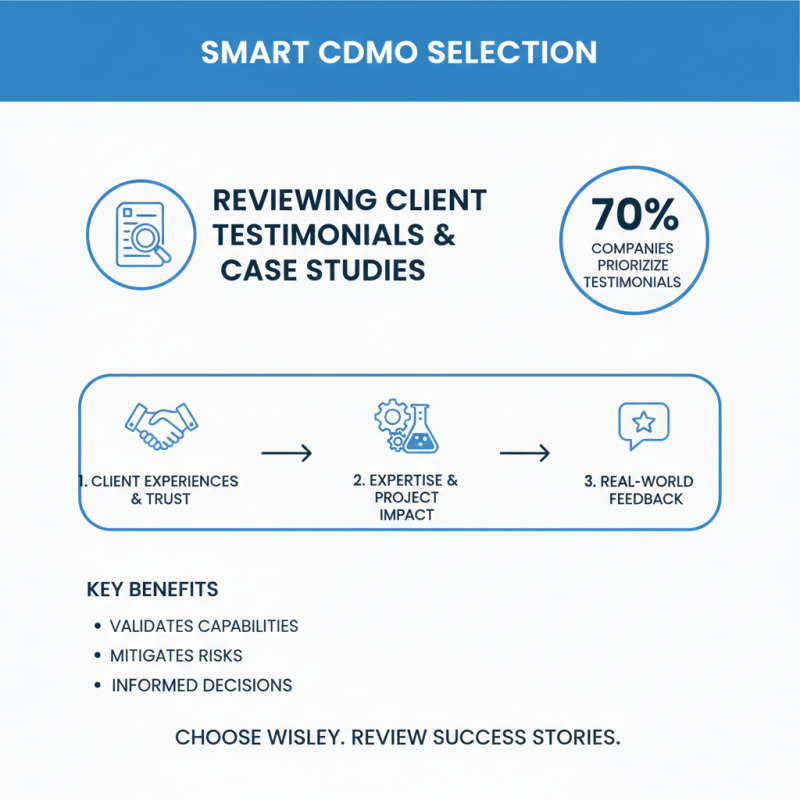
When choosing a biopharmaceutical Contract Development and Manufacturing Organization (CDMO), client testimonials can provide valuable insights. Organizations often share their experiences, detailing how a CDMO's expertise impacted their projects. According to a recent industry report, about 70% of companies prioritize testimonials when selecting a CDMO, highlighting the importance of real-world feedback.
Detailed case studies can reveal how a CDMO approached challenges in previous projects. For instance, successful partnerships may demonstrate a CDMO’s ability to scale production efficiently. A survey indicated that 64% of clients experienced significant improvements in timelines and quality after collaboration with the right CDMO. These results speak volumes about the relationship dynamics and operational capabilities of a CDMO.
However, it’s essential to consider potential shortcomings in testimonials. Some clients may share overly positive experiences, neglecting challenges faced during collaboration. A balanced view is crucial for informed decisions. Gather insights from various sources, including peer-reviewed studies and industry analyses. This comprehensive approach helps to navigate the complex landscape of biopharmaceutical development. Trustworthiness and reliability should guide your choice in finding the right CDMO.
Conclusion
Choosing the right biopharmaceutical CDMO (Contract Development and Manufacturing Organization) is crucial for the success of drug development. Understanding the role of CDMOs in the biopharmaceutical landscape is essential, as they provide critical services that can enhance efficiency and compliance in development processes. When selecting a biopharmaceutical CDMO, several key factors should be evaluated, including technological capabilities, expertise, regulatory compliance, and quality control processes.
Moreover, analyzing the cost structures and pricing models of different CDMOs can significantly impact budget management. It is also important to review client testimonials and case studies to make informed decisions. Ultimately, a thorough assessment of these elements will ensure that the chosen biopharmaceutical CDMO aligns with the specific needs and goals of your project, paving the way for successful outcomes in biopharmaceutical development.