In today’s fast-moving biotech world, picking the right contract development and manufacturing organization (or CDMO) really matters. With so many options out there, figuring out which one fits your specific needs can feel pretty overwhelming. That’s where Biotech Cdmo comes into play — they’ve become a go-to partner for lots of companies. What sets them apart? Their deep expertise in biopharma manufacturing. They handle pretty complex processes, like cell culture and purification, making sure everything turns out top-notch.
When you’re choosing a Biotech Cdmo, you’re really weighing reliability and cutting-edge tech. Most of these guys have flashy, state-of-the-art facilities, plus skilled folks who know their stuff. Experience is huge here — a good CDMO usually has a solid track record. But not every organization offers the same level of service. Some might be lacking the specialized know-how needed for more complex products.
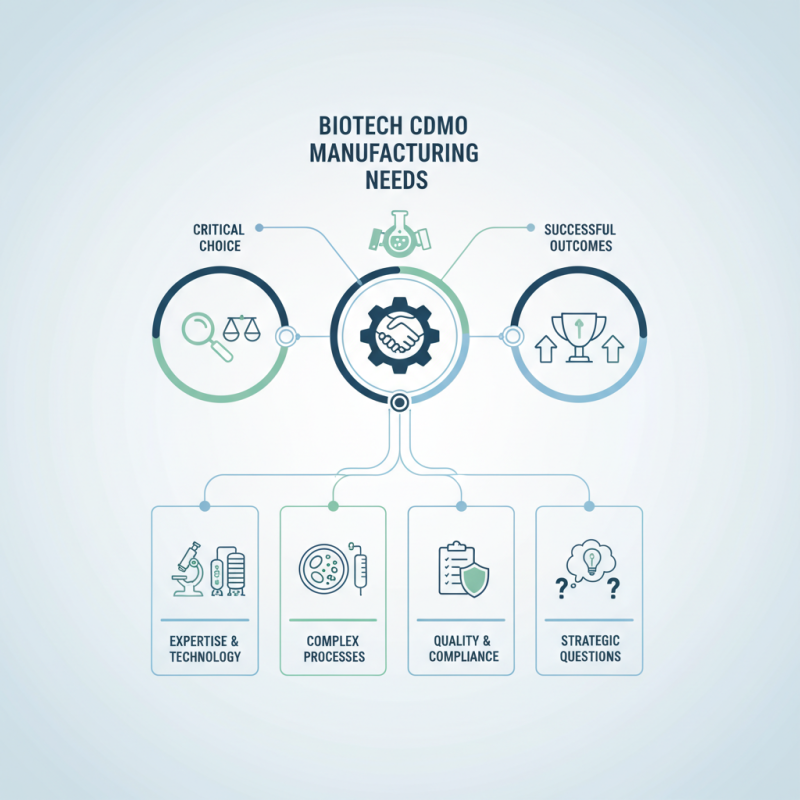
So, it’s really worth taking a step back and asking yourself: what does my project actually need? Picking the right biotech CDMO means asking the right questions — like, what capabilities do they bring to the table? How do they make sure everything stays compliant and up to quality standards? Decision-makers should do their homework and pick partners who truly understand their unique challenges. The right choice can make all the difference and help you succeed in a pretty competitive market.
Biotech Contract Development and Manufacturing Organizations (CDMOs) play a crucial role in the pharmaceutical supply chain. They offer specialized services that help accelerate drug development. These organizations possess the expertise to handle complex biopharmaceutical processes. However, selecting the right CDMO can be challenging.
With the increasing pressure on pharmaceutical companies to deliver effective treatments, Biopharmaceutical Cdmo has become indispensable. Their ability to scale production allows for swift responses to market demands. However, not all CDMOs are created equal. Research is vital. Understand their capabilities and track record. Seek references from other companies to assess reliability.
Tips: Always ask about their regulatory compliance history. This reflects their commitment to quality. If possible, visit their facilities. It helps to gauge their operational standards. Understanding their project management approach is critical. Effective communication can make or break a collaboration.
The pharmaceutical industry often faces unforeseen challenges. Biotech CDMOs must adapt quickly to changes. Flexibility and innovation are essential traits. Evaluate how potential partners respond to unexpected developments. It’s important to choose a CDMO that aligns with your specific needs.
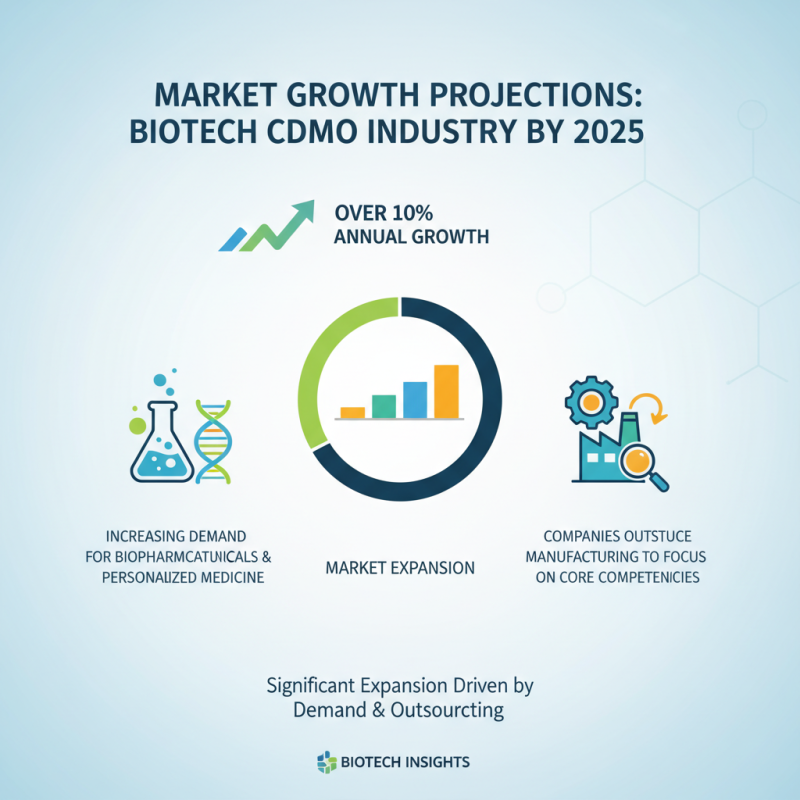
The biotech CDMO industry is set for significant growth by 2025. Recent projections estimate a market expansion of over 10% annually. This surge reflects the increasing demand for biopharmaceuticals and personalized medicine. Companies aim to outsource their manufacturing to focus on core competencies.
Many biotech firms recognize the benefits of using Cdmo Services. They gain access to advanced technologies and expertise without hefty investments. Moreover, partnering with experienced CDMOs ensures regulatory compliance and quality assurance. However, the choice of a CDMO can be daunting. Companies must evaluate capabilities, track records, and cultural fit.
Challenges still exist in this landscape. As demand grows, so does competition among CDMOs. Companies must remain vigilant in selecting partners. It is essential to assess not just cost, but also innovation and adaptability. The right CDMO can propel a biotech firm’s success, but the wrong choice can hinder progress.
Outsourcing to a Biotech CDMO can significantly enhance your manufacturing capabilities. The key advantages lie in their specialized expertise and state-of-the-art technology. Biotech CDMOs focus on specific areas, such as biologics and pharmaceuticals. Their tailored approach ensures that your products meet the highest quality standards. They are equipped with advanced facilities that can adapt to various manufacturing needs and scale production efficiently.
It's crucial to evaluate potential Cdmo Services carefully. Look for a vendor with proven experience and a solid track record. Check their certifications and quality control measures. This will help ensure that they can meet your unique requirements.
Collaborating with a Biotech CDMO can lead to faster time-to-market. Their established processes can streamline development and production. This not only saves time but also reduces costs. However, companies must maintain clear communication throughout the partnership. Keep track of progress and adapt strategies as needed. This fosters a productive relationship and ensures that your goals align with theirs.
| Advantage | Description | Impact on Business |
|---|---|---|
| Expertise & Specialization | Access to specialized knowledge and experience in biotech manufacturing processes. | Improved product quality and process efficiency. |
| Cost Efficiency | Reduction of operational costs through outsourcing rather than in-house production. | Increased profitability and reallocating funds to R&D. |
| Flexibility & Scalability | Ability to scale production based on demand without significant capital expenditure. | Better adaptation to market changes and reduced risk of overproduction. |
| Regulatory Compliance | Expertise in navigating complex regulatory environments and ensuring compliance. | Minimized risk of regulatory issues and enhanced reliability of product approval. |
| Access to Advanced Technology | Utilization of the latest technology and innovations in biotechnology manufacturing. | Increased efficiency and competitive edge in the market. |
| Focus on Core Competencies | The ability to concentrate on core business functions while outsourcing manufacturing. | Enhanced innovation and strategic growth. |
Biotech Contract Development and Manufacturing Organizations (CDMOs) play a crucial role in maintaining high-quality standards. They adhere to strict guidelines set by regulatory bodies such as the FDA and EMA. This adherence is vital for the production of biologics, especially in areas like cell therapy. A recent rEport indicates that over80% of biotech companies trust CDMOs for compliance and quality assurance in their manufacturing processes.
Quality assurance standards at biotech CDMOs include thorough validation procedures. The industry's data reveals that approximately 92% of CDMOs employ comprehensive risk management strategies. These strategies are essential for identifying potential issues before they escalate. Moreover, the implementation of Good Manufacturing Practices (GMP) ensures that products consistently meet safety and efficacy requirements.
While many CDMOs strive for excellence, not all have mastered every aspect of quality assurance. Some may struggle with technological advancements or regulatory updates. This creates opportunities for improvement within the industry. The push for enhanced standards will be critical, especially as new therapies emerge, like those seen in cell therapy. Continuous reflection and adaptation will ultimately define the future of biotech manufacturing.
Outsourcing manufacturing to a Biotech CDMO (Contract Development and Manufacturing Organization) can yield substantial cost savings. According to a report by Deloitte, companies can save up to 30% on production costs by choosing a CDMO instead of in-house production. This is increasingly critical in today's market, where innovation and speed to market are vital.
Investing in in-house facilities involves high initial capital. A study from BioPharma Dive reveals that 62% of firms face difficulties in justifying these expenses. Maintenance costs and the need for specialized expertise further compound this issue. By contrast, CDMOs bring established processes and experienced personnel to the table, dramatically reducing both time and resource investment.
Tip: Evaluate the hidden costs of in-house production. Overhead, labor, and equipment depreciation can quickly add up. Assess your specific needs to determine whether outsourcing makes financial sense.
A potential drawback of outsourcing is the loss of direct control. Companies must build strong communication with their CDMO to mitigate this issue. Despite this, 78% of businesses reported satisfaction with their CDMO partnerships, seeing them as more reliable in rapidly fluctuating markets.
Tip: Foster a collaborative relationship with your CDMO. Regular feedback sessions can enhance the partnership and align goals effectively.
Technological innovations in Biotech CDMO operations are transforming the landscape of biomanufacturing. With the rise of automation, companies can enhance productivity and consistency. Automated systems reduce human error, streamlining processes. This leads to faster turnaround times and increased output. More precision means better quality control in every batch produced.
One remarkable trend is the integration of artificial intelligence. AI can analyze vast amounts of data quickly. This enables real-time monitoring and predictive maintenance of equipment. Such insights can prevent costly downtimes and optimize production schedules. Companies are now able to respond swiftly to market demands.
Tip: Ensure the CDMO you choose embraces technological advancements. Inquire about their automation and AI capabilities. Understanding these innovations can enhance your decision-making.
Biotech is still developing in some areas. Not all companies are equally equipped to handle complex products. It's essential to assess their experience with the specific bioprocesses your product requires. Look for transparency in their operational practices. This is key to establishing trust and ensuring quality.
Tip: Regularly review your CDMO’s performance and innovation strategies. It’s a vital factor that can ensure the long-term success of your projects.
Biotech CDMO partnerships can significantly enhance drug development. Many companies have faced challenges when handling the complexities of biologics manufacturing. A closer look at case studies reveals success stories among biotech CDMOs. These partnerships often streamline processes and improve efficiency.
One such case involved a biotech firm with a promising therapeutic candidate. They struggled with scalability and compliance in their initial trials. By collaborating with a specialized Biologics Cdmo, they gained access to advanced technologies and expertise. This relationship not only met regulatory demands but also shortened their time to market.
Another example highlighted a small startup that faced funding constraints. They needed to produce their biologics but lacked the infrastructure. Partnering with a Biologics CDMO allowed them to leverage existing facilities. This strategy minimized upfront costs while maximizing innovation. Their journey reflects the intricate balance between growth and resource management, reminding us that not all partnerships result in immediate success.
: Biotech CDMOs accelerate drug development and manage complex biopharmaceutical processes.
Research capabilities thoroughly. Check references and understand their track record before making a decision.
Regulatory compliance reflects a CDMO's commitment to quality and safety in drug manufacturing.
Innovations like automation and AI enhance productivity, improve quality control, and reduce human error.
Evaluate how quickly they adapt to unforeseen challenges and their innovation in problem-solving.
Transparency builds trust. It ensures that both parties align on operational practices and quality standards.
Challenges include scalability, funding constraints, and navigating regulatory requirements during drug development.
Collaborations can streamline processes, improve efficiency, and provide access to specialized expertise and technology.
Regularly review performance to ensure alignment with innovative strategies and project goals for long-term success.
No, capabilities vary. Assess each CDMO's experience with the specific bioprocesses relevant to your product.
The increasing complexity of drug development and the demands of the pharmaceutical supply chain highlight the importance of Biotech CDMOs (Contract Development and Manufacturing Organizations). By 2025, the Biotech CDMO industry is projected to experience significant growth, driven by the need for specialized manufacturing solutions. Outsourcing to Biotech CDMOs offers key advantages, such as enhanced focus on core competencies, access to advanced technologies, and improved scalability. Furthermore, these organizations adhere to rigorous quality assurance standards, ensuring that products meet regulatory requirements.
Cost-effectiveness is another crucial factor, as utilizing Biotech CDMO services can provide substantial savings compared to in-house production. With ongoing technological innovations enhancing operational efficiency, Biotech CDMOs are becoming essential partners for pharmaceutical companies. Case studies have shown successful partnerships in drug development, further illustrating the strategic value of collaborating with Biotech CDMOs in navigating the complexities of the pharmaceutical landscape.