Picking out Gmp-Grade Reagents for your lab isn't something to take lightly. The truth is, the quality and reliability of these reagents can make or break your experiments. You really gotta source them carefully to stay compliant with all the regulations—that’s just part of doing good science. Plus, when you use top-notch reagents, you’re more likely to get accurate results and keep your research honest.
When you're on the hunt for Gmp-Grade Reagents, pay attention to the reputation of the supplier and whether they have the right certifications. Big names like Sigma-Aldrich and Thermo Fisher Scientific usually come through with solid options. It’s also a good idea to look for clear labels and thorough documentation—these little details can save you headaches down the line. But hey, not everything that looks good on the surface actually meets high standards, so you've gotta develop an eye for quality.
Setting high standards is obviously important, but knowing what to steer clear of is just as crucial. Think back—have you ever had a failed experiment because of poor reagents? Those experiences are gold because they help you figure out what to avoid next time. In the end, choosing the right Gmp-Grade Reagents can really boost your chances of running successful experiments and making exciting discoveries.

Understanding GMP Standards and Their Importance in Lab Reagents
When selecting GMP-grade reagents, understanding GMP standards is crucial. These guidelines ensure that reagents are consistently produced and controlled. GMP stands for Good Manufacturing Practice. It sets the stage for quality assurance in laboratories. Compliance is not merely a regulatory box to check; it is pivotal to the reliability of experiments and product outcomes.
Choosing the right GMP-grade reagents requires careful consideration. Always verify that the supplier adheres to GMP standards. It is essential that the reagents you acquire for biopharmaceutical manufacturing meet stringent quality benchmarks. Inadequate testing could lead to faulty results. Pay close attention to the storage and handling conditions of these reagents. Mismanagement often leads to degradation.
Tip: When in doubt, consult your team or regulatory documents. Don't overlook documentation practices; they play a vital role in ensuring compliance. Get familiar with the supplier’s quality control processes, and ask questions. Quality should never be sacrificed for cost savings. Be proactive rather than reactive in your selection process.
Identifying the Types of Reagents Needed for Your Laboratory
When setting up a laboratory, selecting the right reagents is critical. Understanding the types of reagents you need is the first step. There are several categories to consider. For example, you may require acids, bases, solvents, and analytical standards. Each type serves a different purpose.
Acids and bases are fundamental for many reactions. Solvents, like water and organic compounds, help dissolve other substances. Analytical standards ensure the accuracy of your tests. It’s essential to assess the specific experiments you plan to conduct. What will you test? Which reactions are crucial? Each decision affects reagent quality.
Identifying your requirements may not be straightforward. Often, you might realize a reagent is missing only when you need it. It can be frustrating. Make lists and categorize your needs. Regularly review these lists. Should you update them? Remember, not all reagents are created equal. Quality matters. Always choose GMP-grade options for reliable results, though that can lead to additional costs. Balancing quality and budget is a common challenge every lab faces.
How to Choose Gmp-Grade Reagents for Your Laboratory? - Identifying the Types of Reagents Needed for Your Laboratory
| Reagent Type | Common Applications | Storage Requirements | Quality Indicators |
| Biological Reagents | Cell culturing, Protein Analysis
| -20°C to 4°C, protect from light | Purity, sterility testing |
| Chemical Reagents | Synthesis, chromatography | Room temperature, in airtight containers | Batch number, expiration date |
| Solvents | Dissolution, extraction | Cool, dry place | HPLC grade, absence of impurities |
| Buffers | pH stabilization, enzyme reactions | 4°C, avoid contamination | pH stability, ionic strength |
Evaluating Supplier Qualifications for GMP-Grade Reagents
When selecting GMP-grade reagents, evaluating supplier qualifications is crucial. A qualified supplier ensures your laboratory works with high-quality materials. Look for certifications they hold. GMP certification is a must. It indicates adherence to strict manufacturing standards. Ask for documentation that supports their compliance.
Consider the supplier's experience. Longevity in the industry often translates to reliability. Check for references from other laboratories. Are they satisfied with the supplier's reagents? Feedback can reveal a lot. If a supplier has collaborated with well-known labs, it adds trust.
**Tip:** Visit the supplier's facility if possible. Observing their production process helps verify their GMP practices. Ensure they have quality control measures in place. Ask about their testing procedures for reagents.
Also, don't ignore the after-sales support. Can the supplier provide technical assistance? Are they responsive to queries? This support is essential if issues arise with the reagents. Flexibility in service can be a game changer for your lab's operations.
Selection of GMP-Grade Reagents: Supplier Evaluation Criteria
Assessing the Quality Control Processes of Reagent Manufacturers
When selecting GMP-grade reagents, assessing the quality control processes of manufacturers is crucial. Quality assurance can significantly affect experimental outcomes. According to a recent industry rEport, nearly 30% of laboratories reported issues in reagent reliability. This statistic underlines the importance of scrutinizing manufacturers’ quality protocols.
Manufacturers must adhere to strict guidelines to produce High-Quality Gmp-Grade Reagents. Look for certifications that reflect compliance with international standards. Many manufacturers employ rigorous testing methods, including batch testing and stability studies. These processes help ensure reagent purity and effectiveness, yet not all companies prioritize these initiatives. A gap in quality control can lead to inconsistent results, which can be detrimental in critical research settings.
Moreover, transparency in testing procedures is essential. Some manufacturers may claim high quality without sufficient data to back their assertions. Evaluating the frequency of quality audits can provide insight into a company's commitment to maintaining high standards. Laboratories should demand comprehensive documentation to validate the quality of GMP-grade reagents. Without this, researchers expose themselves to unpredictable variables that can compromise their work.
Examining Compatibility with Existing Laboratory Processes and Equipment
Choosing GMP-grade reagents for your laboratory requires careful consideration of compatibility with existing processes. An important factor is how these materials integrate with your current workflows. For instance, in a recent survey, 78% of labs reported that reagent compatibility directly impacts their operational efficiency. This underscores the need for a thorough evaluation of Gmp-Grade Materials before procurement.
Additionally, the equipment used in labs greatly influences reagent selection. If your lab employs automated systems, the viscosity and particle size of GMP-grade materials become crucial. Reports indicate that 60% of laboratory errors stem from compatibility issues between reagents and equipment. Moreover, users must routinely assess their existing protocols. Regular reviews highlight unseen problems and inefficiencies, prompting necessary adjustments to improve outcomes.
Choosing the right GMP-grade materials can drive innovation, but some labs may overlook subtle integration issues. This can lead to unexpected delays in research timelines. Moreover, reliance on outdated methods can hinder the effective use of contemporary GMP-grade reagents. Balancing innovation with current practices is essential for any laboratory aiming for excellence.
Establishing Cost Considerations and Budget Constraints for Reagents
When establishing a budget for GMP-grade reagents, cost considerations are crucial. Factors such as the source of the materials and their quality impact expenses. Often, laboratories have strict budgets, and choosing reagents wisely can become a challenge. Prioritizing essential reagents over less critical ones can help maintain quality while adhering to financial constraints.
It's also vital to weigh the long-term benefits against short-term savings. A cheaper reagent might require additional verification steps, complicating the workflow and increasing overall costs. Evaluating each reagent's performance and reliability can help streamline operations. Sometimes, individuals overlook the true expense associated with lower-quality products, leading to regrettable choices later on.
Engaging with suppliers and discussing pricing can yield better deals. However, discounts shouldn't compromise quality. Having a clear understanding of your laboratory's specific needs is necessary. This allows for thoughtful decisions, avoiding impulsive purchases that might seem cost-effective initially. Balancing cost and quality requires careful attention and reflection on past experiences.
Reviewing Regulatory Compliance and Documentation Requirements
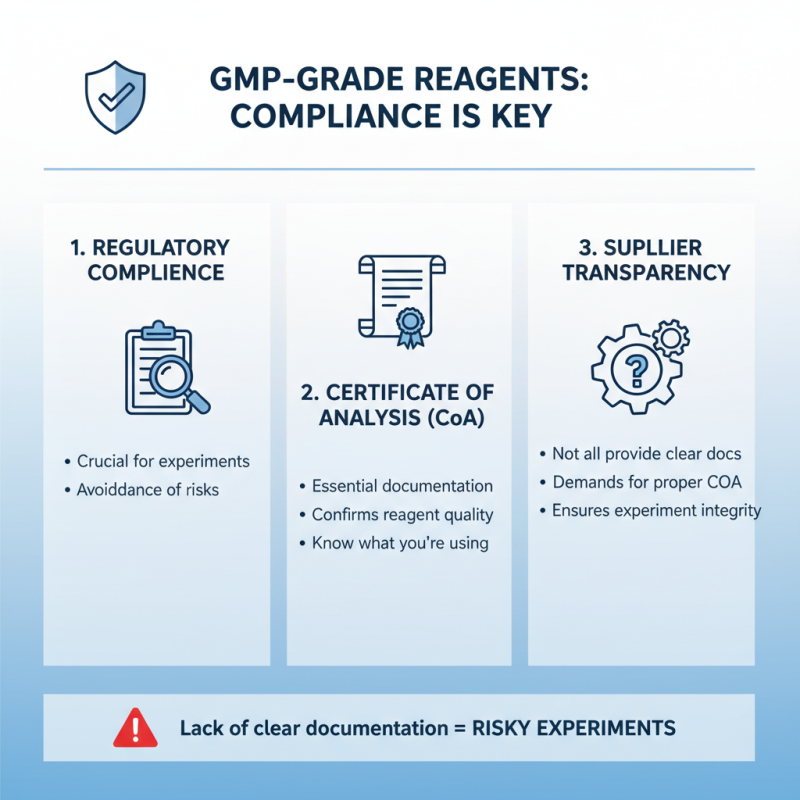
When selecting GMP-grade reagents, regulatory compliance is crucial. Documentation is often overwhelming. Each reagent should come with a certificate of analysis (CoA). This ensures that you know what you are using. Not all suppliers may provide clear documentation. This can place your experiments at risk.
Consider the traceability of Gmp-Grade Raw Materials. Each batch should have proper records. Non-compliance can lead to serious consequences. Are you confident in your source? Regular audits can help maintain standards. However, keeping up with regulatory changes can be difficult.
Documentation should be accessible. It must detail the source and quality tests conducted. Still, some laboratories overlook this aspect. This oversight can lead to errors in research. A strong focus on compliance can enhance your reliability. But don't underestimate the complexity of this process. It requires constant vigilance and regular updates.
Exploring the Benefits and Applications of GMP-Grade CD3 Magnetic Beads for Enhanced Immunology Research
GMP-grade CD3 magnetic beads represent a cutting-edge advancement in immunology research, offering unparalleled benefits in cell separation and analysis. These beads are produced under Good Manufacturing Practice (GMP) standards, ensuring high purity and consistency, which are crucial for obtaining reliable experimental results. By enabling targeted isolation of CD3+ T cells, researchers can gain deeper insights into immunological responses, facilitating the development of novel therapies and vaccines.
The applications of GMP-grade CD3 magnetic beads extend beyond basic research. They are instrumental in the study of autoimmune diseases, cancer immunotherapy, and infectious diseases, where understanding T cell dynamics is vital. Their ease of use and reproducibility significantly streamline experimental workflows, empowering scientists to focus on data generation rather than the complexities of cell isolation methods. The availability of products like the GMP-TL622 model, which are currently in stock, further supports researchers looking to enhance their methodologies with superior tools.
Incorporating these magnetic beads into research protocols can lead to more effective investigations into T cell biology and other immune responses, fostering innovation in therapeutic strategies. As immunology continues to evolve, the role of high-quality materials, like GMP-grade CD3 magnetic beads, becomes increasingly critical in driving scientific discovery and advancing healthcare solutions.
FAQS
: The article discusses effective strategies for personal development and growth.
It enhances self-awareness and improves overall well-being.
Begin with setting clear, achievable goals. Reflect on your strengths and weaknesses.
Yes, techniques include journaling, mindfulness, and seeking feedback.
Regularly assess your goals, ideally monthly, to stay on track.
It can be. Take small steps and celebrate minor achievements along the way.
Challenges are normal. Adapt your strategies and continue pushing forward.
While it’s not mandatory, getting support can provide valuable insights and motivation.
Create a vision board or remind yourself why you started in the first place.
Growth takes time. Reflect on your efforts and stay committed, even if progress seems slow.
Conclusion
Choosing GMP-grade reagents for your laboratory is a critical process that ensures quality and reliability in experimental outcomes. Understanding GMP standards is fundamental, as these guidelines are designed to assure that laboratory reagents meet specific quality criteria. Identifying the types of reagents necessary for your experiments is the first step, followed by evaluating the qualifications of potential suppliers to confirm their compliance with GMP standards.
Furthermore, assessing the quality control processes implemented by reagent manufacturers is essential to ensure consistent product quality. Compatibility of the reagents with existing laboratory processes and equipment should also be examined to avoid complications. Additionally, establishing budget constraints and considering regulatory compliance and necessary documentation will help in making informed decisions when selecting GMP-grade reagents for your laboratory. Ultimately, a careful approach in each of these areas will lead to improved reliability and efficiency in laboratory operations.