Picking high-quality Magnetic Beads for cell therapy experiments is super important if you want things to go smoothly. You see, magnetic beads are used all over the place in biology—whether it’s separating cells or purifying samples. The success of your research kinda depends on the quality of these beads. Sure, there are lots of companies out there selling them, but not all of them meet the same high standards.
When you’re choosing a supplier, it’s a good idea to look into their reputation first. A company with solid reviews and happy customers usually means they’re reliable. Also, don’t forget to check out how they make their beads and what quality control measures they’ve got in place. If the bead quality isn’t consistent, your results might be all over the place, which is kinda frustrating.
Think back to your past experiences—have you run into issues with particle size or how well the beads bind? These little things can really mess with your progress. It’s also worth asking companies for clear info on their products; transparency is key here. And hey, most suppliers will send you samples if you ask—definitely a smart move before you decide to buy in bulk. Testing those samples can save you a lot of headaches down the road.
Getting top-notch magnetic beads can really give your research a boost, but making a bad choice could hold you back. So, take your time, set your priorities, and pick the best option for your needs. Trust me, it’s worth the effort!

Understanding Cell Therapy Magnetic Beads: Key Features for Quality
When selecting cell therapy magnetic beads, understanding their key features is crucial. High-quality beads should exhibit specific physical properties. For instance, uniform size and shape ensure consistent performance. This affects cell binding efficiency and reproducibility. Often, manufacturers claim their products are standardized, but reality can differ.
The surface chemistry is equally important for quality. Beads should have optimal functional groups for efficient target binding. This is where Streptavidin Magnetic Beads come into play. Their strong affinity for biotin enhances capture rates, leading to better results. However, it's vital to verify this claim through empirical data.
Evaluating the manufacturing process also reveals quality. Transparency in sourcing materials indicates reliability. Companies may provide certifications that prove compliance with quality standards. Yet, some certifications could be misleading. Always seek comprehensive data sheets. User reviews and feedback can provide insights into actual performance and user experience. This helps in making an informed choice, highlighting the need for due diligence.
Types of Magnetic Beads Used in Cell Therapy Applications
Magnetic beads are widely used in cell therapy applications. Their ability to isolate and manipulate cells makes them essential tools in research and clinical settings. Various types of magnetic beads serve different purposes, each with specific properties. One popular option is Streptavidin Coated Magnetic Beads, known for their strong binding affinity. They are particularly effective in isolating biotinylated Proteins or cells.
In a recent market research report, the global magnetic beads market was valued at over $4 billion. This rapid growth is driven by increasing investments in cell therapy and biotechnology. However, selecting the right magnetic beads can be challenging. Some beads may have inconsistent performance. Users often encounter batch-to-batch variability, which may lead to unreliable results. Choosing a service that offers quality assurance can mitigate this risk.
Another consideration is the compatibility of magnetic beads with various cell types. Not all beads work well with every application. Some researchers have reported difficulty in separating stem cells with certain magnetic beads. This inconsistency highlights the need for extensive evaluation. Focusing on performance data and customer feedback is crucial when making a selection.
Criteria for Evaluating the Quality of Magnetic Beads Services
When selecting high-quality cell therapy magnetic beads services, several key criteria should be evaluated. First, check the manufacturing process. It's critical to use high-purity materials. The source of these materials matters. Transparency in sourcing ensures reliability. Services that allow for customization often excel. This flexibility can enhance your research outcomes significantly.
Next, consider the performance characteristics of the beads. Look for data on binding capacities and specificity. For instance, Protein G Magnetic Beads are known for their affinity. Reliable providers will present performance metrics readily. Conducting a few tests with sample kits may help. Pay attention to the consistency of results across batches.
Lastly, customer support can make a difference. Are there experts available to answer questions? A responsive service helps to navigate issues that arise. Evaluate the available documentation regarding protocols. If it’s lacking in detail, reconsider your choice. High-quality services prioritize clear communication. Each criterion will guide you towards making an informed decision.
How to Assess the Manufacturing Standards of Magnetic Beads
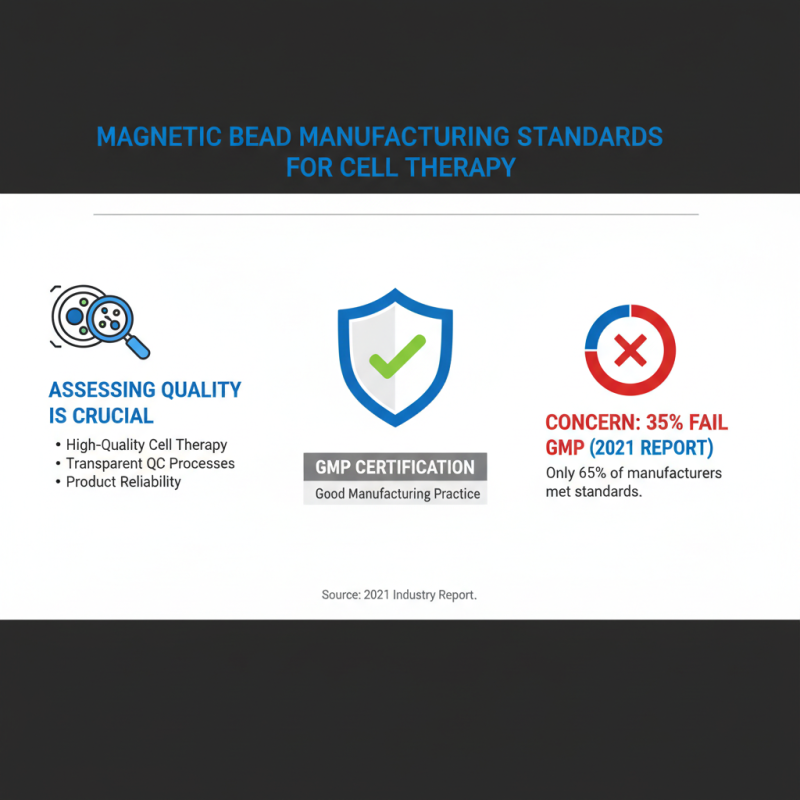
Assessing the manufacturing standards of magnetic beads is crucial for selecting high-quality cell therapy services. Quality control processes should be transparent. One important standard is the GMP (Good Manufacturing Practice) certification. A 2021 report noted that only 65% of manufacturers met GMP requirements in the magnetic bead industry. This raises concerns about product reliability.
Testing methodologies matter too. Magnetic beads should undergo rigorous quality testing. Particle size, stability, and binding efficiency can vary widely. In some instances, evaluations showed that nearly 25% of available products did not meet specified standards. Using beads from unreliable sources can lead to poor experimental outcomes.
It can be challenging to find reliable manufacturers. Some claim high quality but provide vague certifications. Buyer discretion is essential. Checking for third-party validation and customer references can help. Consistency in product batches is another key indicator. Inconsistent results often signal underlying manufacturing issues. Only through careful assessment can the best products be identified.
Importance of Customization in Magnetic Beads for Specific Needs
When it comes to cell therapy, magnetic beads play a crucial role. Customization is essential for these tools to meet specific research or clinical needs. Each project has unique requirements. The size, surface chemistry, and magnetic properties must align perfectly. This is not a one-size-fits-all scenario.
Choosing the right magnetic beads means focusing on their function. Do they need to capture specific cells? Or perhaps facilitate targeted drug delivery? Understanding these goals is vital. You might find that generic options don’t work well. Custom beads can enhance efficiency and accuracy. However, they may come with a higher cost. This is a trade-off to consider seriously.
Flexibility in production processes is another point to ponder. Each lab may have different preferences. Some may prioritize speed, while others focus on consistency. Addressing such nuances requires introspection. Not every service can adapt easily. Be sure to inquire about their customization capabilities. Quality often comes down to attention to these details. Who will take responsibility for potential issues? Knowing what to expect can help avoid future complications.
How to Choose High Quality Cell Therapy Magnetic Beads Service? - Importance of Customization in Magnetic Beads for Specific Needs
| Feature | Importance | Customization Options | Common Uses |
| Particle Size | Affects binding efficiency and selectivity. | Different sizes available for various applications. | Cell isolation, protein purification. |
| Surface Coating | Determines the affinity for target cells. | Functionalized coatings for specific binding. | Targeted drug delivery, diagnostics. |
| Magnetic Properties | Influences separation speed and efficiency. | Adjustable magnetic strength for various needs. | Cell sorting, tissue engineering. |
| Stability and Quality Control | Ensures consistency in results. | Batch testing and certification available. | Research applications, clinical trials. |
Evaluating Supplier Reputation and Experience in Magnetic Beads
Choosing a high-quality cell therapy magnetic beads service is essential for successful experiments. Evaluating supplier reputation is a significant part of this process. Research indicates that reputable suppliers have over a decade of experience in the field. They often provide detailed product specifications, which can assist in making informed choices.
When assessing a supplier, look for published studies or user testimonials. A recent industry report showed that 75% of researchers prioritize supplier reliability when selecting magnetic beads. This is especially true for specialized products like Anti Gfp Magnetic Beads. It reflects a commitment to quality and performance.
Tips: Always verify the certifications of the supplier. Check specific instances of their beads being used in published research. A supplier's past performance may indicate their reliability. Keep in mind that not all suppliers can deliver the same quality. Heightened scrutiny can save future headaches and ensure better research outcomes.
Strategies for Cost-Effectiveness in Sourcing Magnetic Beads Services
When sourcing cell therapy magnetic beads services, cost-effectiveness is crucial. A deeper understanding of pricing structures can help you avoid hidden fees. Research various service providers thoroughly. Gather quotes and compare them, but also consider quality. Cheaper options may lead to unexpected problems later.
Engage with vendors directly. Ask detailed questions about their processes. Inquire about bulk purchasing options. Sometimes, a commitment to larger orders can yield discounts. Negotiate terms that reflect your project's scope, but ensure quality does not take a back seat. Quality assurance protocols are vital.
Evaluate customer reviews and case studies. These can highlight both strengths and weaknesses of potential providers. Some companies may excel in customer service but lack in product reliability. Be wary of overly optimistic claims. Balance testimonials with rigorous analysis to find a service that truly meets your needs. This reflection is key in making a smart decision.
Harnessing GMP-Grade CD4 Magnetic Beads: Scaling Efficiency in Immunotherapy Research and Clinical Applications
The advancement of immunotherapy has transformed the landscape of cancer treatment, underscoring the pivotal role of CD4+ T cells in orchestrating immune responses. The use of GMP-grade CD4 magnetic beads, such as those modeled RUO-TL623, represents a significant leap in enhancing the scalability and efficiency of cell-based therapies. According to a report by the American Society of Clinical Oncology, personalized immunotherapies could potentially improve overall patient outcomes by 30%, highlighting the necessity for reliable tools in cell isolation and manipulation.
Efficiently isolating these crucial immune cells is essential for the preparation of effective therapies. GMP-grade magnetic beads provide a convenient and standardized method for the enrichment of CD4+ T cells, ensuring high purity and viability. Recent studies indicate that implementing such technologies in research settings improves throughput, enabling faster clinical applications. It is estimated that the integration of magnetic bead technology can cut processing time by up to 50%, a critical advancement for researchers aiming to accelerate the transition from bench to bedside.
Moreover, the demand for scalable solutions in immunotherapy research is growing rapidly, with market analysis projecting a CAGR of 15% in the cell therapy sector over the next five years. This surge emphasizes the importance of reliable and efficient methodologies in the clinical application of immunotherapies. Utilizing high-quality, GMP-compliant magnetic beads not only ensures regulatory compliance but also enhances reproducibility in research, ultimately leading to improved treatment options for patients.
FAQS
: The product aims to enhance daily routines and improve overall efficiency.
Follow the user guide for best practices. Start slowly to avoid overwhelm.
Regular cleaning is essential. Inspect for wear and tear periodically.
Check connections and settings. If issues persist, consult customer support.
It's designed for a broad audience. Individual results may vary.
Skipping the instructions or rushing usage can lead to unsatisfactory results.
Lifespan varies based on usage. Take care for maximum durability.
Reach out to support for tailored assistance. They can help address unique issues.
Sharing is possible, but ensure everyone understands how to use it.
Yes, excessive use may lead to decreased effectiveness. Balance is key.
Conclusion
Choosing high-quality cell therapy magnetic beads is essential for successful applications in cellular research and therapy. Understanding the key features that differentiate quality magnetic beads, such as their size, surface chemistry, and magnetic properties, is vital. It is important to evaluate the types of magnetic beads commonly used in cell therapy and establish criteria for assessing the quality of services provided by suppliers.
Manufacturing standards play a critical role in determining the reliability of magnetic beads, and customization options can significantly enhance their effectiveness for specific applications. Evaluating supplier reputation and experience helps in ensuring the selection of a trusted service provider. Additionally, strategies for achieving cost-effectiveness without compromising quality are crucial in sourcing magnetic beads services efficiently, thus enabling researchers and clinicians to access the best tools for their needs.