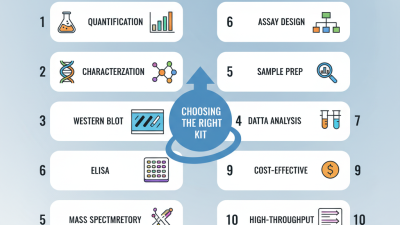
Picking the right Protein Analysis Kits is pretty key when you're trying to make your lab run smoothly. There are so many options out there, each with its own set of features and perks, so really understanding what your lab needs is a big deal.
Think about things like sensitivity and specificity. Some kits are fantastic at catching really low levels of Proteins, while others are built for crunching through a ton of samples quickly. And be aware— not all kits give you the full picture. You might see some differences in results depending on the brand you go with.
It's also worth considering the costs. Just because a kit is pricey doesn’t automatically mean it’s better. For instance, companies like Bio-Rad tend to have more expensive kits, but they often deliver consistent, reliable results. Do some digging— check out reviews and comparisons to find what's truly trustworthy.
At the end of the day, your choice should match your lab’s goals and budget. The goal is to find solutions that not only give you accurate results but also support innovative research. It's kind of a balancing act, but with a little research, you’ll find what works best for you.

Understanding Protein Analysis: An Overview of Key Techniques
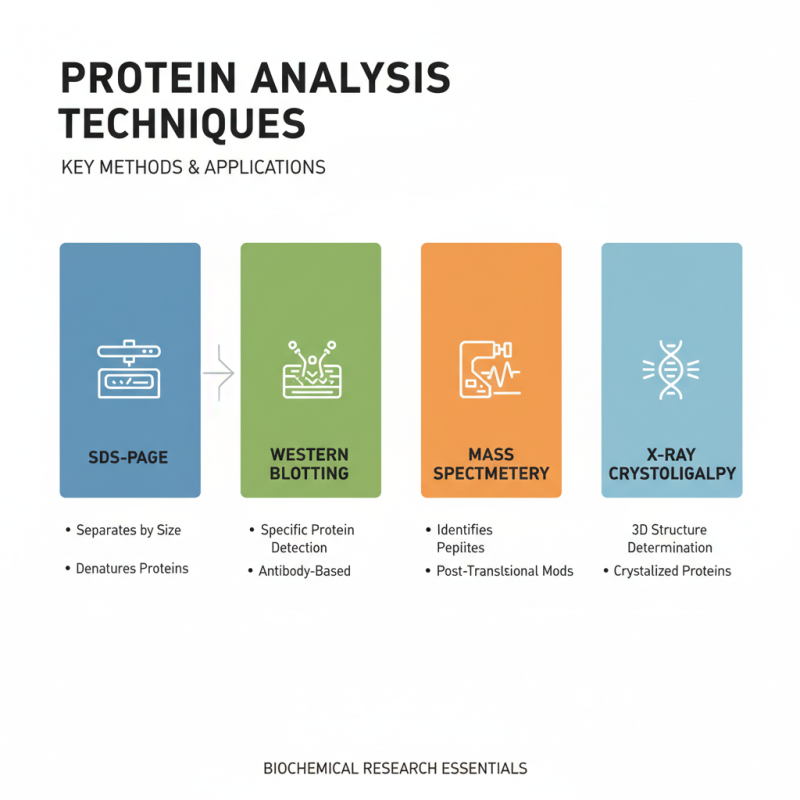
Protein Analysis is a critical aspect of biochemical research. Various techniques aid in understanding protein structure and function. Each has its strengths and limitations. For instance, SDS-PAGE allows separation based on size, but it does not retain functional properties. Western blotting provides specificity but can miss broader interactions.
When selecting Protein Analysis Kits, consider the methods available. Mass spectrometry is precise, yet it requires technical expertise. Enzyme-linked immunosorbent assays (ELISAs) offer a balance of simplicity and sensitivity. However, cross-reactivity could lead to misleading results.Bio-Rad Protein Analysis Kits For European Pharmaceutical Companies fit specific needs, but not all labs may find them suitable.
It's essential to recognize the context of your experiments. The chosen method may not always align perfectly with your goals. Limitations in detection sensitivity or specificity can skew your data. Being aware of these shortcomings is crucial for valid results. Adaptability is key in protein analysis, and ongoing evaluation of techniques is vital for improvement.
Identifying Your Lab's Specific Protein Analysis Needs
When it comes to protein analysis, understanding your lab's specific needs is crucial. Do you focus on quantification or protein interactions? Each task demands different methods and reagents. For instance, if you need high sensitivity, consider fluorescence-based assays. But do you have the expertise to interpret complex data? This question requires reflection.
Custom Protein Analysis Kits can be tailored to fit unique requirements. Think about the sample types you handle most frequently. Do they require specific buffers or additives? Additionally, some kits may not perform well with certain impurities. Careful consideration of your samples ensures better results. Reach out to colleagues for their experiences, as peer feedback often reveals hidden pitfalls.
Lastly, consider your budget. High-end kits may seem appealing, but do they offer value for your lab's priorities? It’s essential to balance quality and cost. Invest time in testing different kits, as that’s where the learning happens. Experimentation may reveal unexpected challenges. Stay flexible and be ready to rethink your choices.
Evaluating the Types of Protein Analysis Kits Available
When evaluating protein analysis kits, it's crucial to understand the different types available. High-Performance Liquid Chromatography (HPLC) kits are popular for separating proteins with high precision. A recent study indicates that over 40% of laboratories rely on HPLC due to its effectiveness in analyzing complex samples. However, the setup can be costly and time-consuming.
Enzyme-Linked Immunosorbent Assay (ELISA) kits offer a simpler alternative. They are user-friendly and ideal for quantifying specific proteins. According to industry reports, ELISA kits account for about 30% of the market. Yet, they may lack the sensitivity of HPLC in certain applications. This limitation raises questions for labs with high-performance demands.
Mass Spectrometry (MS) represents another robust option for protein analysis. MS kits are excellent for characterizing proteins at a molecular level. However, they require expert knowledge to operate effectively. Misinterpretation of data can lead to significant errors in research outcomes. Many labs face a steep learning curve with MS techniques, which may not be suitable for all users. Evaluating these diverse kit types ensures that labs can choose solutions that best meet their unique needs and challenges.
Key Features to Look for in Protein Analysis Kits
Selecting the right protein analysis kits is crucial for any lab. Several key features should guide your choice. Firstly, consider the sensitivity of the kit. Reports indicate that kits with higher sensitivity can detect proteins at lower concentrations, which is essential for various applications. Specificity is another vital factor. The best kits target specific proteins without cross-reactivity, reducing false positives.
Tip: Always check the validation data in product manuals. This data supports claims made by the manufacturer. It helps ensure you choose a kit that meets your specific needs.
Another critical aspect is the ease of use. Complex protocols can lead to errors and wasted resources. User-friendly kits, with clear instructions, are often preferred. A study from the Journal of Proteomics shows that simplified workflows can enhance the accuracy of protein quantification. Additionally, consider the available support services. Good Protein Analysis Kits Service often provides troubleshooting and protocol optimization.
Tip: Look for online resources like forums or user reviews. They can provide insights into the real-world performance of kits. A bit of research can save you time and improve your experiments.
Flexibility is also important. Kits that accommodate various samples, like serum or cell lysates, offer broader applications. However, kits with too many features can sometimes complicate usage, leading to confusion. Balancing these aspects is key for any lab’s success.
Comparative Analysis of Popular Protein Analysis Kit Brands
When selecting protein analysis kits, various brands offer distinct advantages and limitations. A recent industry report shows that certain kits excel in specificity. However, sensitivity can vary widely across brands. For instance, sensitivity levels can range from 60% to 90% in different products. This can substantially influence experimental outcomes.
Cost is another crucial factor. Some popular kits may appear affordable at first glance. However, hidden costs emerge through required reagents and consumables. A study indicated that about 30% of researchers underestimated these additional expenses. This often leads to budget overruns and sourcing issues.
User feedback highlights usability differences. While some kits provide clear protocols, others lack guidance, causing user frustration. A survey noted that 25% of users reported difficulties with complex instructions. Such feedback suggests a need for improved clarity and support. Therefore, while features like reproducibility and robustness are essential, the overall user experience must not be overlooked.
Cost Considerations in Selecting Protein Analysis Kits
When selecting protein analysis kits, cost is a crucial factor. Reports indicate that laboratory budgets often dictate research capabilities. In fact, nearly 50% of labs limit their purchasing decisions based on budget constraints. It’s important to compare prices without compromising quality. Cheaper kits may save money upfront but could lead to unreliable results and wasted resources later.
Many suppliers offer various price ranges for similar kits, which can be confusing. A study found that labs that carefully assess the cost-to-benefit ratio of their purchases report better outcomes. For instance, investing in a mid-range Protein Analysis Kits Supplier often yields more consistent performance than opting for the cheapest option.
Moreover, it's vital to consider hidden costs, such as reagents and maintenance. Some kits may require additional components, driving up overall expenses. Price shouldn't be the only consideration. While saving money is important, effective and reliable protein analysis can enhance the validity of research findings. Reducing costs at the expense of quality can lead to long-term consequences that aren’t immediately apparent.
Tips for Effective Use and Maintenance of Protein Analysis Kits
When using protein analysis kits, proper technique is key. Follow the manufacturer's instructions closely. Ensure all reagents are fresh and within expiration dates. Contamination can ruin your results, so always use clean pipette tips. Store kits at recommended temperatures. A dedicated storage area helps maintain their integrity.
Regular maintenance is crucial for consistent performance. Clean all equipment after each use. This prevents cross-contamination and preserves your samples. It's beneficial to log usage and any observations. This simple practice can reveal patterns over time. Make notes on what works and what doesn’t.
Don’t hesitate to troubleshoot if something seems off. Sometimes results can be inconsistent. Keeping a detailed lab notebook can help you identify potential issues. Reflect on your techniques and make adjustments as needed. This continuous improvement process can enhance your skill in using these kits effectively.
How to Choose the Best Protein Analysis Kits for Your Lab? - Tips for Effective Use and Maintenance of Protein Analysis Kits
| Criteria | Description | Importance (1-5) | Recommended Actions |
| Sensitivity | Ability to detect low concentrations of proteins | 5 | Choose kits with lower detection limits for precise quantification. |
| Specificity | Ability to accurately measure target proteins without interference | 5 | Select kits designed for the specific proteins of interest. |
| Ease of Use | User-friendly protocols and minimal hands-on time | 4 | Opt for kits with clear instructions and intuitive workflows. |
| Cost | Price per test and overall cost of the kit | 3 | Evaluate cost-effectiveness against performance metrics. |
| Stability | Shelf life and reliability under storage conditions | 4 | Check expiration dates and storage recommendations carefully. |
| Support | Availability of technical support and troubleshooting resources | 4 | Choose suppliers that provide robust customer support. |
Exploring the Role and Applications of Recombinant Human IL-21 Protein in Immunotherapy and Disease Management
Recombinant Human IL-21 Protein is gaining traction in immunotherapy and disease management due to its pivotal role in modulating immune responses. This cytokine, primarily produced by T cells, enhances the proliferation and differentiation of various immune cell types, including B cells and NK cells. Its ability to stimulate these cells makes IL-21 a potent candidate for therapeutic interventions in autoimmune disorders, cancers, and viral infections. The exploration of IL-21's applications has unveiled its potential in enhancing the efficacy of existing treatment regimens and even paving the way for novel therapies.
In the context of its applications, the GMP-TL509 model of Recombinant Human IL-21 Protein is designed with high standards for quality and consistency, crucial for research and clinical settings. Being readily available, it facilitates investigations into the mechanisms of immune modulation and supports the development of innovative treatment protocols. The integration of IL-21 into experimental therapies offers a promising avenue to improve patient outcomes through targeted immune enhancement, making it a critical substance in the ongoing battle against various diseases.
FAQS
: The article aims to inform readers about specific topics and provide valuable insights.
The intended audience includes individuals looking for knowledge and practical advice.
Readers can implement the advice in real-life situations for better outcomes.
Reflect on your own circumstances and ensure the information aligns with your needs.
Yes, many may underestimate the effort required for successful application.
Regularly review the content to deepen your understanding and adjust your approach.
You may face obstacles or unexpected outcomes; adapting is key to overcoming them.
No, results can vary based on individual situations and external factors.
Seeking help from others can provide new perspectives and solutions to difficulties.
Stay curious and keep learning; growth comes from ongoing reflection and effort.
Conclusion
Choosing the right Protein Analysis Kits is crucial for any laboratory aiming to conduct effective protein research. The article emphasizes understanding the various techniques involved in protein analysis, which provides a foundational knowledge necessary for selecting appropriate kits. It also stresses the importance of identifying the specific needs of your lab, as different experiments may require tailored approaches.
The evaluation of available Protein Analysis Kits is highlighted, focusing on essential features such as sensitivity, specificity, and ease of use. Additionally, cost considerations play a significant role in decision-making, ensuring that labs can optimize their budgets without compromising quality. Finally, the article offers practical tips for the effective use and maintenance of these kits, ensuring reliable results and prolonging their lifespan in the lab.