In the fast-changing world of clinical research, it’s honestly hard to underestimate just how important Clinical Research Toolsreally are. A rEport from Grand View Research threw out some pretty eye-opening numbers — in 2022, the global market for clinical trial management systems hit around $1.68 billion, and they’re expected to grow at a rate of about 14.3% annually from 2023 all the way to 2030. That kind of growth really shows how much researchers are leaning on specialized tools to manage studies more efficiently.
These tools make a big difference — they boost data accuracy and help streamline the entire process. Take Electronic Data Capture (EDC) systems, for example: they’re great at cutting down data entry errors. Considering that almost 97% of clinical trial protocols run into issues because of poor data management (yep, that’s from Clinical Trials Arena), that’s pretty significant. But, hey, it’s not all smooth sailing. Even with these advances, the industry still faces some hurdles — mainly, getting everything to work seamlessly together and making sure researchers actually adopt and feel comfortable using these tools. Some folks find the systems a bit complicated, which can slow things down.
That’s why it’s so key to tackle these issues head-on. Industry experts keep talking about the importance of providing good training and designing more user-friendly tools. As the whole clinical research landscape keeps evolving, putting your money into the right tools isn’t just smart — it’s essential for running successful studies and, ultimately, improving patient outcomes.

The Role of Clinical Research Tools in Data Collection and Management
Clinical Research Tools play a vital role in data collection and management, ensuring accuracy and efficiency. These tools streamline processes, allowing researchers to gather relevant data seamlessly. They support various phases of a study, from designing protocols to monitoring patient outcomes. Researchers often face challenges in maintaining data integrity and compliance. Effective tools help mitigate these issues by providing structured frameworks and real-time data analysis capabilities.
Moreover, the integration of Clinical Research Project Management Tools enhances collaboration among research teams. These tools promote transparent communication, enabling members to share insights and updates swiftly. However, not all tools are created equal. Some may lack user-friendliness or data integration features, leading to frustration. It’s essential for teams to assess their specific needs before selecting tools.
The importance of training cannot be overstated. Even the best tools can fall short without proper understanding. Researchers must invest time in learning how to utilize these tools effectively. This can prevent future issues with data collection and analysis. Ultimately, successful clinical research relies on the right tools and the right knowledge to leverage them effectively.
Why Are Clinical Research Tools Essential for Successful Studies?
| Dimension | Description | Importance | Example Tools |
| Data Collection | Tools that gather data from participants, clinicians, and laboratories. | Ensures accurate and comprehensive data is captured. | Electronic Data Capture (EDC) systems, Surveys. |
| Data Management | Systems for organizing and storing collected data. | Facilitates data accessibility and integrity. | Clinical Trial Management Systems (CTMS). |
| Data Analysis | Tools for statistical analysis and interpretation of data. | Identifies trends and outcomes vital for research conclusions. | Statistical software (e.g., SPSS, SAS). |
| Compliance Monitoring | Tools to ensure research adheres to regulations and protocols. | Protects participant rights and enforces ethical standards. | Audit and monitoring systems. |
| Communication | Platforms that facilitate information sharing among stakeholders. | Enhances collaboration and timely decision-making. | Research Collaboration Tools, Team Messaging Apps. |
Importance of Reliable Data in Clinical Trials for Regulatory Compliance
In clinical trials, reliable data is crucial. It forms the backbone of regulatory compliance. Regulators require accurate data to assess the safety and efficacy of treatments. Flawed data can lead to severe consequences, resulting in delayed approvals or financial losses. Each data point must be precise and meticulously collected.
The complexity of clinical research demands robust tools. These tools ensure data integrity and enable clear tracking of trial progress. Researchers often face challenges, such as variability in patient responses or incomplete information. Using reliable instruments can minimize these issues. Consistency in data collection processes is essential to maintain quality.
Many studies falter due to overlooked details. Even minor discrepancies can raise questions about a trial's validity. As researchers navigate this landscape, they must cultivate an environment where data accuracy is prioritized. Continued education and training are vital for maintaining high standards in data management.
Importance of Reliable Data in Clinical Trials for Regulatory Compliance
Impact of Technology on Efficiency and Accuracy in Clinical Research
In clinical research, accuracy and efficiency are crucial. Technology plays a pivotal role in enhancing these aspects. Using advanced tools helps streamline processes. For instance, data collection becomes faster with electronic systems. They reduce human error and improve data integrity. Clinical Research Associate Monitoring Tools are integral for real-time oversight. They enable researchers to track trial progress effectively.
However, challenges exist. Not every technology integrates smoothly with existing systems. Researchers may face resistance to adopting new tools. Lack of training can hinder the potential benefits. It's essential to invest in proper onboarding. Even the best technologies can falter without adequate support. Continuous improvement in using these tools is necessary for success.
Furthermore, not all data analysis tools provide clear insights. Some may generate complex reports that are hard to interpret. It's vital to choose user-friendly options. This way, researchers can focus on making informed decisions. Despite potential obstacles, leveraging technology remains key in clinical research.
Comparison of Traditional vs. Modern Clinical Research Tools
The landscape of clinical research tools has evolved dramatically. Traditional tools such as paper-based forms and spreadsheets were once the standard. These methods often led to errors and data loss. Handling large volumes of paper is cumbersome. Furthermore, privacy concerns present challenges regarding patient data security.
In contrast, modern clinical research tools offer streamlined solutions. Electronic data capture systems enhance data accuracy with real-time updates. Research teams can access information instantly, facilitating quicker decision-making. Tools like Clinical Research Monitoring Tools ensure compliance and accountability throughout the study. However, adopting new technology requires training and adjustments. Staff may resist change, fearing it could complicate established processes.
Despite their advantages, modern tools are not flawless. Technical issues can disrupt research timelines. Additionally, over-reliance on technology may overshadow the importance of personal oversight. Balancing the use of modern systems with thorough human analysis remains critical. Researchers must navigate these challenges to optimize study outcomes effectively.
Case Studies: Successful Studies Driven by Advanced Research Tools
Advanced research tools have transformed clinical studies, leading to noteworthy successes. A report by the Clinical Trials Transformation Initiative states that proper data management can reduce trial costs by up to 25%. Case studies of successful trials highlight this trend. For example, a recent oncology trial utilized real-time data analytics. This led to faster patient recruitment and improved outcomes, demonstrating the power of technology in clinical research.
Utilizing electronic data capture systems can also enhance accuracy. A survey by BioPharma Dive found that 72% of researchers believe these tools significantly cut down on data entry errors. These systems streamline workflows, ensuring reliable data collection. Yet, studies still face challenges. Some trials struggle with patient engagement or data integration, revealing areas for improvement.
Tip: Always ensure that your team is trained to use research tools effectively. This training can reduce errors and increase project success rates. Invest time in technology assessments. Ensuring the right tools fit your research needs can lead to significant outcomes. Each project presents unique hurdles, demanding ongoing reflection and adaptation.
Future Trends in Clinical Research Tools and Their Potential Impact
The evolution of clinical research tools is closely tied to emerging trends that promise to shape the future of healthcare. Artificial intelligence (AI) is increasingly influential. According to the Gartner report, AI could reduce clinical trial costs by up to 30% by enhancing data analysis and patient recruitment processes. This potential is significant, as current trial costs average around $2.6 billion, making efficiency improvements crucial.
Another trend is the rise of remote monitoring tools. A recent survey from the Clinical Trials Transformation Initiative reveals that 70% of researchers expect remote technologies to enhance patient engagement. However, challenges exist. Integrating real-time data collection with existing systems can be cumbersome. There’s also the risk of data privacy issues. Stakeholders must prioritize security measures while embracing innovation.
The shift towards patient-centric approaches is palpable. Data from the Center for Information & Study on Clinical Research Participation indicates that 94% of participants want to be more involved in the research process. Tools that facilitate this engagement can significantly increase recruitment and retention rates. Yet, the industry must address the digital divide to ensure all potential participants are reached effectively.
Key Metrics for Evaluating the Effectiveness of Research Instruments
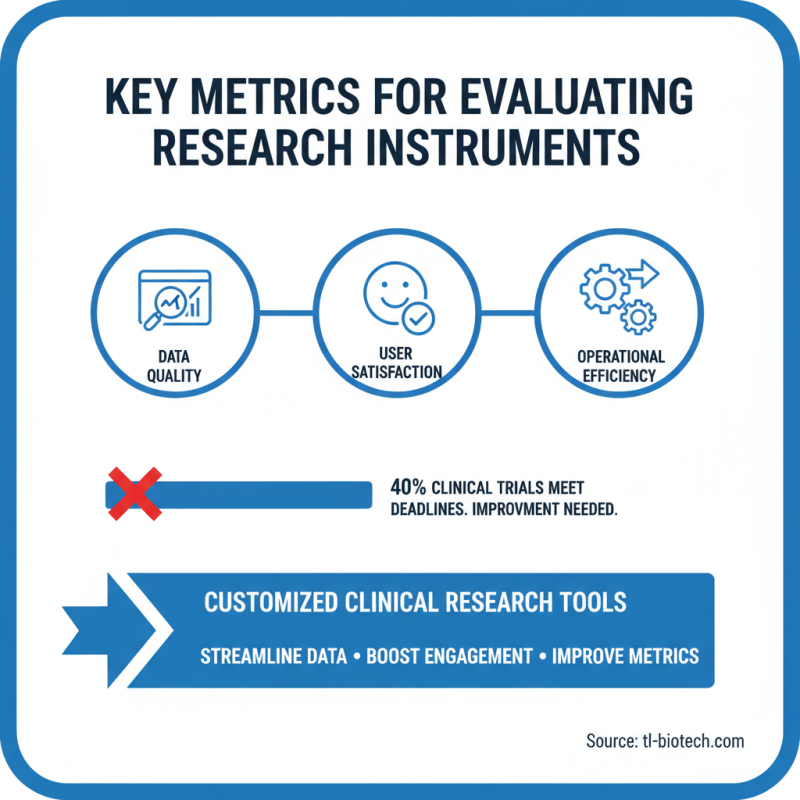
In the realm of clinical research, evaluating the effectiveness of research instruments is crucial. Key metrics include data quality, user satisfaction, and operational efficiency. Recent studies indicate that only about 40% of clinical trials meet their original timelines, a clear sign that improvement is necessary. Custom Clinical Research Tools can significantly contribute to enhancing these metrics. Leveraging tailored solutions can streamline data collection and improve participant engagement.
User satisfaction is often overlooked. Surveys show that 70% of researchers feel overwhelmed by inadequate tools. This dissatisfaction can lead to poorer data quality and missed opportunities for insights. Investing in Custom Clinical Research Tools can address these concerns, fostering a more positive research environment while ensuring reliable data collection.
Operational efficiency is another essential metric. A report by the Clinical Trials Transformation Initiative noted that optimizing workflows can reduce trial costs by up to 30%. However, many researchers continue to rely on outdated methods, resulting in inefficiencies. Custom Clinical Research Tools can automate processes, reduce errors, and ultimately enhance productivity. It’s essential for organizations to assess their current tools critically and remain open to innovations that might better serve their objectives.
FAQS
: Clinical research tools help in data collection and management. They ensure accuracy and efficiency throughout the research process.
Modern tools like electronic data capture systems offer real-time updates. Traditional methods often lead to errors and data loss.
Researchers struggle with maintaining data integrity and compliance. Effective tools can help mitigate these issues through structured frameworks.
Without proper training, even the best tools may not be used effectively. Understanding how to utilize them can prevent future issues.
Key metrics include data quality, user satisfaction, and operational efficiency. These metrics determine the effectiveness of research tools.
Only about 40% of clinical trials meet their original timelines. This indicates a need for improvement in the research process.
Inadequate tools lead to 70% of researchers feeling overwhelmed. This dissatisfaction can result in poorer data quality and missed insights.
Optimizing workflows can reduce trial costs by up to 30%. Many researchers still use outdated methods that can hinder efficiency.
Staff may resist changes due to fears of complicating established processes. Balancing new tools with personal oversight is crucial.
Modern tools can experience technical issues that disrupt timelines. Overreliance on technology may overshadow the importance of human analysis.
Conclusion
Clinical Research Tools play a crucial role in enhancing the efficiency and effectiveness of clinical studies by facilitating comprehensive data collection and management. Reliable data is essential for ensuring regulatory compliance in clinical trials, and the advancement of technology has significantly improved both the accuracy and efficiency of research processes. By comparing traditional methods with modern tools, it's evident that the latter supports more agile and precise data handling, which is essential for successful outcomes.
Case studies highlight how advanced Clinical Research Tools have driven numerous successful studies, showcasing their transformative impact on research methodologies. As we look to the future, emerging trends in clinical research tools promise to further revolutionize the field, improving outcomes and fostering innovation. Key metrics will remain vital in evaluating the effectiveness of these instruments, ensuring that they continue to meet the evolving needs of clinical research.