Have you checked out [Magnetic Bead Reagents](https://www.tl-biotech.com/magnetic-bead-reagents)? They've been getting a lot of buzz in the biotech world lately. These tiny tools are pretty amazing—they make it way easier to separate and purify biomolecules. Dr. Richard Thompson, who's a top expert in molecular biology over at BioTech Innovations, even says, “Magnetic Bead Reagents are truly changing how we do nucleic acid extraction.” Honestly, they’re really stepping up the game and boosting lab productivity all around.
What’s really cool about Magnetic Bead Reagents is how versatile they are. People are using them for all kinds of stuff—diagnostics, DNA extraction, protein purification—you name it. They’re super specific and pretty sensitive, which is exactly what you want when you're after reliable results. That said, it’s not always smooth sailing. Some folks struggle to find the best protocol—getting the right balance between yield and purity can be a real challenge.
Even with those hurdles, there’s no denying the potential here. The applications are just expanding, and they’re opening up new doors in both research and clinical work. If scientists really take the time to understand how to get the most out of these beads, the impact could be huge. Overall, embracing this technology is definitely shaping the future of molecular biology in a big way.
What Are Magnetic Bead Reagents?
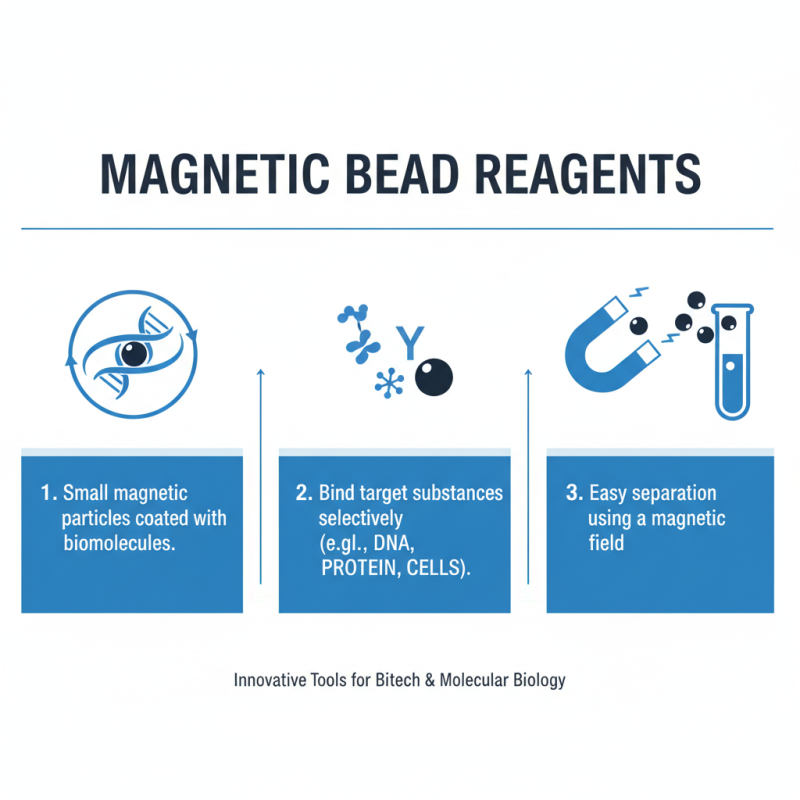
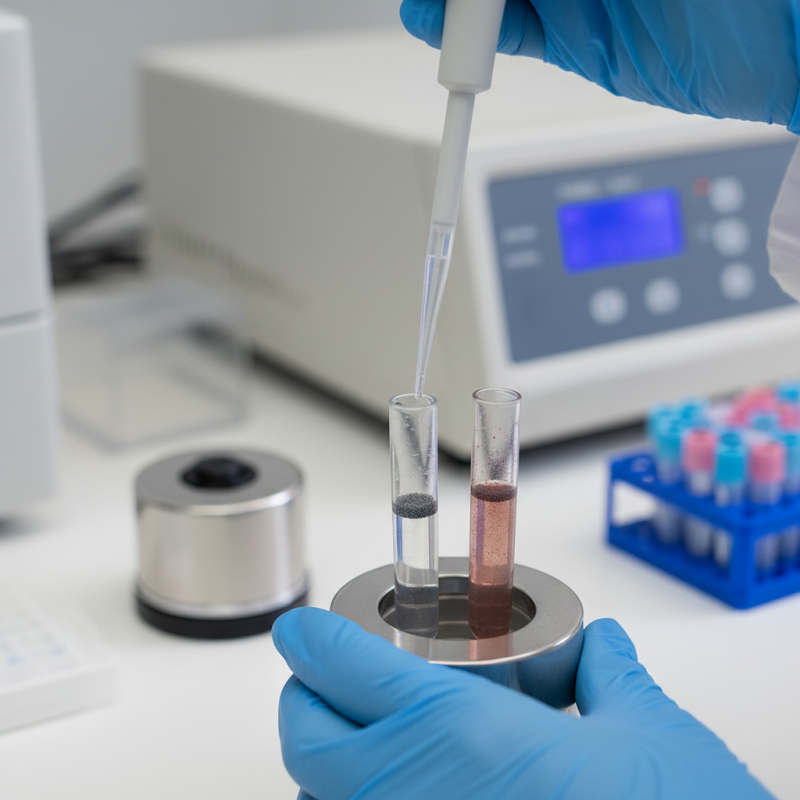
Magnetic bead reagents are innovative tools used in various fields, particularly biotechnology and molecular biology. They are small, magnetic particles coated with specific biomolecules. This unique property allows them to bind target substances selectively. The process of separation is straightforward. By applying a magnetic field, researchers can easily isolate the beads attached to their desired analytes.
These reagents find applications in numerous areas. They are essential in RNA and DNA extraction. In clinical diagnostics, they assist in identifying pathogens in samples. Despite their effectiveness, some challenges exist. The binding efficiency can vary significantly based on the target molecules. Optimizing conditions often requires trial and error, which may lead to inconsistent results. This variability can sometimes cause frustration but presents opportunities for refinement and improvement in experimental protocols.
Types of Magnetic Bead Reagents in Biotechnology
Magnetic bead reagents are vital tools in biotechnology, widely used for various applications. They come in different types, each tailored for specific tasks. For instance, carboxyl-coated magnetic beads allow for efficient nucleic acid extraction, standing out due to their functional groups that provide excellent binding properties. According to a rEport from MarketsandMarkets, the global market for magnetic bead-based assays is projected to reach USD 1.2 billion by 2025, reflecting their growing importance in diagnostics and molecular biology.
Another type is streptavidin-coated magnetic beads. These are frequently employed for protein interactions and affinity purification. Their strong binding affinity for biotin makes them essential in many research protocols. A study indicated that using streptavidin beads can enhance signal sensitivity in assays by up to 50%. However, researchers sometimes struggle with nonspecific binding, leading to reduced assay accuracy.
Furthermore, silica-coated magnetic beads are invaluable for DNA and RNA isolation. They offer high purity and yield, thus enhancing downstream applications. Nevertheless, optimization is often required to minimize the effects of contaminants. The versatility of magnetic bead reagents allows researchers to refine their methods continuously, ensuring precise and reliable results in biotechnology.
What Are Magnetic Bead Reagents and Their Applications?
| Type of Magnetic Bead | Size (µm) | Coating Material | Application | Pros | Cons |
| Carboxyl-Functionalized | 1.0 | Polymer | Nucleic Acid Isolation | High binding capacity | Requires buffer optimization |
| Amino-Functionalized | 2.0 | Silica | Protein Purification | Stable under a wide range of pH | Potential for nonspecific binding |
| Streptavidin-Coated | 0.5 | Polystyrene | Enzyme-linked assays | High specificity | Limited to biotinylated targets |
| Magnetic Nanoparticles | 30 | Iron Oxide | Cell Separation | Excellent magnetic properties | Risk of aggregation |
| Silica-Coated | 3.0 | Silica | DNA Capture | High purity output | Less efficient in high salt |
Key Properties and Scientific Principles Behind Magnetic Beads
Magnetic beads are small, magnetic particles often used in laboratories for a variety of applications. They can be coated with different materials to capture specific biomolecules. Their unique physical properties allow for easy separation and purification. In the realm of life sciences, these beads play a crucial role in Magnetic Bead Reagents For Protein Isolation. This method facilitates the isolation of proteins from complex mixtures, which is essential for research and diagnostics.
The scientific principle behind magnetic beads revolves around magnetism and surface chemistry. When an external magnetic field is applied, the beads cluster together, allowing for quick and efficient separation from solution. Their surfaces can be modified to enhance binding affinity for target proteins. This ability to customize beads is essential for optimizing protocols. However, achieving perfect binding conditions can be challenging and requires careful balancing of factors such as pH and ionic strength.
It’s important to recognize that despite their advantages, there are limitations. Some proteins may not bind effectively due to steric hindrance or suboptimal conditions. Additionally, the reproducibility of results can vary. Laboratories must continuously refine their methods and protocols to address these challenges. By understanding these core properties, researchers can better harness the power of magnetic beads in their studies.
Applications of Magnetic Bead Reagents in Molecular Biology
Magnetic bead reagents have transformed molecular biology. They are commonly used for nucleic acid extraction, protein purification, and cell isolation. Magnetic beads come in various sizes and functionalizations, allowing for versatility in applications. Researchers appreciate their efficiency and simplicity. These beads can easily separate target molecules from complex mixtures using a magnetic field.
One key application is in DNA extraction. Magnetic beads bind to DNA, allowing for quick separation from contaminants. This process usually involves simple washing steps. Optimizing these steps can improve yields. For protein work, magnetic beads can capture specific proteins using antibodies. This makes immunoprecipitation more straightforward and effective. The precision offered by Custom Magnetic Bead Reagents is a game-changer for many labs.
Tips: Always prepare controls for your experiments. This helps in assessing the effectiveness of the beads. Additionally, consider varying bead sizes for different applications. Each size may yield different results, and exploring these can enhance your research. Be wary of potential non-specific binding, as this can lead to unreliable results.
Market Trends: Growth of the Magnetic Bead Industry
The magnetic bead industry is witnessing significant growth, driven by diverse applications in biotechnology and diagnostics. High-Quality Magnetic Bead Reagents are becoming essential tools in areas such as DNA extraction, protein purification, and cellular analysis. These reagents offer a convenient and efficient method for separating biomolecules, spurring innovation across various fields.
Recent market trends indicate a surge in demand for magnetic bead technologies. As researchers seek more efficient workflows, the need for reliable reagents is more critical than ever. Industries are investing heavily in research and development, aiming to improve their products. This evolution, however, raises questions about quality control and standardization that still need to be addressed.
Emerging applications in personalized medicine and environmental testing further emphasize the versatility of magnetic beads. There remains a challenge, as not all products on the market meet the highest standards. Ensuring the reliability of high-quality magnetic bead reagents is key to maintaining momentum in this growing sector. Balancing innovation with quality assurance will be vital for the future of the industry.
Case Studies: Success Stories Using Magnetic Bead Technology
Magnetic bead technology has transformed various research fields, showcasing its practical applications. One remarkable case study involved a biotechnology company focusing on pathogen detection. They utilized magnetic bead reagents to isolate specific DNA sequences from complex samples. This approach significantly reduced time and increased sensitivity in their tests. The challenge was ensuring consistent bead capture efficiency across different samples. They refined their protocols, leading to improved reproducibility and reliable results.
Another success story emerged in the field of cancer research. Researchers employed magnetic beads to purify cancer cells from blood samples. This method provided a novel way to analyze tumor markers with high precision. However, they faced difficulties in separating the cells without damaging them. Continuous optimization of bead size and coating improved the process. As a result, they achieved better yields and refined their findings. Each case emphasizes the need for ongoing adjustments and innovative thinking, proving that even minor changes can significantly impact research outcomes.
Future Innovations in Magnetic Bead Reagents and Their Uses
The future of magnetic bead reagents is promising, particularly in Molecular Biology Reagents. Current trends indicate that the global market for magnetic bead-based processing is set to grow significantly. A report by MarketsandMarkets forecasts that this market could reach USD 3.5 billion by 2025, driven by advancements in biotechnology and increased demand for rapid diagnostics.
One area of innovation involves the functionalization of magnetic beads. By modifying their surfaces, researchers can enhance specificity for target molecules. This could lead to breakthroughs in disease detection. For instance, improved capture efficiency of nucleic acids could accelerate genomic testing. However, as we explore these advancements, challenges remain. Ensuring reproducibility and stability of modified beads is essential for consistent results.
Emerging applications extend into areas like food safety and environmental monitoring. Magnetic beads can be leveraged for swift pathogen detection, a need underscored by recent global health events. However, the technology's adaptability requires robust validation processes. As researchers experiment, the potential for error remains, necessitating careful calibration and testing to maintain quality control. The evolution of magnetic bead reagents offers exciting possibilities, but it also calls for ongoing scrutiny and development to maximize their impact.
Applications of Magnetic Bead Reagents
This bar chart illustrates the frequency of various applications of magnetic bead reagents. The data showcases the most common uses in the field of biotechnology, highlighting nucleic acid purification and protein purification as the leading applications.
Optimizing Cellular Research: The Role of GMP-Grade CD4 Magnetic Beads in Advanced Immunology Studies
In the realm of immunology, optimizing cellular research is crucial for advancing our understanding of immune responses and developing targeted therapies. One of the key elements that has emerged as instrumental in this endeavor is the use of GMP-grade CD4 magnetic beads. These beads offer a reliable and efficient means of isolating and characterizing CD4+ T cells, which play a vital role in orchestrating immune responses. Their high purity and consistent performance under Good Manufacturing Practices (GMP) standards ensure reproducible results and enhanced reliability in experimental outcomes.
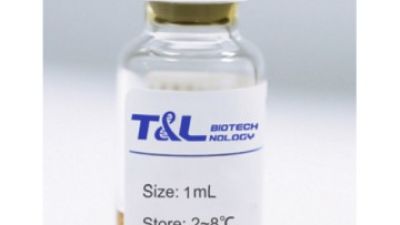
The application of GMP-grade CD4 magnetic beads is particularly significant in translational research, where precision is paramount. Researchers can utilize these beads to not only enrich CD4+ T cell populations but also study their functional characteristics in various contexts, such as autoimmune diseases and cancer immunotherapy. With the ability to facilitate complex immunological assays, these beads become indispensable tools for scientists working to unlock the mysteries of the immune system. The reliability of the RUO-TL623 model, which is currently in stock, exemplifies the advancements in cellular isolation technology, enabling researchers to achieve breakthrough findings with confidence.
FAQS
: Magnetic bead reagents are small, magnetic particles coated with biomolecules. They help in selectively binding target substances.
They work by applying a magnetic field, which isolates beads attached to desired analytes. This process is straightforward.
They are used in RNA and DNA extraction, pathogen identification, and various diagnostic assays. Their versatility is key.
Yes, different types include carboxyl-coated, streptavidin-coated, and silica-coated beads. Each serves unique functions.
Binding efficiency varies, requiring optimization. This variability can lead to inconsistent results, causing frustration at times.
Nonspecific binding can reduce assay accuracy. It presents a challenge researchers must address for reliable outcomes.
Optimization minimizes contaminant effects and enhances purity and yield. Continuous refinement is essential for precision.
The market for these assays is projected to reach USD 1.2 billion by 2025, highlighting their growing significance in diagnostics.
They continuously test conditions to improve binding and separation. Reflection on methods can lead to better experimental protocols.
Researchers must be aware of binding variability and nonspecific interactions. Reflection on these issues can foster improvements.
Conclusion
Magnetic Bead Reagents are versatile tools in biotechnology, known for their unique ability to bind various biomolecules due to their tailored surface properties. This article discusses the different types of magnetic bead reagents, highlighting their key characteristics such as size, charge, and surface chemistry, which facilitate diverse applications in molecular biology, including nucleic acid purification and protein isolation.
Furthermore, the growing magnetic bead industry is explored through market trends and innovative case studies that showcase successful implementations of magnetic bead technology. As research continues, future innovations in magnetic bead reagents promise to enhance their functionality and broaden their applications, paving the way for advancements in diagnostics, therapeutics, and other fields of life sciences. Overall, magnetic bead reagents are becoming increasingly essential in scientific research and clinical settings.