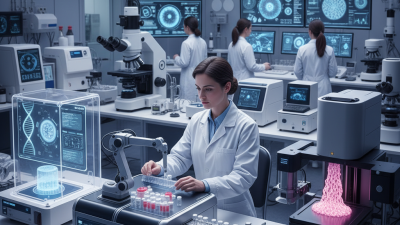
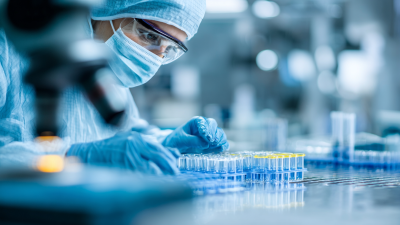
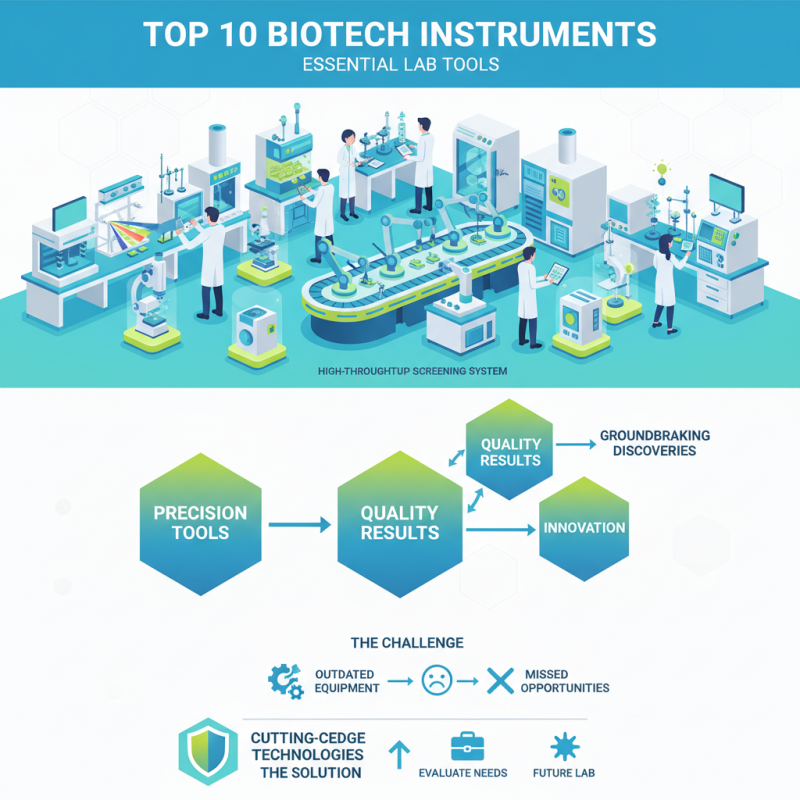
In today's labs, having the right tools really makes all the difference. Dr. Mia Chen, who’s pretty much an expert in Biotech Instruments, often emphasizes that “the precision of your equipment directly impacts the quality of your results.” That really hits home, you know? It just shows how crucial it is to choose the best instruments if you want your biotech research to be on point.
Technology has come a long way, and it’s pretty exciting how new gadgets like high-throughput screening systems and state-of-the-art spectrometers help researchers get super accurate results. But here’s the thing — not all labs are eager to shell out for these fancy tools. Budget issues often mean sticking with outdated gear, which can lead to inconsistent results or missed chances to make real breakthroughs.
Picking the right Biotech Instruments can seriously change the game for research outcomes. When labs invest in top-tier tech, they stand a better shot at making those groundbreaking discoveries. Unfortunately, too many are still relying on older methods, which can hold them back. Being smart about choosing the right gadgets shows both ambition and good foresight. So, every lab really needs to take a close look at what tools they actually need to push their research forward.
Top 10 Essential Biotech Instruments for Modern Laboratories
In modern laboratories, Biotech Lab Instruments play a critical role. They enhance research efficiency and accuracy. In a recent rEport,75% of laboratory professionals identified these instruments as key for success. Among the essential tools are pipettes, which allow for precise liquid handling. This accuracy is vital for experiments. Small errors can lead to significant deviations in outcomes.
Another indispensable instrument is the centrifuge. It helps in separating different substances based on density. According to industry data, centrifuges are used in nearly 90% of molecular biology labs. However, selecting the right model can be challenging. Not every lab has the same needs. Various speeds and capacities can complicate decisions.
Moreover, data from the Lab Equipment Market suggests that automated liquid handling systems are gaining popularity. They reduce human error and save time, yet they require careful calibration. Labs must frequently assess their specific requirements. Balancing cost and functionalityis often a reflection of strategic decisions. Innovations in Biotech Lab Instruments can sometimes make older methods feel outdated.Staying updated with advancements is crucial for any modern laboratory.
Revolutionizing Research: The Role of PCR Machines in Biotech Labs
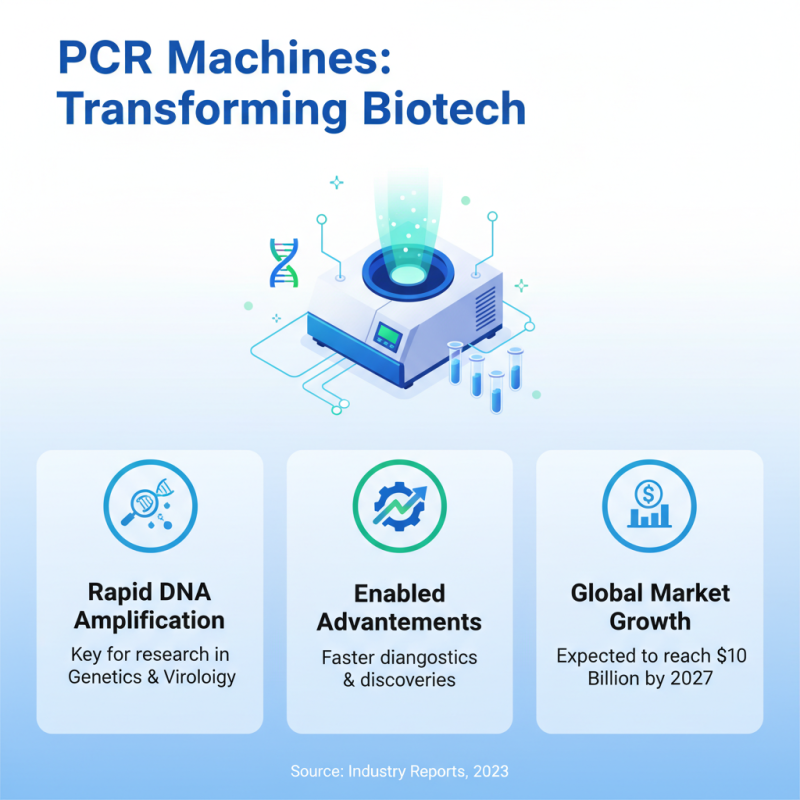
PCR machines have transformed biotech labs significantly. This technology allows for rapid amplification of DNA. The rise of PCR has enabled research advancements across various fields, including genetics and virology. According to recent industry reports, the global PCR market is expected to reach $10 billion by 2027, reflecting its growing importance.
Despite its advantages, PCR is not without challenges. Protocols can be complex, leading to variability in results. Contamination remains a concern as well. A report indicated that about 20% of PCR tests can yield false positives, raising doubts about data validity. Improved training and stringent lab practices are crucial for minimizing error rates.
The role of PCR machines extends beyond basic research. They are critical for developing vaccines and diagnostics. The COVID-19 pandemic highlighted their necessity in monitoring and responding to outbreaks. Yet, as labs invest in these machines, they must also focus on improving reliability. A balance between innovation and accuracy is vital for future breakthroughs in biotech research.
The Importance of Mass Spectrometry in Protein Analysis
Mass spectrometry (MS) plays a crucial role in protein analysis. This technique helps identify and quantify proteins in complex mixtures. MS offers high sensitivity and specificity. It allows researchers to uncover detailed information about protein structure and function. Using this method, you can analyze post-translational modifications and protein interactions effectively.
When working with mass spectrometry, proper sample preparation is vital. Ensure your samples are pure and free from contaminants. Inadequate preparation can lead to misleading results. It's essential to follow protocols carefully. Small mistakes can compromise your findings.
Tips for successful analysis: Start with a high-quality mass spectrometer. The Helix Biotech Instruments offers advanced options for researchers. Regular calibration and maintenance are non-negotiable. They prevent drift in your results and ensure accuracy. Lastly, collaborate with experienced technicians. Their insights can refine your methods further and enhance your understanding of data interpretation.
Next-Gen Sequencing Technologies and Their Impact on Genomics
Next-generation sequencing (NGS) technologies have transformed genomics. Over the last decade, the cost of sequencing a human genome has dropped from $100 million to about $1,000. This drastic reduction has opened doors for widespread genetic research.
Yet, the pace of data generation is overwhelming. In 2023, estimates suggest NGS will produce over 2 exabytes of data annually. Labs need to effectively analyze these massive datasets. Bio-Rad Biotech Instruments For American Universities provide essential tools for data analysis and storage. However, many labs struggle with bioinformatics. The gap between sequencing and data interpretation remains a critical challenge.
Quality control in sequencing is another area needing attention. Recent reports indicate about 20% of sequenced data can be inaccurate. This raises concerns about the reliability of results. Even with advanced instruments, it's not enough. Researchers must develop robust protocols to ensure accuracy. Despite these challenges, the potential of NGS for personalized medicine continues to drive innovation.
Top 10 Biotech Instruments You Need for Your Lab
| Instrument | Type | Application | Impact on Genomics |
| Illumina Sequencers | Next-Gen Sequencing | Whole Genome Sequencing | High-throughput sequencing and data analysis |
| PacBio Sequel II | Single Molecule Sequencing | Long-read Sequencing | Insight into complex regions of genomes |
| Ion Torrent System | Semiconductor Sequencing | Targeted Sequencing | Rapid and cost-effective sequencing |
| Sanger Sequencer | Capillary Electrophoresis | Small-scale Sequencing | Gold standard for accuracy |
| Affymetrix GeneChips | Microarray Technology | Genotype Analysis | Broad genome coverage with high sensitivity |
| Qubit Fluorometer | Fluorescence Detection | Nucleic Acid Quantification | Accurate quantification for library prep |
| Bioanalyzer | Electrophoresis | Fragment Analysis | Assessing quality of nucleic acids |
| Thermal Cyclers | PCR Technology | DNA Amplification | Essential for pre-sequencing steps |
| Cell Sorters | Flow Cytometry | Cell Line Isolation | Genomic studies with purified populations |
| Mass Spectrometry | Analytical Chemistry | Protein Analysis | Integral for proteomics and metabolomics |
Flow Cytometry: Key Instrument for Cell Analysis in Biotech
Flow cytometry stands as a cornerstone in cell analysis within the biotech field. This specialized instrument allows researchers to analyze the physical and chemical characteristics of cells. It provides a fast and accurate way to sort and count cells. With the ability to measure multiple parameters simultaneously, flow cytometers can give insights into cell health and function.
Operating the device, however, is not without its challenges. Calibration is crucial for precise results, and any discrepancy can lead to misinterpretation. Users often struggle with sample preparation. Proper staining and dilution are vital to avoid noise in the data. Despite these hurdles, the insights gained can be invaluable. Flow cytometry plays a significant role in drug development and disease monitoring.
The demand for Biotech Instruments Service continues to grow alongside the increasing complexity of cell analysis. Companies are seeking support in maintaining these instruments. This service is essential for laboratories aiming to maximize their output and minimize errors. By investing in training and assistance, labs can enhance their analytical capacities. Adapting to the challenges of flow cytometry will ultimately reflect on the quality of research.
HPLC Systems: Achieving Precision in Biopharmaceutical Development
High-Performance Liquid Chromatography (HPLC) systems are critical for biopharmaceutical development. They offer the precision needed to analyze complex biological samples. According to recent industry reports, HPLC systems account for over 30% of the market share in analytical instruments. This efficiency is vital, as more than 70% of biopharmaceutical processes rely on effective separation techniques.
In practice, HPLC can streamline the development of biologics, such as monoclonal antibodies. These systems can resolve closely related compounds with high specificity. However, achieving optimal results often requires regular maintenance. Poor calibration or old columns can lead to inaccurate results, impacting drug development timelines. Data reveals that around 40% of lab technicians encounter issues with instrument reliability at some point.
Precision in HPLC opens doors to innovative treatments. However, it also highlights the need for continuous training. New research methods can be challenging to implement. Without proper training, data quality suffers. Reports indicate that labs with ongoing education programs achieve 25% better outcomes in biopharmaceutical development. The balance between implementation and training is crucial for success.
Bioreactors: The Backbone of Bioprocessing in Biotechnology
Bioreactors play a crucial role in biotechnology. They are essential for bioprocessing, which includes growing microorganisms and cells. According to industry reports, the global bioreactor market is projected to reach over $9 billion by 2026. This growth reflects the increasing demand for biopharmaceuticals and biofuels.
Despite their importance, not all bioreactors are perfect. Many labs face challenges in scaling up processes. A study noted that around 30% of bioprocesses do not translate effectively from small-scale to large-scale production. This discrepancy can lead to inefficiencies and increased costs.
Moreover, the integration of automation in bioreactors is not always seamless. Many scientists report difficulties in calibrating systems to maintain optimal conditions. Fluctuating parameters can compromise product yield and quality. Continued investment in research and development is vital to address these gaps. Improving bioreactor technology will ultimately enhance the success of bioprocessing in varied applications.
FAQS
: This service aims to provide users with useful information and answers to common questions.
Users can access the service online through a website or mobile application.
The service may be free, but some features could require a payment. Always check the terms.
User data is usually encrypted. However, vulnerabilities can exist. Always be cautious with personal information.
Yes, users can submit questions. However, response times may vary based on demand.
If you spot an error, report it. Feedback is essential for improving information accuracy.
The service may not be suitable for minors. Parental supervision is advised when accessing information.
Information is updated regularly. Still, some data might become outdated quickly. Verify important details.
Questions can go unanswered due to volume or complexity. Not all submissions will receive a response.
While the service strives for accuracy, it is not infallible. Always cross-check critical information elsewhere.
Conclusion
In modern laboratories, the utilization of essential biotech instruments has become pivotal for advancing research and development in biotechnology. Key equipment such as PCR machines play a revolutionary role in amplifying DNA sequences, while mass spectrometry offers unparalleled precision in protein analysis, enabling researchers to decipher complex biological systems. Next-generation sequencing technologies have transformed genomics by allowing faster and more accurate DNA sequencing, significantly impacting personalized medicine and genetic research.
Additionally, flow cytometry serves as a critical tool for cell analysis, providing insights into cell populations and their functions. High-performance liquid chromatography (HPLC) systems ensure precision during biopharmaceutical development, facilitating the purification and analysis of compounds. Finally, bioreactors stand as the backbone of bioprocessing, supporting the growth of microorganisms and cell cultures essential for producing biological products. Together, these biotech instruments empower scientists to push the boundaries of innovation and discovery in the life sciences.