Leave Your Message
0%

The field of cell therapy has been changing super quickly lately, opening up some pretty exciting opportunities – but also throwing some new challenges into the mix for biopharma companies. As researchers and developers move through this complicated landscape, the role of *biopharmaceutical CROs* is becoming more and more important. These experts can really help speed things up, making sure everything stays compliant with regulations and get Clinical Trials running faster.

In recent years, teaming up with biopharmaceutical CROs has turned out to be a game-changer for many companies. They offer specialized services that are tailored to the unique needs of cell therapy projects. But here’s the thing — not all CROs are created equal. It’s super important for companies to do their homework and pick partners that really match their goals. Sometimes, if they don’t find the right fit, projects can hit delays, which nobody wants.

Looking into the top biopharmaceutical Cro Services can really help guide companies in the right direction. Getting to know the strengths and weaknesses of different organizations is key — that way, decisions are a lot more informed. In this fast-moving space, choosing the right partner can truly make or break a product’s success.

Top 10 CGT Cell Therapy Biopharmaceutical CRO Services to Explore?

Overview of CGT Cell Therapy and Its Significance

Top 10 CGT Cell Therapy Biopharmaceutical CRO Services to Explore?

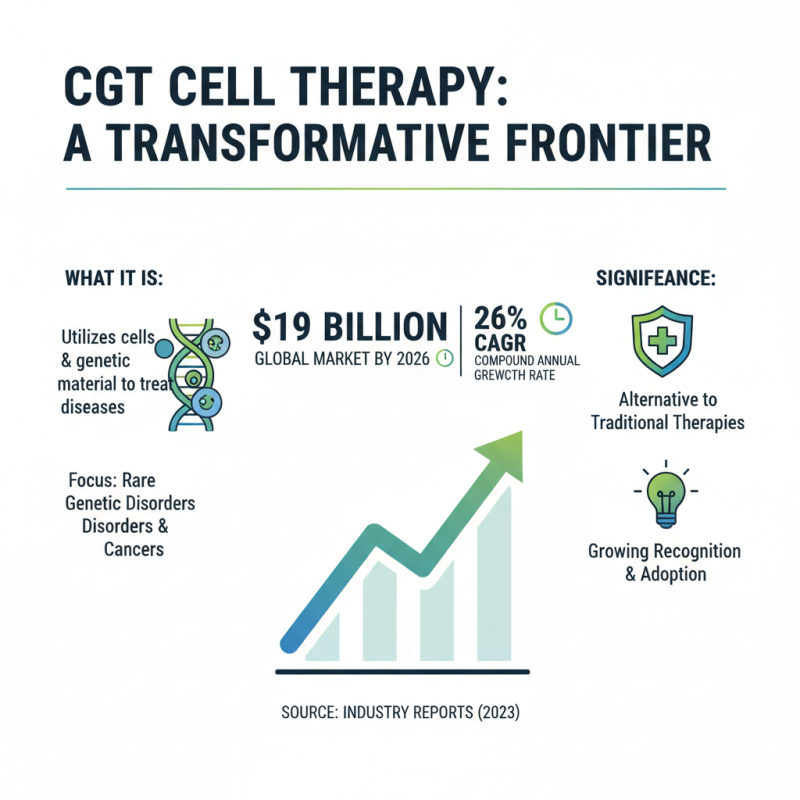
In recent years, cell and gene therapy (CGT) has emerged as a transformative approach in treating various diseases, especially rare genetic disorders and cancers. Reports indicate that the global CGT market is projected to reach approximately $19 billion by 2026, with a compound annual growth rate (CAGR) of 26%. This growth underscores the increasing recognition of CGT as a viable alternative to traditional therapies.

The significance of CGT lies in its ability to address the root causes of diseases. Unlike conventional treatments, CGT targets specific genes or cells. This precision offers hope for patients where other therapies have failed. For instance, CAR-T cell therapies represent a breakthrough in oncology. Despite these advancements, challenges remain. Manufacturing processes, regulatory hurdles, and high treatment costs pose substantial obstacles. A recent analysis highlighted that up to 60% of CGT projects face delays in clinical translation.

Moreover, the need for robust biopharmaceutical contract research organizations (CROs) has skyrocketed. These entities streamline the development of CGT treatments by providing expertise in regulatory compliance and patient management. However, not all CROs are equally equipped to handle the complexities of CGT. Identifying the right one is critical for success in this rapidly evolving field.

Understanding the Role of Biopharmaceutical CRO Services

Biopharmaceutical Contract Research Organizations (CROs) play a vital role in the development of cell therapies, particularly in the CGT (Cell and Gene Therapy) domain. These organizations offer specialized support, helping biopharmaceutical companies navigate the complexities of clinical trials, regulatory requirements, and product commercialization. According to industry reports, the global biopharmaceutical CRO market is projected to reach $69 billion by 2027, highlighting the increasing reliance on these services.

CRO services can include preclinical research, clinical trial management, and data analysis. Each aspect requires significant expertise and precision. For instance, managing clinical trials demands adherence to strict regulatory standards. It often challenges many companies that lack sufficient in-house resources. By leveraging a Custom Biopharmaceutical Cro, firms can streamline processes and enhance trial efficiency.

**Tip:** Collaboration with experienced CROs can mitigate risks, ensuring compliance while optimizing project timelines. However, not all partnerships yield fruitful outcomes. Companies must thoroughly evaluate CRO capabilities and past performance. Poorly chosen partners can lead to project delays and increased costs. Consistent communication is key to maintaining alignment throughout the development process.

In a rapidly evolving landscape, biopharmaceutical CROs must continually adapt. Innovations in technology, like AI and machine learning, are transforming data management and analysis. Companies need to remain vigilant and responsive to trends. This requires ongoing evaluation of partner qualifications and changing market dynamics. The best outcomes arise from a combination of expertise, communication, and strategic planning.

Criteria for Selecting CGT Cell Therapy CRO Providers

When selecting CGT cell therapy CRO providers, several criteria should be assessed. Experience plays an essential role in identifying capable partners. According to a recent report, over 65% of successful cell therapy trials involved CROs with more than ten years of specialized experience. Reviewing their historical data provides insights into their reliability and expertise.

Regulatory compliance is another key factor. The complexity of CGT requires CROs to navigate myriad regulations. Reliable providers maintain rigorous adherence to guidelines set forth by authorities such as the FDA. A surprising finding revealed that non-compliance can lead to a staggering 30% increase in trial costs due to delays.

Additionally, a CRO's technological resources should not be overlooked. The integration of cutting-edge technologies can streamline processes significantly. Firms utilizing advanced analytics report a 40% reduction in time spent on data interpretation. However, companies must remain cautious, as rapid technological growth can sometimes outpace established practices.

Ultimately, understanding the capabilities and shortcomings of Biopharmaceutical Cro Services is crucial. A thorough evaluation ensures that the selected provider aligns with the specific goals of the cell therapy project. Balancing experience, compliance, and technology will guide companies toward informed decisions and successful outcomes.

Top 10 Biopharmaceutical CROs Specializing in CGT Cell Therapy

The landscape of cell and gene therapy (CGT) is rapidly evolving. The demand for specialized biopharmaceutical Contract Research Organizations (CROs) is crucial. According to a recent industry report, the CGT market is projected to reach $25 billion by 2025, driven by advancements in technology and increasing clinical trials.

Selecting the right CRO is essential for biopharmaceutical companies aiming to navigate this complex field. CROs must provide expertise in regulatory affairs, clinical trial management, and data analysis. A survey indicated that 45% of organizations consider regulatory compliance a top priority when choosing a CRO. This highlights the need for experienced partners who can expedite the development process while maintaining high standards.

However, not all CROs meet the industry's demanding requirements. Some lack the necessary expertise or infrastructure to support advanced CGT projects. Choosing a CRO without thorough due diligence can lead to costly delays. It's vital to assess the CRO's track record and client references carefully. Understanding their capability in managing innovative therapies can make a significant difference in project outcomes.

Comparative Analysis of Services Offered by Leading CROs

The landscape of CGT cell therapy is evolving rapidly. A comprehensive analysis of services from leading Biopharmaceutical Cro Suppliers reveals varied offerings. Regulatory expertise, for instance, remains critical. According to a recent report, approximately 75% of CGT developers rely heavily on CROs for regulatory guidance. This highlights the need for timely and accurate compliance support in this complex field.

Another key aspect is the emphasis on manufacturing capabilities. Many CROs are enhancing their production processes to support scaled-up clinical trials. A survey indicated that 65% of biotech firms prioritize CROs with robust manufacturing facilities. This demand reflects a broader industry trend toward integrating development and production to streamline timelines. Moreover, service diversity is also essential. Some CROs specialize in data analytics, vital for interpreting trial outcomes effectively.

Nevertheless, challenges persist. Data integrity and quality management systems often differ among CROs. Many organizations question the consistency of delivered services. As the CGT sector grows, the need for reliable and experienced biopharmaceutical CRO suppliers becomes increasingly critical. Trust and transparency are paramount, especially in these transformative therapies.

Case Studies: Successful CGT Cell Therapy Partnerships

The landscape of cell therapy partnerships is evolving rapidly. Successful collaborations rely on strategic alignment, clear communication, and solid methodologies. Numerous case studies showcase how biopharmaceutical CRO services assist in navigating the complexities of cell and gene therapy (CGT) development.

Consider a scenario where a collaborative effort led to the streamlined production of CAR-T cells. Effective project management and adherence to regulatory guidelines were key. This partnership produced breakthrough therapies, showcasing innovation within a competitive market. It’s crucial to partner with experts who have a proven track record in managing such complexities.

Tips: Focus on building strong relationships with Biopharmaceutical Cro Suppliers. Regularly discuss progress and challenges to ensure mutual understanding. Remember to evaluate data consistently. Not all partnerships yield success. Reflection on setbacks can drive improvement in future collaborations. Continuous learning helps teams stay agile in this fast-paced field.

Future Trends in CGT Cell Therapy and CRO Collaboration

The landscape of cell therapy is rapidly evolving, with significant trends shaping its future. Data from the Alliance for Regenerative Medicine indicates that the CGT sector is projected to reach $89.6 billion by 2027, highlighting increased investment and collaboration opportunities within the field. However, this growth also brings challenges in regulatory compliance and manufacturing scalability.

A notable trend is the growing partnership between biopharmaceutical companies and Contract Research Organizations (CROs). These collaborations enable streamlined clinical trial processes and more efficient data management. According to a recent report by Frost & Sullivan, approximately 62% of biopharmaceutical firms plan to engage CROs for their expertise in cell therapy. This surge emphasizes the necessity of reliable partnerships for overcoming complex regulatory landscapes.

**Tips:** Choose CROs with proven experience in CGT. Assess their regulatory knowledge and past project success. Collaborating effectively can mitigate risks and enhance research outcomes. Investing in robust data management systems is crucial. They help ensure compliance and optimize trial efficiencies. An effective partnership requires mutual understanding and clear communication.

Top 10 CGT Cell Therapy Biopharmaceutical CRO Services to Explore

Service Type Description Key Trends Market Demand
Regulatory Support Assistance with regulatory submissions and compliance. Increased focus on streamlined approval processes. High demand due to stricter regulations.
Clinical Trial Management Comprehensive management of clinical trials. Emphasis on patient-centric trial designs. Growing need for efficient management solutions.
Manufacturing Services Development and production of cell therapies. Advancements in bioprocessing technologies. Rising market for scalable manufacturing solutions.
Data Management Collection, storage, and analysis of trial data. Integration of AI and machine learning. Increasing reliance on data-driven decision making.
Safety Monitoring Monitoring of patient safety during trials. Real-time safety data analysis. Growing importance of patient safety in trials.
Quality Assurance Ensuring compliance with quality standards. Focus on continuous quality improvement. Heightened scrutiny from regulatory bodies.
Supply Chain Management Management of materials and logistics. Enhancements in supply chain visibility. Need for agile supply chain solutions.
Patient Recruitment Recruitment strategies for clinical studies. Use of digital platforms for recruitment. Challenges in finding eligible participants.
Consulting Services Strategic consulting for cell therapy projects. Increased focus on commercialization strategies. Growing need for expert consultation.

FAQS

: What role do biopharmaceutical CROs play?

: Biopharmaceutical CROs support cell therapy development, aiding in clinical trials and regulatory navigation.

What services do CROs provide?

Services include preclinical research, clinical trial management, and data analysis.

Why is collaboration important with CROs?

Collaboration mitigates risks and ensures compliance, but not every partnership succeeds.

What happens if a CRO is poorly chosen?

Poor choices can lead to delays and increased costs during the development process.

How can companies ensure effective communication with a CRO?

Consistent communication maintains alignment and addresses challenges within projects.

How are technology trends impacting CRO services?

Innovations like AI are transforming data management, necessitating ongoing evaluation of CRO qualifications.

What should companies focus on in partnerships?

Strategic alignment and clear communication are crucial for successful collaborations.

How can setbacks in partnerships be viewed?

Reflection on setbacks drives improvement, helping teams learn and adapt for future projects.

What challenges do CROs face?

CROs must adapt to a rapidly evolving landscape, managing regulatory and data complexities effectively.

What can enhance trial efficiency?

Leveraging expert CROs can streamline processes and optimize project timelines.

Conclusion

The article provides a comprehensive overview of Cell and Gene Therapy (CGT) and highlights its growing significance in the biopharmaceutical landscape. It explores the pivotal role of biopharmaceutical CRO (Contract Research Organizations) services in supporting CGT development, emphasizing the criteria for selecting suitable CRO providers. The piece also showcases the top 10 CROs specializing in CGT, offering a comparative analysis of their services and highlighting successful partnerships through case studies. Finally, it discusses future trends in CGT and the evolving collaboration between biopharmaceutical CROs and developers, underscoring the importance of these relationships in advancing innovative therapies.


Lila

Lila

Lila is a dedicated marketing professional at T&L Biotechnology Co., Ltd., a company that specializes in the research and development of upstream GMP-grade raw materials and reagents for cell and gene therapy (CGT). With her extensive knowledge of CGT products, Lila plays a pivotal role in......
Previous Why Are Clinical Research Tools Essential for Successful Studies?