Leave Your Message
0%

You know, in the fast-changing world of Pharmaceutical Biotechnology, new innovations in Cell Therapy are really shaking up how we think about treatment options. Dr. Jane Smith, a real expert in the field, once said, “The future of medicine is all about creating personalized cell therapies that fit each patient’s unique needs.” That quote highlights just how important tailored approaches are when it comes to patient care.

Companies like Thermo Fisher are leading the charge here. Their recent advancements are pretty exciting—showing lots of promise but also bringing some challenges to the table. These custom cell therapies are truly revolutionary, but they also raise important questions about ethics and how we regulate them. Finding that sweet spot between moving quickly and keeping patients safe isn’t easy.

As we push forward in the industry, it’s really worth taking a moment to reflect—are we focusing on the right things when caring for patients? The potential here is huge, but everything needs to be carefully vetted. The journey in Pharmaceutical Biotechnology can get pretty complex, so we’ve gotta approach these innovations with care and thoughtfulness.

Top 10 Custom Cell Therapy Innovations in Pharmaceutical Biotechnology by Thermo Fisher

Overview of Custom Cell Therapy in Pharmaceutical Biotechnology

Top 10 Custom Cell Therapy Innovations in Pharmaceutical Biotechnology by Thermo Fisher

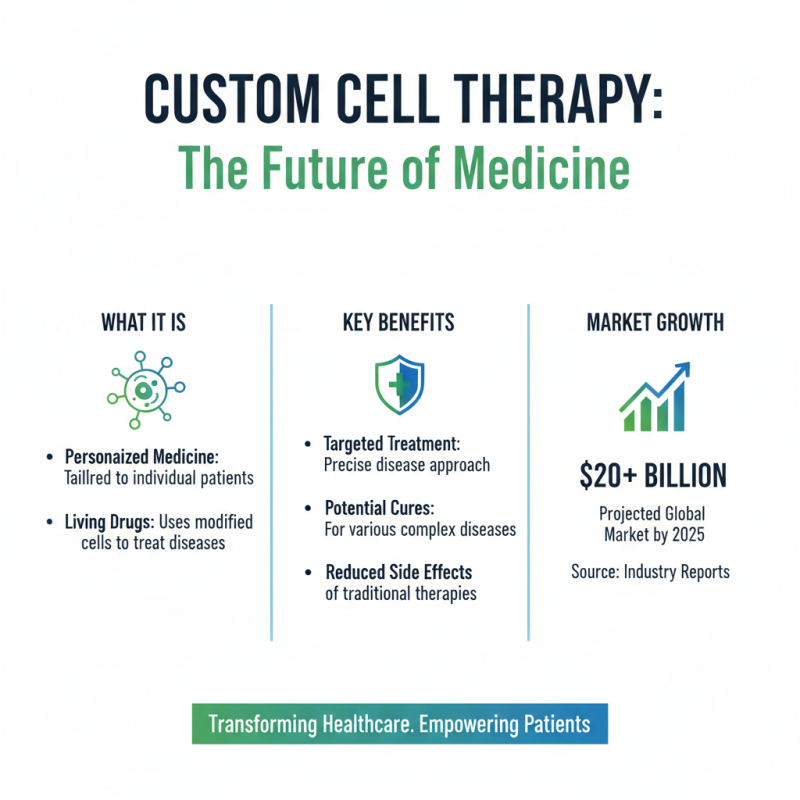
Custom cell therapy represents a significant shift in pharmaceutical biotechnology. This innovative approach is transforming how we treat a variety of diseases. REports show that the global market for cell therapy is projected to exceed $20 billion by 2025. This growth highlights a growing interest in personalized medicine, where treatments are designed to meet individual patient needs.

Recent advancements in genetic engineering are paving the way for new therapies. For example, researchers are increasingly using CRISPR technology to create modified cells. These cells can target diseases more effectively. However, challenges remain. Many therapies require rigorous testing. Safety and efficacy are paramount, and processing these therapies can be complex.

The success of custom cell therapies relies heavily on collaboration among scientists, institutions, and regulatory bodies. Many projects face delay due to compliance issues. History shows that even promising therapies can stumble in Clinical Trials. Yet, the potential rewards are enormous. The ability to tailor treatments showcases a bright future in biotechnology, but reflection on past missteps is crucial for progress.

Key Innovations Transforming Cell Therapy Development

Recent advancements in cell therapy have redefined the landscape of pharmaceutical biotechnology. Innovations are key to enhancing treatment efficacy and patient outcomes. Notably, the global cell therapy market is projected to reach $8.6 billion by 2027, according to industry reports. This rapid growth illustrates a dynamic shift in therapeutic approaches.

New technologies aid in streamlining development processes. Automated cell culture systems, for instance, increase efficiency but sometimes sacrifice flexibility. These systems can optimize cell yield, yet they may struggle with diverse cell types. Additionally, gene-editing techniques show promise but need vigilant oversight to ensure safety.

The realm of personalized medicine is evolving. Tailored therapies lead to improved response rates, yet scalability remains a challenge. Studies indicate that while 72% of patients benefit from these advanced therapies, a significant portion still encounters hurdles. As the field progresses, reflecting on these imperfections is crucial. Continuous improvement is vital to truly transform patient care.

Top 10 Custom Cell Therapy Innovations in Pharmaceutical Biotechnology

Innovation Description Key Feature Impact on Therapy
CAR-T Cell Therapy Enhancements Improved targeting mechanisms to enhance specificity and reduce side effects. Higher efficacy rates based on enhanced binding affinity. Transforming treatment protocols for hematological malignancies.
Allogeneic Cell Therapies Development of off-the-shelf cell therapies from donor cells. Reduced time to treatment for patients. Expanding accessibility of cell therapies.
Gene Editing Techniques Utilizing CRISPR/Cas9 for precise gene modifications in cells. Increased precision and reduced off-target effects. Enhancing the therapeutic potential of engineered cells.
Scalable Cell Production Automation of cell manufacturing processes for efficiency. Increased yield and consistency in cell therapies. Lowering costs and improving supply chain logistics.
Bioinformatics in Cell Therapies Employing AI and machine learning for data analysis and patient selection. Enhanced decision-making capabilities throughout the therapy process. Optimizing the effectiveness and safety of treatments.
Novel Delivery Mechanisms Creating targeted delivery systems for cell administration. Minimizing systemic exposure and enhancing local effects. Improving overall therapeutic outcomes.
Regulatory Adaptations Developing frameworks to streamline approval processes for advanced therapies. Faster access to patients for new therapies. Encouraging innovation in cell therapy development.
Personalized Cell Therapies Tailoring cell treatments based on individual genetic profiles. Increased precision in treatment efficacy. Improving outcomes in diverse patient populations.
Nanotechnology in Cell Therapy Utilizing nanoparticles to enhance cell viability and function. Improved delivery and tracking of therapeutic cells. Enhancing therapeutic possibilities and effectiveness.

Role of Thermo Fisher in Advancing Cell Therapy Technologies

Cell therapy represents a transformative approach in modern medicine. It employs living cells to treat diseases, including cancer and genetic disorders. Market research indicates that the cell therapy industry is expected to reach a value of $18.9 billion by 2025, reflecting a compound annual growth rate of 36.6% from 2020.

Companies play a pivotal role in advancing these technologies. The development of customized cell therapies demands robust manufacturing, regulatory expertise, and innovative solutions. For instance, advancements in cell culture systems and vector design are critical. Current data points to the growth of the CAR-T cell therapy market, which is set to exceed $15 billion by 2027, influenced by improved patient outcomes.

Despite these advancements, challenges remain. Manufacturing scalability is a major concern. The production of personalized therapies often leads to inconsistencies. Finding cost-effective solutions is crucial for wider adoption. Additionally, ensuring compliance with evolving regulatory frameworks poses another layer of complexity. As the industry continues to evolve, reassessing these obstacles will be essential for sustained growth and innovation.

Assessment of Personalized Cell Therapies: Benefits and Challenges

The development of personalized cell therapies has gained traction in recent years. These therapies promise tailored treatments for various diseases, particularly cancer. Personalized approaches can enhance treatment efficacy and minimize side effects. However, they also face significant challenges.

One major hurdle is the complexity of manufacturing custom cells. Each treatment must be crafted uniquely. Ensuring consistency and precision can be daunting. There is also the issue of regulatory approval, which adds to the timeline. Moreover, the cost of personalized therapies often limits accessibility. These barriers can discourage patients from seeking potentially life-saving treatments.

Tips: Always ask questions. Understand the process of your treatment. Knowing the journey can ease concerns. Stay informed about new developments. Innovations in this field happen rapidly. Keeping up with research can empower patients. Embrace the future of medicine while being aware of its pitfalls. Balancing hope with realism is essential.

Regulatory Landscape for Custom Cell Therapies in Biotechnology

The regulatory landscape for custom cell therapies is complex. Innovations in biotechnology require adherence to strict guidelines. This ensures the safety and efficacy of treatments. Regulatory bodies assess the quality of cell products before they reach patients. They require extensive documentation and data to support claims.

Many companies struggle to navigate this framework. Each country may have different regulations. It can be challenging for biopharmaceutical firms to keep up. They must stay informed about evolving policies. Delays in approval processes are common. They can hinder the advancement of promising therapies.

Collaboration with regulatory experts is vital. Companies need to seek guidance and support. Ongoing training for personnel helps address compliance issues. Fostering transparency in communication with regulators is essential. Companies may need to rethink their approaches to align with regulatory expectations. Adjusting strategies to meet these requirements can be a time-consuming process, but it is necessary for success in custom cell therapy development.

Top 10 Custom Cell Therapy Innovations in Pharmaceutical Biotechnology

This bar chart illustrates the advancements in different custom cell therapies based on their effectiveness ratings and regulatory approvals in the biotechnology sector.

Future Trends in Custom Cell Therapy Innovations

Custom cell therapy has emerged as a groundbreaking avenue in biotechnology. The future of this field looks promising, yet challenges persist. Innovations in personalized treatments aim to tailor therapies to individual patient needs. This specificity could revolutionize how we address complex diseases. However, the path to widespread adoption is not without hurdles.

As advancements continue, a focus on scalability becomes critical. Developing protocols that can be replicated across various settings is essential. The complexity of manufacturing remains a significant barrier. While some therapies show remarkable results, their production can be cumbersome. This inconsistency raises questions about accessibility for patients. Efforts must be directed towards simplifying these processes.

Ethical considerations also play a role in shaping the future landscape. As we explore novel approaches, it's crucial to address potential risks. There is a fine line between innovation and safety. Public trust requires transparency and accountability in every step. Balancing innovation with ethical practices can lead to sustainable growth in cell therapy. As the field evolves, ongoing dialogue among stakeholders will be vital.

Case Studies of Successful Custom Cell Therapy Applications

The rise of custom cell therapy represents a significant breakthrough in biotechnology. It has shown immense potential in treating diseases. Specific case studies illustrate this innovation's impact. One prominent application involved modifying T-cells to target cancer. Patients responded positively, showcasing improved survival rates. Yet, this journey is not without challenges. Ensuring consistent cell quality remains a hurdle.

Another example can be found in regenerative medicine. Scientists engineered stem cells to repair damaged tissues. In clinical trials, results were promising. However, the complexity of stem cell differentiation often led to unexpected outcomes. Researchers noted variations in cell behavior, highlighting the need for further refinements. These experiences underscore that while custom cell therapies hold promise, patient outcomes can vary. Continuous improvement and adaptation are essential for success in this evolving field.

FAQS

: What is the main purpose of this article?

: The article aims to inform readers about key concepts and issues in a specific field.

How can I apply the ideas in the article?

Readers can implement strategies discussed by adapting them to their own situations.

Are there any common misconceptions highlighted?

Yes, the article points out several misunderstandings that can lead to confusion.

What kind of examples are used?

The article shares real-world scenarios to illustrate key points clearly.

Is this information suitable for beginners?

While it provides useful insights, some concepts may be complex for newcomers.

What are the main challenges mentioned?

The article identifies various obstacles that people often encounter in this area.

Where can I find more resources?

The article suggests additional readings and websites for further exploration.

Are there any actionable tips included?

Yes, practical advice is offered, but it may require additional research to implement.

What tone does the article use?

The article maintains an informative yet approachable tone for its target audience.

Can I discuss the article with others?

Engaging in conversation can deepen understanding, but be mindful of differing opinions.

Conclusion

The article "Top 10 Custom Cell Therapy Innovations in Pharmaceutical Biotechnology" provides a comprehensive overview of the advancements in custom cell therapy, highlighting key innovations that are transforming its development. It emphasizes the critical role of technological advancements in enhancing the efficacy and accessibility of personalized cell therapies, while also addressing the benefits and challenges associated with these innovative treatments.

Furthermore, the article examines the regulatory landscape governing custom cell therapies and discusses future trends that are likely to shape this field. Through case studies of successful applications, it illustrates the potential of personalized therapies in improving patient outcomes. This synthesis of information underscores the significant impact of pharmaceutical biotechnology on the evolution of custom cell therapies.


Clara

Clara

Clara is a dedicated marketing professional at T&L Biotechnology Co., Ltd., where she leverages her extensive knowledge of cell and gene therapy (CGT) products to drive the company's mission forward. With a strong focus on the research and development of GMP-grade upstream raw materials and......
Previous 10 Reasons to Choose GmpGrade Materials for Your Supply Chain