As we head into 2025, Gene Therapy is really ramping up, and it’s pretty exciting to see how fast things are moving. According to a recent report from the Alliance for Regenerative Medicine, the global market for gene therapy is expected to hit around $20 billion by then. A big part of that growth is fueled by constant innovations and the growing number of clinical trials happening out there. Companies like Gene Therapy Solutions are really leading the charge, bringing us new treatments for conditions that used to be untreatable.
Dr. Emily Carter, who’s pretty much an expert in the field, says, “The future of medicine is all about how we can harness gene therapy.” It’s a bold statement, but honestly, it reflects all the amazing progress with molecular techniques lately. That said, there are still hurdles to jump—things like scaling up treatments, navigating regulatory hurdles, and making sure these therapies are accessible to everyone, not just a lucky few.
What’s really promising, though, is how much interest there’s been from both researchers and investors. Especially in tackling rare diseases and genetic disorders, we’re probably going to see some pretty groundbreaking breakthroughs soon. But, with all this rapid growth, it’s super important to keep ethical considerations in mind. We need to make sure these innovations actually end up helping patients, not just advancing science for science’s sake. All in all, the next few years are going to be critical for shaping the future of gene therapy—and it’s definitely a space to keep an eye on.

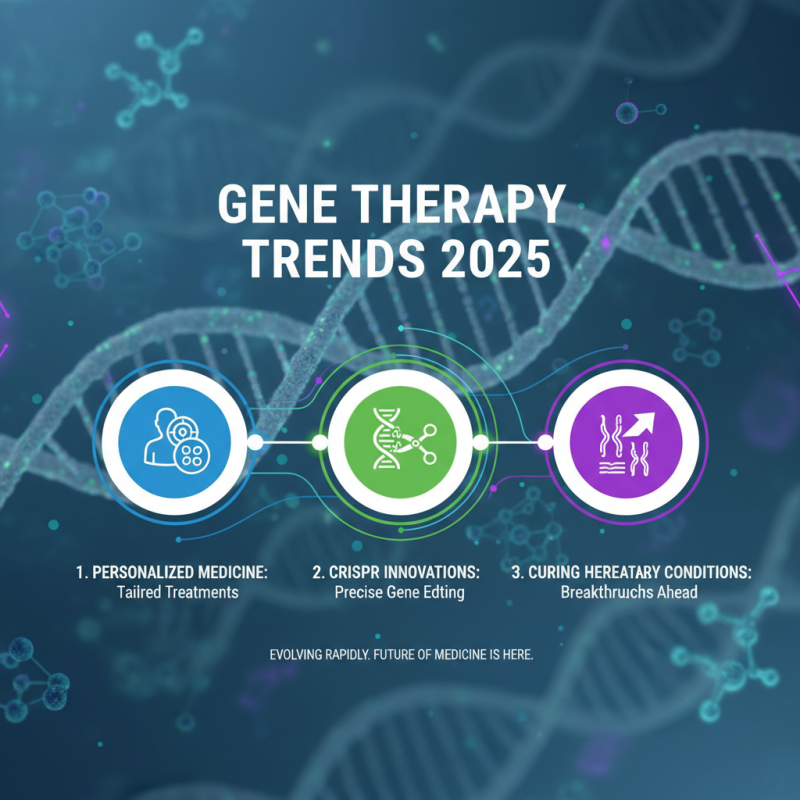
The field of gene therapy is evolving rapidly. As we approach 2025, several emerging trends are worth noting. Personalized medicine is at the forefront. Tailored treatments can target genetic diseases more effectively. Innovations in CRISPR technology show promise in editing genes with precision. This could lead to breakthroughs in curing hereditary conditions.
Tips: Stay informed. Read recent studies on gene therapy techniques. Understanding the latest developments in this field is crucial.
Another trend is the rise of accessibility in gene therapy. With decreasing costs of genetic testing, more patients can benefit from these innovations. Additionally, patient advocacy groups are pushing for wider access. However, challenges remain in insurance coverage. Not all therapies will be affordable for everyone.
Tips: Engage with community forums. Sharing experiences can provide valuable insights. It’s essential to reflect on both successes and barriers in treatment options.
Gene editing technologies are evolving rapidly. By 2025, significant advances are expected. One standout area is CRISPR. With CRISPR technology, researchers can edit genes with high precision. A recent industry report predicts CRISPR’s market will grow by over 30% annually. This growth shows the increasing interest and investment in gene editing.
Another crucial innovation involves base editing. This method allows for targeted changes without double-strand breaks. Experts believe base editing could reduce off-target effects. A study indicated a 90% accuracy in edits. However, challenges remain, such as delivery mechanisms for effective treatment.
Lastly, advancements in gene therapies are noteworthy. A report from the National Institutes of Health shows that gene therapies could treat various genetic disorders. Yet, access and affordability issues persist. Many patients cannot afford these emerging therapies. The tension between innovation and accessibility is a major concern. As we look ahead to 2025, the balance between breakthroughs and ethical considerations will define this field.
Innovations in targeted gene delivery systems are reshaping the landscape of gene therapy. These systems enhance the precision of therapeutic agents, making treatments more effective. Current advancements focus on utilizing nanoparticles and viral vectors to deliver genes directly to affected cells. This approach minimizes side effects and maximizes therapeutic benefits.
One area of concern, however, is the potential for immune responses. Each delivery system can trigger different reactions in the body. Researchers must address these responses to improve safety profiles. Transparency in clinical trials will be vital for gaining public trust. Balancing innovation with caution is essential for responsible development.
Efforts are underway to customize delivery mechanisms for individual patients. Personalized gene therapy presents a significant opportunity for tailored treatments. Nonetheless, this approach also raises ethical questions about affordability and accessibility. As advancements continue, the dialogue surrounding these issues must evolve to ensure equitable solutions for all patients.
| Solution Type | Delivery Method | Targeted Conditions | Efficiency Rate (%) | Projected Market Growth (Billion USD) |
|---|---|---|---|---|
| Adeno-Associated Virus (AAV) Therapy | Viral Vector | Genetic Disorders, Cancer | 85 | 12.5 |
| CRISPR/Cas9 Technology | Nuclease-Based | Inherited Disorders, HIV | 75 | 15.3 |
| Lentivirus-based Delivery | Viral Vector | Blood Disorders, Neurological Conditions | 80 | 10.1 |
| Naked DNA/RNA Delivery | Non-viral | Vaccine Development, Infectious Diseases | 65 | 8.2 |
| Exosome-mediated Delivery | Extracellular Vesicles | Cancer, Regenerative Medicine | 70 | 9.4 |
Gene therapy is rapidly evolving, especially for rare diseases. The Global Gene Therapy Market is expected to grow at a remarkable compound annual growth rate (CAGR) of 35% by 2025. This surge reflects a growing demand for innovative treatment options. Rare diseases often have limited treatment options, which makes gene therapy a beacon of hope.
Research shows that over 7,000 rare diseases affect around 350 million people globally. Many gene therapy applications target conditions like spinal muscular atrophy and hemophilia. For example, a study indicated that gene therapy could reduce treatment costs by up to 90% in rare disease cases. However, the path isn't without challenges. High development costs and regulatory hurdles pose significant barriers.
Some gene therapies have also shown unexpected outcomes, leading to complications for patients. Ongoing clinical trials are essential to ensure safety and efficacy. Adopting personalized approaches offers potential, but requires extensive validation. Despite these imperfections, advancements in this field are promising. Experts remain hopeful about breakthroughs in 2025 that will make a positive impact on rare disease treatment.
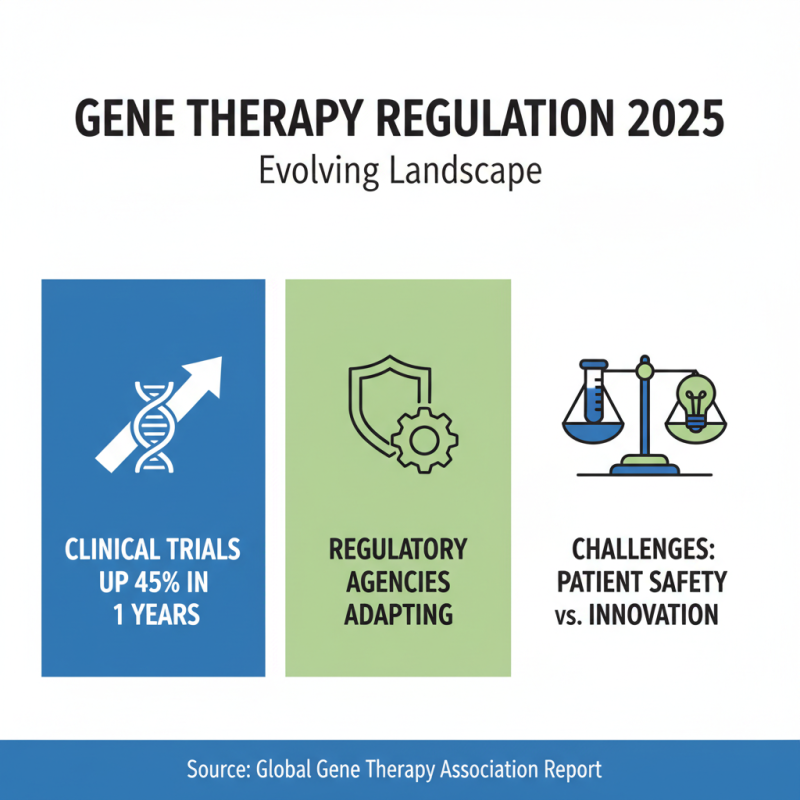
The regulatory landscape for gene therapies in 2025 is evolving rapidly. According to a report by the Global Gene Therapy Association, the number of gene therapy clinical trials has surged by 45% in the past two years. Regulatory agencies are adapting to this rapid change. They face the challenge of ensuring patient safety while fostering innovation.
In 2025, some regulatory frameworks are expected to become more flexible. This shift aims to expedite approvals for promising therapies. However, concerns arise around the long-term effects of these treatments. A recent survey indicated that 70% of patients worry about potential side effects. Balancing swift access to treatments with thorough evaluations remains a critical issue.
Emerging trends point to increased collaboration between biotech firms and regulatory bodies. This collaboration can streamline the approval process. Yet, there may be skepticism about transparency. Many stakeholders believe that faster approvals could compromise thorough assessments. The dynamic environment necessitates constant reflection on regulatory practices to ensure public trust and safety.
The rapid advancements in gene therapy present significant ethical implications. Innovators are racing to develop therapies that target genetic disorders. According to a report by GlobalData, the gene therapy market is expected to reach $23 billion by 2025. This surge raises questions about equity and access to these treatments. Who gets them? Who decides?
Imagine a world where gene editing can prevent hereditary diseases. Yet, this technology could lead to genetic stratification. Wealthy individuals may access enhanced therapies, creating disparities. A survey found that 65% of people are concerned about the ethical aspects of gene editing. These concerns are not just theoretical; they need concrete answers.
Moreover, the potential for misuse looms large. The prospect of designer babies can lead to unforeseen societal issues. Regulations have not kept pace with innovations. A study indicates that 70% of biopharmaceutical companies see the need for stronger guidelines. As the field evolves, ongoing discourse about ethics becomes crucial. Responsible innovation is key to harnessing gene therapy's full potential.
Investment in gene therapy has seen a remarkable rise, with funding reaching nearly $20 billion in 2022. This trend is expected to continue through 2025. More investors are recognizing the potential of gene therapies to revolutionize treatment for genetic disorders. Innovative approaches are attracting attention and capital alike.
Major research breakthroughs are being made. In particular, advancements in CRISPR technology have opened new avenues for therapy development. This has led to a surge in startup companies focusing on gene editing and delivery mechanisms. However, the market is evolving rapidly, and not all projects succeed. There's an increasing need for careful assessments of both technology and potential outcomes.
Tips: Stay informed about new therapies entering clinical trials. Understanding market dynamics can guide investment decisions. Review data from recent biotech reports to identify successful funding patterns. Innovation is promising but requires caution and thorough evaluation for sustainability.
: This product aims to enhance user experience through innovative features. It focuses on usability and convenience.
It streamlines common activities, reducing time and effort. Users report feeling more efficient and productive overall.
While designed for a broad audience, it particularly benefits tech-savvy individuals looking for optimized solutions.
Yes, users can adjust various settings to meet their preferences. However, some features might be limited.
Users sometimes struggle with setup. Others find certain advanced functionalities confusing. It requires a learning curve.
Customer support responds to questions via multiple channels. Responses may take time, so patience is needed.
Yes, there is a warranty. Details on coverage and duration can be found in the user manual.
Updates are released regularly, but frequency may vary. Staying informed on updates is crucial for optimal use.
Yes, there are tutorials and guides available. However, some users find them lacking in depth, requiring extra research.
As we approach 2025, the landscape of gene therapy solutions is evolving rapidly, marked by emerging trends and key innovations. Advances in gene editing technologies are set to revolutionize how diseases, particularly rare disorders, are treated. Enhanced targeted gene delivery systems promise more precise therapies, increasing the efficacy of treatments while minimizing side effects.
The regulatory framework for gene therapies is also adapting, aiming to balance innovation with patient safety. Furthermore, ethical considerations surrounding the use of gene therapies are becoming increasingly important as we explore their potential. Investment and funding trends reflect a growing confidence in the sector, indicating a robust future for gene therapy solutions that could significantly impact healthcare in the years to come.