When it comes to top-notch manufacturing, choosing the right Gmp-Grade Materialsreally makes all the difference. A recent rEport from the International Society for Pharmaceutical Engineering (ISPE) mentioned that almost 70% of production issues actually come from using subpar materials. That just goes to show how crucial it is to stick to Good Manufacturing Practice (GMP) standards. The right materials don’t just help you stay compliant—they also boost your product’s safety and effectiveness.
Companies like Pfizer and Merck have actually seen pretty noticeable improvements in how efficient their production lines are once they started using Gmp-Grade Materials. They found out there's about a 25% drop in quality-related problems when top-quality components are in play. But, here's the catch — sourcing these high-quality materials isn’t always smooth sailing. It can lead to delays and higher costs, and that naturally raises concerns about keeping the supply chain steady.
Figuring out the sweet spot between cost and quality is still a big challenge. Companies need to really vet their suppliers. Because at the end of the day, picking Gmp-Grade Materials isn’t just about ticking boxes for compliance — it’s about making sure consumers get safe, effective products. The never-ending pursuit of quality in manufacturing just keeps reminding us that we should constantly review and improve our processes.

Overview of GMP Grade Materials in Manufacturing
In the realm of high-quality manufacturing, adhering to stringent guidelines is crucial. Gmp-Grade Raw Materials play a pivotal role in this process. These materials ensure the safety, effectiveness, and consistency of products. Manufacturers often overlook the importance of sourcing quality components. Choosing the right suppliers can be a challenging task, yet it is essential.
GMP-grade raw materials are meticulously tested. They must meet specific criteria set by regulatory bodies. This includes purity, stability, and efficacy. However, even with these guidelines, not all materials labeled as GMP-grade are created equal. It’s vital to scrutinize certifications and documentation. Some manufacturers take shortcuts, exposing their operations to risks.
Moreover, the supply chain's reliability is a key factor. Manufacturers should seek partnerships with reputable suppliers who prioritize quality. This also requires continuous assessment and adaptation. Engaging with suppliers is not always straightforward, yet it is important for ensuring GMP compliance. Reflecting on these aspects can lead to improved practices and more reliable products in the long run.
Importance of GMP Compliance in Material Selection
Ensuring GMP compliance in material selection is crucial for any manufacturing process. Good Manufacturing Practice (GMP) standards guarantee that products are consistently produced and controlled. Selecting the right materials can make or break the quality of the final product. Many manufacturers overlook this step. They may focus solely on cost or availability. Yet, the consequences of ignoring material compliance can be severe.
High-Quality Gmp-Grade Raw Materials For Clinical Trials are essential in performing reliable tests. The materials chosen must not only meet safety standards but also ensure efficacy. This is where some manufacturers struggle. They may choose materials based on immediate needs instead of long-term reliability. Such decisions can lead to subpar products and compromised trials. An example is using lower-grade materials, thinking they save money. However, they could lead to unexpected failures later in the process.
Additionally, transparency in sourcing materials is often neglected. Manufacturers should know the origin and handling practices of their ingredients. Many don't realize how vital this knowledge is. Understanding where materials come from can prevent contamination and ensure compliance. Without attention to detail in material selection, companies risk damaging their reputation and undermining trust in their products. Ignoring these aspects can lead to unfortunate outcomes.
Criteria for Evaluating GMP Grade Materials
Selecting GMP grade materials is crucial for high-quality manufacturing. Key criteria involve quality consistency, material integrity, and regulatory compliance. A report from the International Society for Pharmaceutical Engineering indicates that 70% of product recalls are due to materials not meeting these standards.
Quality consistency means that materials must show uniformity in their properties. Variability can lead to significant issues, impacting the final product. This can affect everything from dosage accuracy to shelf life. For instance, discrepancies in raw material batches can result in varied therapeutic effectiveness and safety concerns.
Regulatory compliance requires materials to adhere to guidelines set by health authorities. Many manufacturers struggle to maintain comprehensive documentation. Proper records are essential for tracking material sources and handling. According to studies, about 40% of companies face challenges in meeting stringent documentation requirements, exposing gaps needing reflection. Evaluating how to streamline compliance can lead to improved quality and overall success in manufacturing.
Top 5 GMP Grade Materials for High Quality Manufacturing
This chart displays the quality scores of the top 5 GMP grade materials commonly used in high-quality manufacturing processes. Each material is evaluated based on its effectiveness and reliability in meeting GMP standards.
Top 5 GMP Grade Materials for High Quality Production
In high-quality production, the selection of GMP grade materials is critical. Many industries rely on these materials to ensure compliance with quality standards. According to the International Society for Pharmaceutical Engineering, 80% of manufacturing failures are linked to poor material selection. This statistic highlights the importance of using the right GMP-grade materials.
Gmp-Grade Materials For Protein Synthesis play a vital role in biopharmaceutical manufacturing. They include high-quality reagents and solvents, which enhance the efficacy of protein production processes. For example, using high-purity water can prevent contamination, ensuring that the synthesis process remains efficient and reliable. Reports show that contamination from low-grade materials can lead to up to 30% production loss.
Many companies still face challenges in sourcing these essential materials. A recent study indicated that nearly 40% of manufacturers struggle to find consistent suppliers. These delays can disrupt production schedules and increase costs. It's crucial to address these sourcing issues to maintain the high standards expected in the industry. Optimizing procurement strategies could prove beneficial in achieving better outcomes.
Application of GMP Grade Materials in Various Industries
GMP grade materials are crucial across many industries. These materials ensure product quality and safety in manufacturing. In pharmaceuticals, GMP materials minimize contamination risks. Health supplements require these materials to ensure each ingredient is pure and potent.
Food processing also benefits from GMP standards. Ingredients must be sourced carefully to avoid any hazards. Quality control becomes easier with these guidelines. Implementing GMP practices can feel overwhelming. Many companies struggle with compliance. It's important to learn and adapt continuously.
Tips: Always audit suppliers for GMP compliance. Even small deviations can affect the entire production line. Engage in training sessions regularly. Education empowers staff to maintain high standards. Stay updated on industry changes. This commitment is vital for success.
Challenges in Sourcing GMP Grade Materials
Sourcing GMP grade materials can be a daunting task for manufacturers. The demand for high-quality products is rising. Many seek Gmp-Grade Raw Materials For Gene Therapy Applications. However, finding these materials poses several challenges.
One significant challenge is the limited availability of GMP materials. Suppliers often operate under strict regulations. This can lead to increased costs and longer lead times. As a result, manufacturers may face delays in production. It’s vital to establish strong relationships with reputable suppliers. Regular communication can help ensure timely access to necessary materials.
Tips: Always verify supplier certifications. Make sure they comply with GMP standards. Consider diversifying your supplier base. This can reduce dependency on a single source. Additionally, keep an inventory buffer for critical materials. This proactive approach may help mitigate disruptions.
Another issue is the complexity of regulations. Different regions have varying standards. Manufacturers must stay updated on these changes. This requires constant monitoring and adaptation of sourcing strategies. It’s essential to invest time in regulatory research. Sometimes, it feels like a never-ending cycle of adjustments.
Tips: Create a compliance checklist. Regular reviews can help identify gaps in knowledge. Engage with industry experts when in doubt. Collaborative efforts often yield better results in sourcing quality materials.
Future Trends in GMP Manufacturing Materials
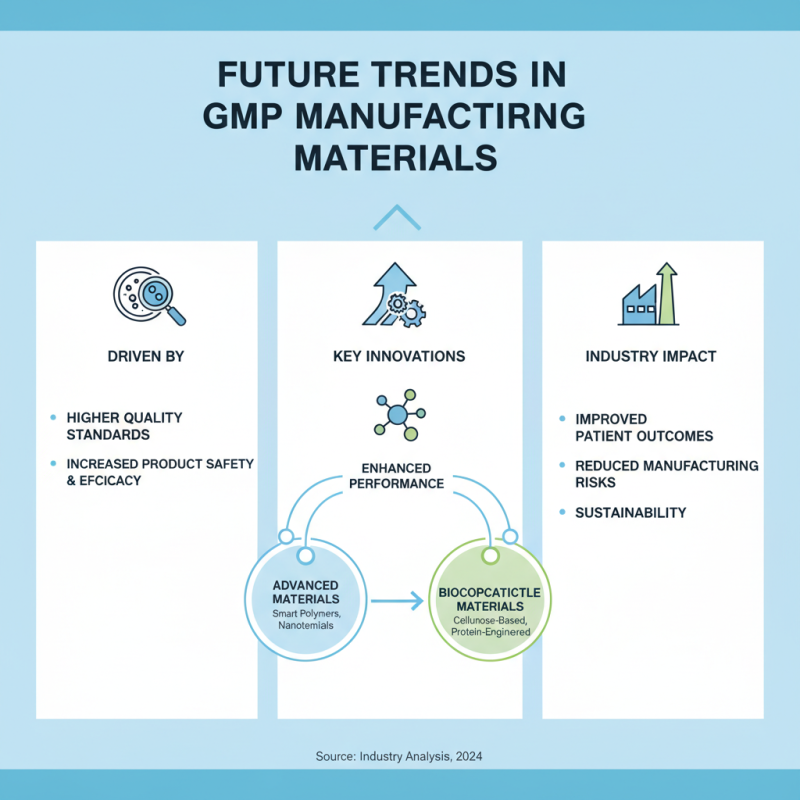
The future of GMP manufacturing materials is bright but complex. As industries strive for higher quality, the demand for advanced materials grows. Innovations in biocompatible materials are on the rise. These materials enhance product safety and efficacy, a critical requirement in manufacturing.
Sustainability is becoming a driving factor. Companies are increasingly seeking eco-friendly materials that do not compromise on quality. However, the transition can be challenging. Not all sustainable options meet the rigorous standards required for GMP compliance. Manufacturers often face a dilemma between cost and quality when selecting materials.
While new technologies offer exciting possibilities, they also introduce unforeseen challenges. For example, the integration of smart materials can improve supply chain efficiency. Yet, these innovations require substantial investment and training. Embracing these changes demands careful consideration and ongoing evaluation. Balancing innovation with regulatory compliance is essential for future success in GMP manufacturing.
The Role of GMP-TL112 Anti-Human CD20 mAb in Inducing B Cell Apoptosis: Insights from Recent Oncology Data Reports
The interest in targeted therapies for B cell malignancies has surged, particularly with the advent of monoclonal antibodies. One promising agent is GMP-TL112, an anti-human CD20 monoclonal antibody that has shown significant potential in inducing apoptosis in B cells. Recent oncology data reports shed light on the mechanism of action of GMP-TL112, highlighting its ability to engage multiple pathways that lead to programmed cell death in B cell populations. This characteristic is crucial, as traditional therapies may miss cellular targets that contribute to treatment resistance.
In exploring the implications of GMP-TL112 in the oncology landscape, it becomes evident that its role transcends mere eradication of malignant cells. The antibody not only eliminates B cells but also modulates the tumor microenvironment, enhancing the efficacy of combinatory therapeutic approaches. This dual action underscores the importance of GMP-TL112 in therapeutic regimens, particularly in contexts where standard treatments have failed. Understanding these dynamics could pave the way for enhanced patient outcomes and more refined treatment protocols in hematological oncology.
Current availability of GMP-TL112 in sufficient stock allows for its integration into clinical research and practice. As studies continue to unfold, its impact on B cell apoptosis offers a strategic avenue in the development of effective treatments against B cell-related malignancies. Researchers and clinicians alike are encouraged to consider this compound as a vital component of future therapeutic innovations.
FAQS
: GMP compliance ensures products are consistently produced and controlled, affecting final product quality.
Many focus solely on cost or availability, ignoring compliance, leading to severe consequences.
Knowing the origin helps prevent contamination and ensures compliance with safety standards.
Limited availability of materials and strict regulations can increase costs and lead times.
Establish strong relationships with reputable suppliers and maintain regular communication.
Keeping an inventory buffer for critical materials can help reduce risks of delays.
This ensures suppliers comply with GMP standards, protecting product quality and reliability.
Regular monitoring and adaptation of sourcing strategies are essential for compliance.
Creating a compliance checklist and engaging with industry experts can enhance understanding.
Ignoring attention to detail in material selection can damage reputation and undermine product trust.
Conclusion
GMP-grade materials play a crucial role in ensuring high-quality manufacturing across various industries, particularly in pharmaceuticals and biotechnology. This article outlines the importance of GMP compliance in material selection, emphasizing that adherence to stringent regulations is essential for producing safe and effective products. The criteria for evaluating these materials include purity, consistency, and traceability, which are vital for maintaining product integrity.
The discussion highlights the top five GMP-grade materials commonly used in high-quality production processes, along with their versatile applications in multiple sectors. However, sourcing these materials can present challenges, such as supplier reliability and cost management. Looking ahead, the article explores future trends in GMP manufacturing materials, emphasizing the ongoing innovation and commitment to ensuring compliance that will shape the landscape of manufacturing excellence.