Leave Your Message
0%

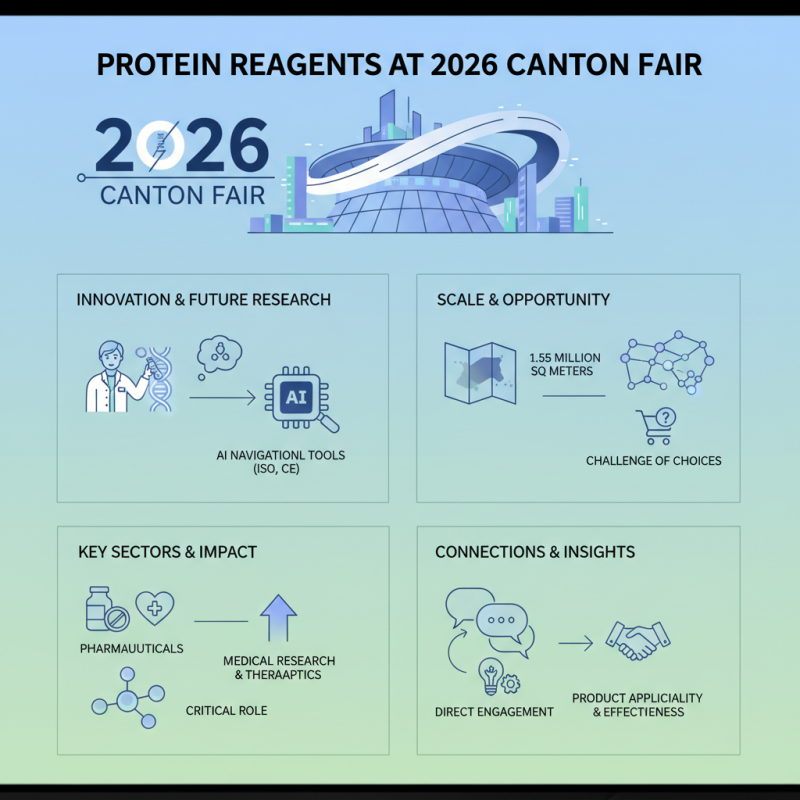
The 2026 Canton Fair is shaping up to be an exciting event, especially for folks in the Protein Reagents industry. Michael Thompson from BioTech Innovations, who's pretty much a top expert in the field, put it nicely: "The future of protein research really depends on innovative reagents." Honestly, that just shows how important it is to keep up with all the latest developments since the market is always changing.

If you're attending, you'll find a huge variety of Protein Reagents that can really boost your research work. Plus, they've got AI-powered tools to help you find suppliers based on specific certifications like ISO or CE, which is pretty neat. Honestly, though, with so many options spread out over 1.55 million square meters, it might feel a bit overwhelming trying to navigate everything.

The fair will focus on really important sectors like pharmaceuticals and healthcare, so it's definitely a must-visit for industry pros. There's a lot of buzz around how Protein Reagents are going to push medical research and new treatments forward. Naturally, companies are super eager to showcase their latest products.

Looking back at past fairs, many participants mentioned how much they wish there were better ways to connect with the right people. Meeting directly with suppliers really gives you a much clearer picture of how their products work and if they'd be a good fit for your needs.
Top Protein Reagents to Explore at 2026 Canton Fair?

Overview of Protein Reagents in Today's Market

The protein reagent market is thriving as research collaborations expand. Scientists use these reagents for various applications, including drug discovery and diagnostics. High-quality Antibodies, enzymes, and assay kits are sought after. Researchers demand reliable products to ensure experimental success.

Protein reagents are essential tools. They can impact research outcomes significantly. However, variations in quality exist. Some reagents may not perform as expected. This inconsistency can lead to experimental setbacks. Researchers must validate the reagents they choose.

Emerging technologies shape the landscape. Novel protein purification techniques and innovative assay methods gain traction. These advancements promise to enhance efficiency and outcomes. Still, the market faces challenges. Balancing cost and quality is crucial for many teams. Ongoing evaluation of available options is necessary. This mindset will help researchers make informed decisions.

Importance of Protein Reagents in Research and Industry

Protein reagents play a crucial role in both research and industry. They are essential for understanding biological processes. Researchers depend on these tools to study protein interactions, functions, and structures. Every detail matters in science. The choice of reagents can significantly impact experiment outcomes.

Protein Crosslinking Reagentsare vital for probing complex protein behaviors. These reagents allow scientists to connect Proteins, forming a network of interactions. This can reveal hidden relationships among proteins. Efficient crosslinking is not always straightforward. Some reagents may not work as expected. Experiments can lead to unexpected results. Researchers must be prepared to adapt.

In industry, protein reagents facilitate product development. They are used in diagnostics and therapeutics. The quality of these reagents affects the reliability of tests and treatments. However, there are challenges. Some reagents may have inconsistent performance. This can lead to frustrations in both research labs and production facilities. Continuous improvement and refinement of these tools is necessary for progress.

Top Protein Reagents to Explore at 2026 Canton Fair? - Importance of Protein Reagents in Research and Industry

Reagent Type Application Typical Use Market Demand
Antibodies Western Blotting, Immunohistochemistry Protein detection and analysis High
Enzymes Biochemical assays, Drug development Catalyzing reactions, GC/LC/MS Moderate
Recombinant Proteins Therapeutics, Vaccines Targeted therapies Growing
Protein A/G Affinity Purification Purifying antibodies High
Molecular Weight Markers Gel Electrophoresis Size determination of proteins Stable

Top Trends in Protein Reagent Development for 2026

Top Protein Reagents to Explore at 2026 Canton Fair?

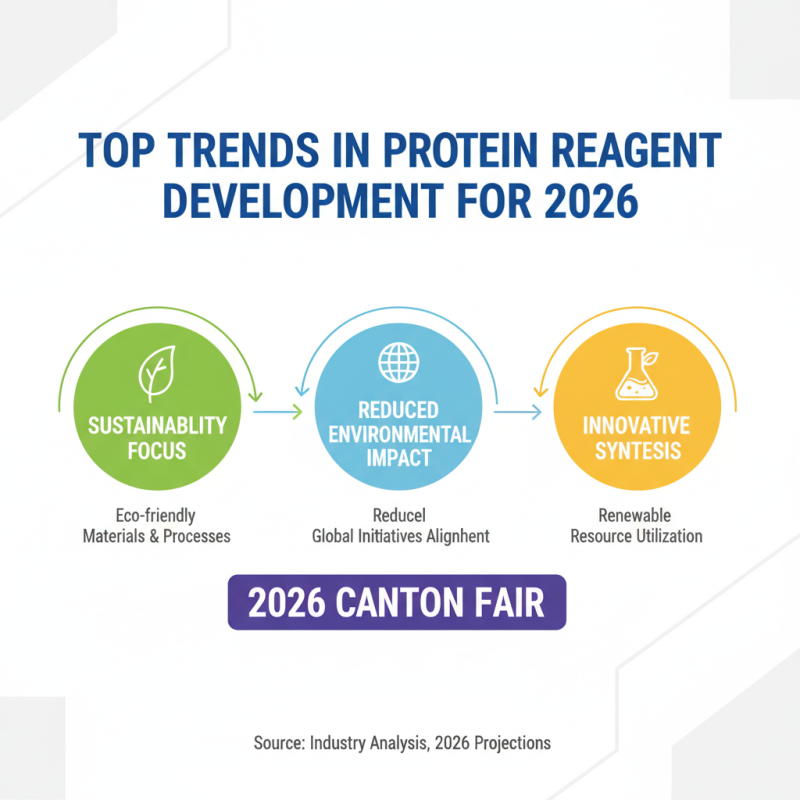
As we approach the 2026 Canton Fair, the protein reagent sector is set to witness exciting developments. One notable trend is the increased focus on sustainability. Companies are exploring eco-friendly materials and processes. This aligns with global efforts to reduce environmental impact. New methods of protein synthesis using renewable resources are gaining traction.

Another significant trend involves the customization of protein reagents. Researchers now seek tailored solutions for various applications. This personalization enhances performance and efficacy. The demand for specific binding and highly selective reagents is on the rise. It's important to see how well suppliers adapt to these needs.

Despite these advancements, challenges remain. The complexity of producing high-quality protein reagents can lead to inconsistencies. Not all reagents meet the same standards, which can affect research outcomes. Users need to be vigilant about reagent sourcing. This aspect emphasizes the importance of quality control in the protein reagent market. Manufacturers must continuously innovate while ensuring reliability.

Featured Protein Reagents to Look For at the 2026 Canton Fair

Top Protein Reagents to Explore at 2026 Canton Fair?

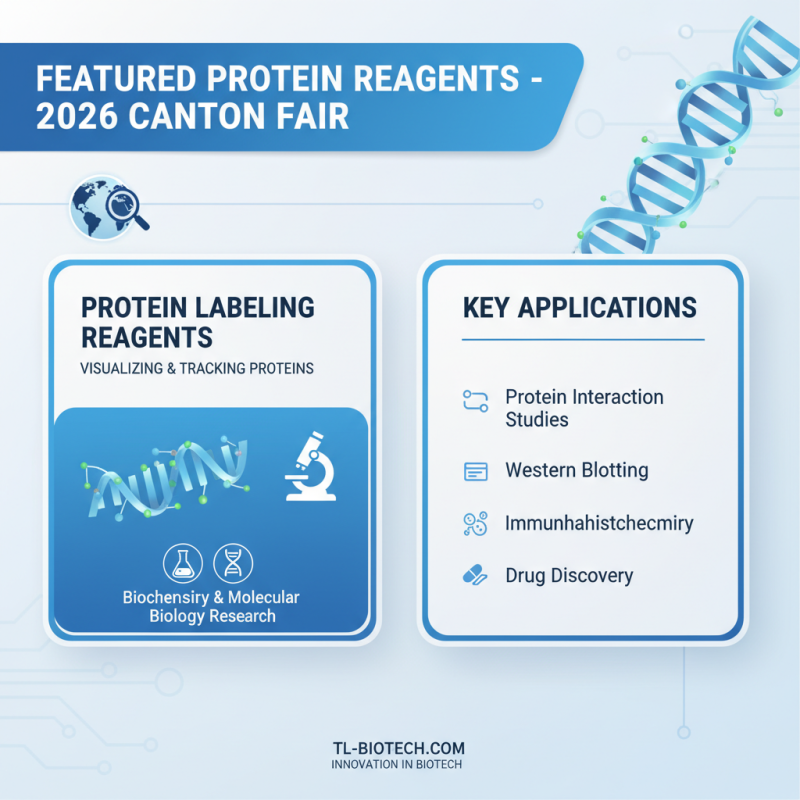
At the 2026 Canton Fair, visitors can expect an exciting array of protein reagents. Among these, Protein Labeling Reagents will be a highlight. These reagents are essential for visualizing proteins in research. They enable scientists to track and study protein interactions in various biological contexts. This is crucial for many fields, including biochemistry and molecular biology.

Tips: When exploring protein reagents, pay attention to compatibility. Not every reagent works well with every sample. Sometimes, a small incompatibility can lead to inaccurate data. It’s wise to check protocols and previous studies before making a selection.

Interest will also center around purification kits. High-quality purification methods can make experiments more reliable. But users should be aware that purification can be tricky. Inconsistent results can frustrate even experienced scientists. Finding a purification kit that fits your needs is key to success in your research.

Don’t overlook the importance of proper handling. Mistakes can happen easily. Proper storage conditions are crucial for maintaining reagent stability. This can affect your entire experiment, so stay alert and organized.

Key Manufacturers and Innovators in Protein Reagents

The 2026 Canton Fair will showcase numerous key manufacturers and innovators in the protein reagents sector. According to market research, the global protein reagents market is expected to reach approximately $3.5 billion by 2026. This growth is driven by an increasing need for biomolecular studies and diagnostics.

Among leading innovators, many specialize in novel purification techniques. Their methods help researchers isolate proteins more efficiently. However, the complexity of these systems sometimes leads to challenges in reproducibility. Such issues highlight the need for continuous improvements in assay performance.

Tip: When exploring vendors at the Fair, consider asking about their quality control measures. Understanding these factors can help gauge a product's reliability.

In addition, the demand for custom protein reagents is on the rise. Custom solutions often present challenges in scaling production efficiently. Researchers must weigh the benefits versus the potential for errors in customization.

Tip: Document your requirements clearly. This can minimize miscommunications during the ordering process. Always seek transparency from suppliers regarding production timelines and protocols.

Evaluation Criteria for Selecting Protein Reagents

When choosing protein reagents for research, one must consider several evaluation criteria. Quality is paramount. High purity levels influence experimental outcomes. Studies show that impurities can lead to inconsistent data. The best reagents usually have purity levels above 95%. This ensures reliable results in protein isolation and analysis.

The type of reagent also matters. For instance, Magnetic Bead Reagents For Protein Isolation offer a powerful method for separating proteins from complex mixtures. Their versatility is supported by data indicating they can increase yield and efficiency. Customization options can further refine their application. Researchers often express frustration with one-size-fits-all reagents, as they may not suit every unique protein. It is essential to assess compatibility with specific assays.

Cost is another significant factor in reagent selection. Budget constraints can limit access to high-quality options. Industry reports reveal that researchers often resort to less effective alternatives due to price. This can compromise research integrity. Thus, balancing cost with quality is a complex decision that requires deep reflection. Being aware of these factors will lead to more informed choices at the 2026 Canton Fair.

Future Innovations and Predictions for Protein Reagents

As the 2026 Canton Fair approaches, the spotlight on protein reagents grows. These reagents are crucial for diagnostics and therapeutic development. They play a significant role in research, specifically in areas like immunology. Protein Reagents For Elisa Assays will be particularly important. Innovations in this field promise more efficient testing methods.

Future trends indicate a shift towards more sustainable practices. Researchers are exploring environmentally friendly reagents. This could reduce waste and limit environmental impact. However, challenges remain in balancing effectiveness and sustainability. Some reagents may not yield optimal results. Ongoing research is necessary to find solutions.

Emerging technologies, like automation in reagent production, show promise. This could streamline processes and improve quality. Yet, it also raises questions about accessibility and cost. Not all labs have equal access to these advancements. The push for innovation must consider these disparities. Balancing progress and practicality is essential as we move forward.

Harnessing Recombinant Human IFN-γ Protein: Insights from Industry Reports on Immunotherapeutic Advancements and Market Trends

The field of immunotherapy is rapidly evolving, with recombinant human interferon-gamma (IFN-γ) emerging as a significant player in the development of advanced therapeutic strategies. Industry reports highlight the increasing recognition of IFN-γ’s pivotal role in modulating immune responses, particularly in the treatment of various cancers and infectious diseases. Its ability to enhance macrophage activation and promote cytotoxic T-cell responses has attracted attention from researchers and clinicians alike, positioning it as a promising candidate in the immunotherapeutic landscape.

Recent advancements in manufacturing processes have led to the development of high-quality recombinant proteins such as the GMP-TL105 model, which is currently in stock. This product meets the stringent Good Manufacturing Practice (GMP) standards, ensuring its suitability for research and clinical development. With an emphasis on scalability and reproducibility, these advancements not only improve the reliability of therapeutic applications but also facilitate the exploration of new treatment paradigms. As the market for IFN-γ expands, the insights gathered from industry reports will continue to drive innovation and inform strategic decisions, making it an exciting time for stakeholders in the field of immunotherapy.

FAQS

: Why are protein reagents important in research?

: Protein reagents are essential for studying biological processes and understanding protein interactions. They significantly impact experiment outcomes.

What role do protein crosslinking reagents play?

They allow scientists to connect proteins, revealing complex behaviors and hidden relationships. Results can vary, requiring adaptability.

How do protein reagents affect industry applications?

They are vital for diagnostics and therapeutics. The quality of reagents influences the reliability of tests and treatments.

What challenges do researchers face with protein reagents?

Inconsistent performance and unexpected results can frustrate researchers. Continuous improvement of reagents is essential for progress.

How can the quality of protein reagents be evaluated?

High purity levels are crucial. Reagents above 95% purity yield more reliable results. Impurities can cause inconsistent data.

Why is customization of protein reagents gaining importance?

The demand for tailored solutions is rising. However, scaling production can be challenging, leading to potential customization errors.

What should researchers consider when choosing protein reagents?

They need to balance cost and quality. Budget constraints may force researchers to select less effective alternatives, compromising integrity.

What evaluation criteria should be considered for reagent selection?

Researchers should assess purity, compatibility with assays, and cost. Each factor plays a significant role in experimental success.

How can communication with suppliers improve reagent ordering?

Documenting requirements clearly helps minimize miscommunication. Transparency regarding production timelines is crucial for smooth transactions.

Conclusion

The article titled "Top Protein Reagents to Explore at 2026 Canton Fair" provides a comprehensive overview of the current landscape of Protein Reagents, highlighting their significance in both research and industrial applications. It examines the latest trends in protein reagent development, emphasizing innovations that are shaping the field for the upcoming years.

Furthermore, it outlines key protein reagents to watch for at the 2026 Canton Fair, as well as the leading manufacturers and innovators contributing to the advancement of these crucial tools. Evaluation criteria for selecting protein reagents are discussed, alongside future predictions for innovations that are expected to enhance their functionality and efficacy. This article serves as a valuable guide for professionals seeking to stay ahead in the ever-evolving world of protein reagents.
Clara

Clara

Clara is a dedicated marketing professional at T&L Biotechnology Co., Ltd., where she leverages her extensive knowledge of cell and gene therapy (CGT) products to drive the company's mission forward. With a strong focus on the research and development of GMP-grade upstream raw materials and......
Previous Why Attend the 139th Canton Fair for Clinical Research Organizations?