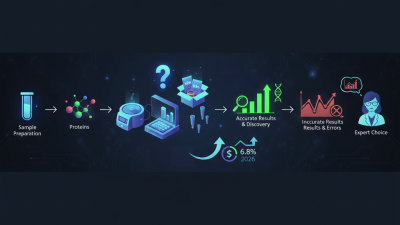
Hey, have you noticed how quickly biotech is changing? One thing that’s really become a cornerstone in research these days is Protein Reagents. They're actually pretty crucial when it comes to digging into new drugs and diagnostics. In fact, a recent rEport from Grand View Research predicts the global market for these goodies could hit around $5 billion by 2026 — no joke! It just shows how much these reagents are ramping up in importance, especially for folks working on new therapies or tests. Companies like Thermo Fisher Scientific and Merck Group are leading the charge, coming out with innovative options to keep up with the growing demand.
With more research happening worldwide, the need for top-notch Protein Reagents is only going up. But here’s the thing — not all reagents are created equal. Picking the right ones really matters because some products just don’t deliver consistent results. Take Bio-Rad Laboratories, for instance; they've caught some flak over how well their reagents perform in certain cases. That’s a big reminder that reliability is key when you're choosing these tools.
For researchers, it’s essential to consider things like purity and specificity. You can’t just buy blindly; you’ve got to test and validate thoroughly to make sure your data is solid. Choosing the right Protein Reagents isn’t something to take lightly — because, honestly, your experimental success depends a lot on them.

Top Trends in Protein Reagents for Global Buyers in 2026
As we look toward 2026, the trends in protein reagents indicate significant transformation. An increasing shift towards sustainable practices is becoming evident. A recent report from the Global Protein Reagent Market has shown that sustainable protein reagents could grow by 15% annually. This highlights the industry's response to environmental concerns while meeting consumer needs.
Another trend is the rise of multi-functional protein reagents. These reagents, especially Protein Crosslinking Reagents, gain attention for their versatility. They create stronger bonds, enabling advanced research outputs. The demand for these reagents is propelling growth, with analysts projecting a 20% market increase in this category by 2026.
Tips: Always assess the purity and stability of the reagents. These factors can affect your experimental reproducibility. Collaboration between research institutions can also yield innovative solutions, driving the industry forward. Engage with professionals to stay updated, as knowledge sharing is crucial.
2026 Top Protein Reagents Trends
Key Considerations for Selecting Protein Reagents
When selecting protein reagents, understanding your specific needs is crucial. Focus on the type of experiments you plan to conduct. Academic and industrial labs often have different priorities. High specificity and sensitivity might be key for research settings. In contrast, bulk production may prioritize cost-effectiveness.
Tips: Always check compatibility. Ensure that the chosen reagents work well with your existing protocols. Mismatched reagents can lead to failed experiments. Consider the manufacturer's reputation. Reliable suppliers often offer comprehensive data on their products.
Another important factor is stability. Some Protein Labeling Reagents degrade quickly, limiting their shelf life. Evaluate storage conditions and express your concerns when choosing a reagent. Pay close attention to buffer compositions and pH. These factors can significantly influence experiment outcomes. Always document your findings for future reference. Reflect on any inconsistent results. Understanding these variabilities can enhance your experimental design.
Most In-Demand Protein Reagents by Market Segment
As the demand for protein reagents grows, understanding market segments is crucial. Scientists require specific reagents tailored to their research needs. One popular segment is Magnetic Bead Reagents For Protein Isolation. These reagents provide rapid and efficient protein extraction from complex mixtures. They are user-friendly and often yield high-quality results.
When considering protein reagents, it's essential to evaluate your specific applications. Different research fields, like biochemistry and molecular biology, have diverse requirements. Not all reagents work for every application. Conduct thorough research and consult reputable sources. This ensures that you select the right reagents for your experiments.
Here are a few tips for making informed decisions. First, review studies that showcase the effectiveness of various reagents. Look for peer-reviewed articles and expert recommendations. This helps build trust in the reagents you choose. Second, consider scalability. Ensure that the reagents can support both small-scale and larger projects. This flexibility is vital for evolving research needs.
2026 Top Protein Reagents for Global Buyers to Consider
| Market Segment | Reagent Type | Usage | Growth Rate (%) | Region |
| Research | Antibodies | Western Blotting, ELISA | 8% | North America |
| Diagnostics | Enzymes | Clinical Testing | 10% | Europe |
| Therapeutics | Recombinant Proteins | Drug Development | 12% | Asia Pacific |
| Biotechnology | Protein Assays | Quantitative Analysis | 9% | Global |
| Food Safety | Protein Detection Kits | Contaminant Testing | 7% | Latin America |
Innovative Technologies Impacting Protein Reagent Development
Innovative technologies are transforming protein reagent development, reshaping the landscape. These advancements focus on improved efficiency and specificity. Techniques like CRISPR and protein engineering have revolutionized how reagents are designed.
Recent breakthroughs in high-throughput screening allow scientists to quickly evaluate numerous protein interactions. This accelerates the discovery of effective reagents. Artificial intelligence tools now aid in predicting protein structures and functions, enhancing reagent reliability. However, the complexity of these technologies can pose challenges. Researchers must critically assess data quality and interpretation.
Moreover, the integration of nanotechnology offers potential benefits. Nanoscale materials can improve the performance of protein reagents. Yet, the long-term effects and safety of these new materials require further investigation. As the field evolves, continuous adaptation and scrutiny of emerging technologies are essential for ensuring reliability and efficacy in protein research.
Global Suppliers of Protein Reagents: A Comparative Analysis
When evaluating global suppliers of protein reagents, several factors come into play. Reliability, quality, and customer service are crucial indicators. Buyers should consider the supplier's expertise in various protein reagents, such as enzymes, antibodies, and assays. Each category has specific requirements and standards that need to be met.
Tips: Assess the supplier's reputation within the scientific community. Look for reviews and feedback from previous clients. Engage with professionals who have firsthand experience.
Moreover, comparative analysis highlights price differences across regions. Suppliers may offer competitive pricing, but it’s essential to examine their product quality. Some lower-priced options might compromise on crucial performance attributes, leading to suboptimal results in experiments.
Tips: Don’t solely focus on price. Investigate the technical support offered by suppliers. Quick response times can enhance your laboratory's efficiency.
Ultimately, the choice of protein reagent supplier should be well-informed. Buyers must strike a balance between cost, quality, and support. Some suppliers may present enticing offers but lack reliable quality control. Making the wrong choice could lead to significant delays in research progress.
Regulatory Factors Affecting Protein Reagent Procurement
Regulatory factors significantly influence the procurement of protein reagents. Buyers must navigate a complex web of regulations affecting product quality and safety. These regulations vary across countries and regions, impacting how Protein Reagents For Elisa Assays are sourced. Compliance with local laws ensures that researchers can trust the reagents they use in their experiments.
Manufacturers need to be aware of Good Manufacturing Practices (GMP). These practices establish strict quality measures for production. Not adhering to these guidelines can lead to subpar products. Buyers should verify the reliability of their suppliers. Questions about certifications and quality control processes are essential. It is crucial to know whether a reagent has undergone the necessary regulatory scrutiny.
Additionally, proper documentation is vital. Regulatory bodies often require detailed information about every reagent. Missing this information can delay shipments. Inconsistent labeling and inadequate data may raise alarms. Buyers must prioritize suppliers who are transparent about their compliance. It ensures timely access to high-quality protein reagents for ELISA assays and supports successful research outcomes.
Future Directions and Predictions for Protein Reagent Market
The protein reagent market is poised for significant evolution by 2026. Emerging trends highlight the growing demand for innovative and reliable reagents. These advancements could revolutionize research methodologies across various scientific disciplines.
A key focus is the increasing emphasis on sustainability. Many researchers are seeking eco-friendly options. This shift might lead to the development of biodegradable protein reagents. Organizations that prioritize environmentally safe products gain credibility in this evolving landscape.
Market predictions also indicate a rise in personalized medicine. As research becomes more tailored to individual needs, protein reagents will play a crucial role. The integration of artificial intelligence could enhance reagent design and application. Adapting to these changes may require a reevaluation of current practices. The scientific community must remain flexible to embrace new technologies and methodologies. This ongoing transformation presents both opportunities and challenges as we move forward.
FAQS
: Innovative technologies enhance efficiency and specificity in protein reagent development. They change how reagents are designed.
High-throughput screening allows faster evaluation of protein interactions. It speeds up the discovery of effective reagents.
The complexity of new technologies can complicate data quality. Researchers must critically assess and interpret the data.
AI tools help predict protein structures and functions. This enhances the reliability of protein reagents used in research.
Nanotechnology can improve protein reagent performance. However, safety and long-term effects need more investigation.
Regulatory factors ensure product quality and safety. They vary by region and are crucial for trustworthy research.
Buyers must ensure suppliers follow Good Manufacturing Practices (GMP). Certifications and quality control processes are critical.
Regulatory bodies require detailed information for every reagent. Missing documentation can delay shipments and raise concerns.
Buyers should prioritize transparency and compliance. Reliable suppliers ensure access to high-quality protein reagents.
Not adhering to guidelines can lead to lower quality products. This can ultimately affect research outcomes negatively.
Conclusion
In 2026, the landscape of protein reagents is set to evolve significantly, driven by emerging trends and innovative technologies. Key considerations for global buyers include the efficacy, sourcing, and compliance of protein reagents, which are crucial for advancing research and diagnostics. The most in-demand protein reagents are categorized by their application in various market segments, highlighting the diverse needs of researchers across disciplines.
Innovative technologies are reshaping the development of protein reagents, fostering more precise and efficient solutions. In choosing protein reagents, buyers must navigate regulatory factors that impact procurement processes globally. A comparative analysis of global suppliers will help buyers identify the best options available to them. As the market continues to grow, future directions and predictions suggest a shift towards more personalized and adaptable protein reagents to meet the ever-evolving needs of the scientific community.