
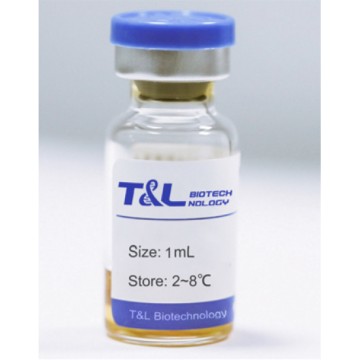
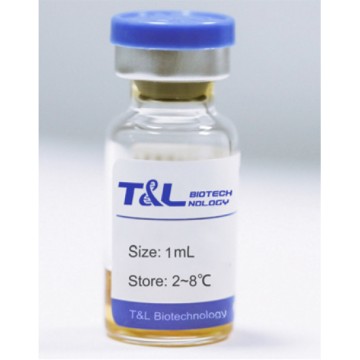
GMP-TL778 Anti-Human CD137 mAb for T Cell Proliferation - Leading China Suppliers & Factory
4-1BB, also known as CD137, is an inducible cell surface receptor and one member of the tumor necrosis factor receptor (TNFR) superfamily. CD137 is encoded by the tumor necrosis factor receptor superfamily member 9 (TNFRSF9) gene and widely expressed on the surface of activated T cells and NK cells.
Ligand & Expression
Its ligand, CD137L, also a TNFSF member, is an inducible costimulatory receptor expressed by activated CD4+ and CD8+ T cells, NKT, NK cells, DC, macrophages, eosinophils, neutrophils, and mast cells, especially on CD8+ T cells.
CD137 / CD137L mediate immune responses by transmitting activation, proliferation, or apoptotic signals between immune cells.
Activation & Signaling
The activation of CD137 can stimulate NK cell and T cell proliferation and generate anti-tumor activity, which induces durable memory responses.
4-1BB mAb can activate 4-1BB to recruit TNFR related factors TRAF1 and TRAF2. Then, TRAF1 and TRAF2 form a heterotrimer, which strengthens signal transduction through c-Jun N terminal kinase (JNK) or extracellular signal-regulated kinase (ERK) pathway. This heterotrimer can stimulate the proliferation of T cells and antigen-presenting cells, improve anti-tumor immune response of the body and secrete cytokines through the transcription of NF-κB.
Frequently Asked Questions
4-1BB (also known as CD137) is an inducible cell surface receptor and a member of the tumor necrosis factor receptor (TNFR) superfamily. It is encoded by the tumor necrosis factor receptor superfamily member 9 (TNFRSF9) gene.
CD137 is widely expressed on the surface of activated T cells and NK cells.
CD137L is the ligand of CD137 and a member of the TNFSF. It is an inducible costimulatory receptor expressed by activated CD4+ and CD8+ T cells, NKT, NK cells, DC, macrophages, eosinophils, neutrophils, and mast cells, with a notable presence on CD8+ T cells.
They mediate immune responses by transmitting activation, proliferation, or apoptotic signals between immune cells.
Activation of CD137 stimulates NK cell and T cell proliferation, generates anti-tumor activity, and induces durable memory responses.
4-1BB mAb activates 4-1BB to recruit TNFR-related factors TRAF1 and TRAF2. These factors form a heterotrimer that strengthens signal transduction through the JNK or ERK pathways. This heterotrimer stimulates the proliferation of T cells and antigen-presenting cells, enhances the body's anti-tumor immune response, and triggers cytokine secretion via NF-κB transcription.