




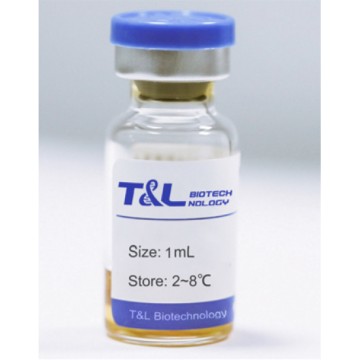

Recombinant Human 4-1BB Ligand Protein GMP-TL695 | China Suppliers & Factory In Stock
4-1BB ligand (4-1BBL), also known as CD137L or TNFSF9, is a member of the tumor necrosis factor (TNF) family expressed on activated antigen-presenting cells. Its receptor, 4-1BB, is a member of the TNF receptor family expressed on activated CD4 and CD8 T cells.
T Cell Co-stimulation
In response to 4-1BB Ligand binding, 4-1BB transduces a co-stimulatory signal that promotes the proliferation, activation, and survival of CD4⁺ and CD8⁺ T cells. T cell co-stimulation through CD28 is important for the initial T cell expansion, while 4-1BB acts later in the response.
Cognate Interactions
Furthermore, 4-1BBL may play a role in cognate interactions between T-cells and B-cells/macrophages, facilitating essential communication pathways within the adaptive immune response.
Frequently Asked Questions
What is 4-1BB ligand (4-1BBL)?
4-1BB ligand (4-1BBL), also known as CD137L or TNFSF9, is a member of the tumor necrosis factor (TNF) family expressed on activated antigen-presenting cells.
What is the receptor for 4-1BBL and where is it expressed?
Its receptor is 4-1BB, which is a member of the TNF receptor family expressed on activated CD4 and CD8 T cells.
What is the primary function of 4-1BB Ligand binding?
Upon binding, 4-1BB transduces a co-stimulatory signal that promotes the proliferation, activation, and survival of CD4⁺ and CD8⁺ T cells.
How does 4-1BB co-stimulation differ from CD28?
T cell co-stimulation through CD28 is crucial for the initial T cell expansion, whereas 4-1BB functions later in the immune response.
Does 4-1BBL play a role in other immune cell interactions?
Yes, 4-1BBL may play a role in cognate interactions between T-cells and B-cells or macrophages.
Which diseases are associated with 4-1BBL?
4-1BBL is involved in several diseases, including cancers, infectious diseases, and autoimmune diseases.