




Leave Your Message

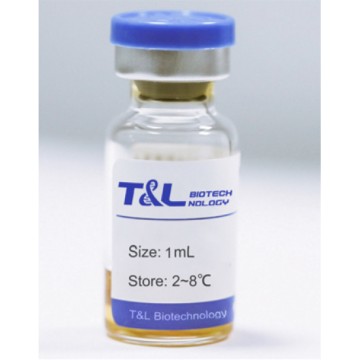
Recombinant Human IL-2 Protein from China: Leading Suppliers and Factory Quality GMP-TL906

Discover the GMP-TL906, a high-quality product that reflects our commitment to excellence. As a leading supplier from China, we pride ourselves on manufacturing top-notch goods in our state-of-the-art factory. Our stock is available and ready for immediate shipment, ensuring prompt delivery to meet your needs. Choose us for reliable products and exceptional service that sets us apart in the competitive market.

    T Cell Activation & IL-2 Regulation

    Activated T cells generally cannot survive for a long time in vitro culture, and the addition of IL-2 can promote their long-term and sustained proliferation. The surface of stationary T cells does not express IL-2R and does not respond to IL-2; T cells activated by mitogen or other stimuli can express IL-2R and become target cells of IL-2; IL-2 can also induce increased IL-2R expression in target cells.

    The expression of IL-2R on T cells is transient, generally reaching its peak 2-3 days after activation and disappearing around 6-10 days. With the disappearance of IL-2R, T cells lose their ability to respond to IL-2. Therefore, in order to maintain the long-term growth of normal T cells in vitro, it is necessary to constantly stimulate T cells with mitogen or other stimulators to maintain the expression of IL-2R.

    NK Cell Receptor Dynamics

    NK cells are the only lymphoid cells that normally express IL-2R, and therefore always maintain reactivity to IL-2. However, only IL-2R is expressed on stationary NK cells β Chain and γ Chains have a low affinity for IL-2 and can only react with high concentrations of IL-2. Once NK cells are activated, they express IL-2R α Chain, becoming a high affinity receptor.

    Frequently Asked Questions
    Q1: Why is IL-2 necessary for in vitro T cell culture?
    Activated T cells generally cannot survive for a long time in vitro. The addition of IL-2 is essential to promote their long-term and sustained proliferation.
    Q2: Do stationary T cells respond to IL-2?
    No, stationary T cells do not express IL-2R (IL-2 Receptor) on their surface and do not respond to IL-2. They must be activated by mitogen or other stimuli to express IL-2R and become target cells.
    Q3: How long does IL-2R expression last on T cells?
    The expression is transient. It typically reaches its peak 2-3 days after activation and disappears around 6-10 days, at which point T cells lose their ability to respond to IL-2.
    Q4: How can normal T cells be maintained for long-term growth in vitro?
    To maintain long-term growth, T cells must be constantly stimulated with mitogen or other stimulators to continuously maintain the expression of IL-2R.
    Q5: How do stationary NK cells react to IL-2?
    Stationary NK cells only express the β and γ chains of IL-2R, which have a low affinity for IL-2. Consequently, they can only react with high concentrations of IL-2.
    Q6: What change occurs in NK cell receptors upon activation?
    Once activated, NK cells express the IL-2R α chain, which transforms the receptor into a high-affinity receptor.