





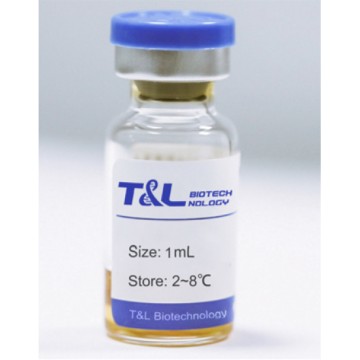

Recombinant Human PDGF-BB Protein - Leading China Suppliers and Factory - GMP-TL644 in Stock
PDGFs are disulfide-linked dimers consisting of two 12.0-13.5 kDa polypeptide chains, designated PDGF-A and PDGF-B chains.
The three naturally occurring PDGFs, PDGF-AA, PDGF-BB and PDGF-AB, are potent mitogens for a variety of cell types, including smooth muscle cells, connective tissue cells, bone and cartilage cells, and some blood cells.
The PDGFs are stored in platelet α-granules, and are released upon platelet activation.
The PDGFs are involved in a number of biological processes, including hyperplasia, chemotaxis, embryonic neuron development, and respiratory tubule epithelial cell development.
Two distinct signaling receptors of PDGFs have been identified and named PDGFR-α and PDGFR-β. PDGFR-α is a high-affinity receptor for each of the three PDGF forms. On the other hand, PDGFR-β interacts only with PDGF-BB and PDGF-AB.
PDGFs are disulfide-linked dimers consisting of two 12.0-13.5 kDa polypeptide chains, designated PDGF-A and PDGF-B chains.
PDGFs act as potent mitogens for a variety of cell types, including smooth muscle cells, connective tissue cells, bone and cartilage cells, and some blood cells.
PDGFs are stored in platelet α-granules and are released upon platelet activation.
They are involved in several biological processes, including hyperplasia, chemotaxis, embryonic neuron development, and respiratory tubule epithelial cell development.
PDGFR-α is a high-affinity receptor for all three PDGF forms (PDGF-AA, PDGF-BB, and PDGF-AB), whereas PDGFR-β interacts exclusively with PDGF-BB and PDGF-AB.