





Leave Your Message

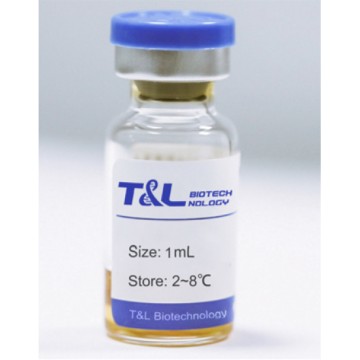
Recombinant Human PDGF-BB Protein - Quality GMP Production from China Suppliers and Factory in Stock

Discover the GMP-TL644, a top-quality product now available in our stock, manufactured by leading suppliers in China. This model showcases exceptional craftsmanship from our reliable factory, ensuring high performance and durability. Designed to meet the diverse needs of our clients, the GMP-TL644 stands out as a premier choice among consumers seeking dependable products sourced directly from trusted China suppliers. Experience the excellence of our factory production with every purchase.

    Molecular Structure

    PDGFs are disulfide-linked dimers consisting of two 12.0-13.5 kDa polypeptide chains, designated PDGF-A and PDGF-B chains.

    Target Cell Types

    The three naturally occurring PDGFs, PDGF-AA, PDGF-BB and PDGF-AB, are potent mitogens for a variety of cell types, including smooth muscle cells, connective tissue cells, bone and cartilage cells, and some blood cells.

    Storage & Release

    The PDGFs are stored in platelet α-granules, and are released upon platelet activation.

    Biological Processes

    The PDGFs are involved in a number of biological processes, including hyperplasia, chemotaxis, embryonic neuron development, and respiratory tubule epithelial cell development.

    Signaling Receptors

    Two distinct signaling receptors of PDGFs have been identified and named PDGFR-α and PDGFR-β. PDGFR-α is a high-affinity receptor for each of the three PDGF forms. On the other hand, PDGFR-β interacts only with PDGF-BB and PDGF-AB.

    Frequently Asked Questions

    What is the molecular structure of PDGFs?

    PDGFs are disulfide-linked dimers consisting of two 12.0-13.5 kDa polypeptide chains, designated PDGF-A and PDGF-B chains.

    What are the three naturally occurring forms of PDGFs?

    The three naturally occurring PDGFs are PDGF-AA, PDGF-BB, and PDGF-AB.

    Which cell types do PDGFs target as potent mitogens?

    PDGFs act as potent mitogens for a variety of cell types, including smooth muscle cells, connective tissue cells, bone and cartilage cells, and some blood cells.

    Where are PDGFs stored and how are they released?

    PDGFs are stored in platelet α-granules and are released upon platelet activation.

    What biological processes involve PDGFs?

    PDGFs are involved in several biological processes, including hyperplasia, chemotaxis, embryonic neuron development, and respiratory tubule epithelial cell development.

    How do PDGF receptors differ in binding affinity?

    PDGFR-α is a high-affinity receptor that binds to all three PDGF forms (PDGF-AA, PDGF-BB, and PDGF-AB), whereas PDGFR-β interacts exclusively with PDGF-BB and PDGF-AB.